
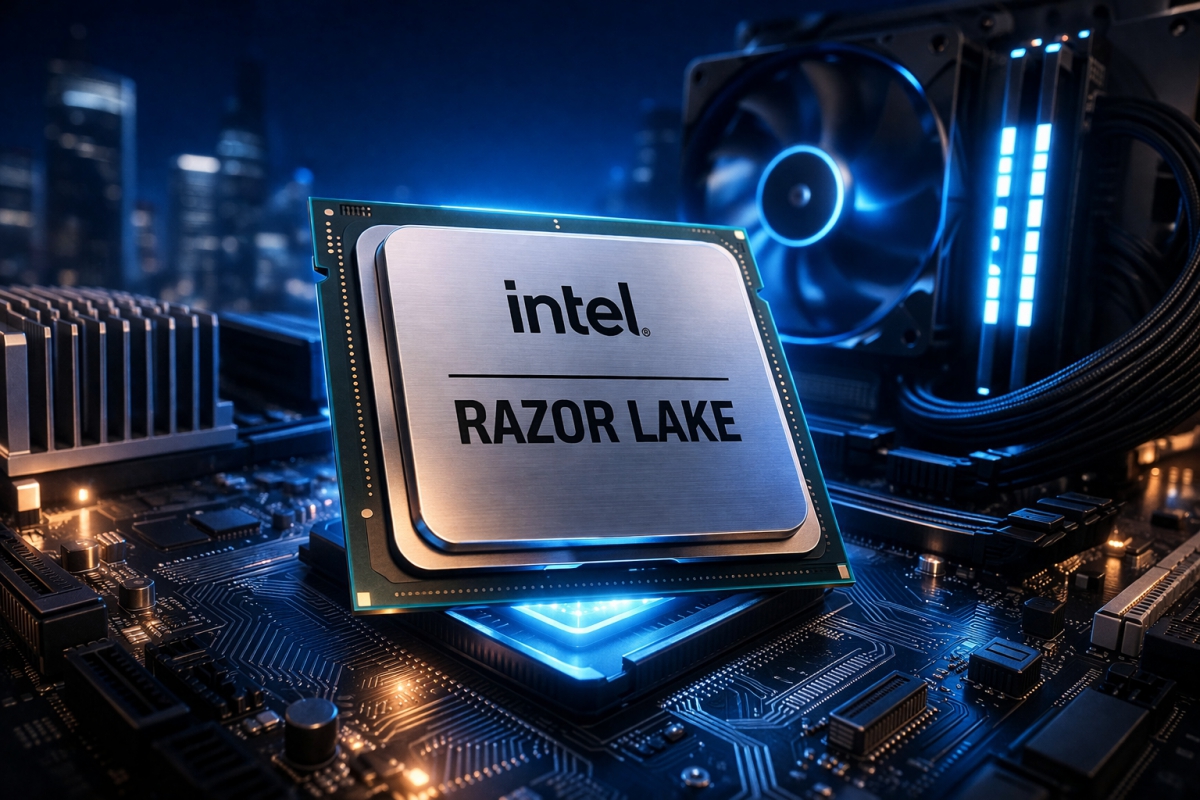
4 variants of the Intel Razor Lake appear in the Linux kernel patches sent by Intel
Today we have seen how AMD has incorporated new patches to the Linux Kernelwhich enable distribution of tasks according to the capacity of the cores. An option that will improve the assignment of tasks to the most capable cores, compared to the lighter tasks in the LP cores. Intel is also making changes to support its Razor Lake processorsand thanks to these patches the variants that Intel will launch under this next generation.
Intel Razor Lake appears in the Linux kernel with four variants for desktops and laptops
To add compatibility, Intel has introduced Razor Lake identifiersin its different versions, linux kernelalong with the Coral Rapids for servers and data centers. These identifiers include versions for desktop and laptop computers, in addition to these aforementioned processors for servers in the Xeon family. The 4 identifiers include the names Razor Lake (plain), Razor Lake-S, Razor Lake-U and Razor Lake-Lwhere the first two are assumed for desktop computers and the last two for laptops.
Still The differences between these 4 variants are not knownand we also do not see other variants such as the all-powerful HX or the H for laptops with more balanced performance and consumption. This may be because the names used belong to the internal definitions of the CPUs, and not to the commercial names. But it is still early to know Intel’s intentions, beyond the first tests with early engineering samples that it can do with Linux, since Intel Razor Lake is not expected until at least 2028.
Intel Razor Lake desktops could maintain Nova Lake’s LGA 1954 socket
At the moment it is said that the Razor Lake for desktop computers will continue with the LGA 1954 socket that Intel will supposedly introduce this same year 2026 with the Nova Lakealthough they have not yet been presented.

Juan Antonio Soto
I am a Computer Engineer and my specialty is automation and robotics. My passion for hardware began at the age of 14 when I broke down my first computer: a 386 DX 40 with 4MB of RAM and 210MB of hard drive. I continue to give free rein to my passion in the technical articles I write for Geeknetic. I dedicate most of my free time to video games, contemporary and retro, on the more than 20 consoles I have, in addition to the PC.
