
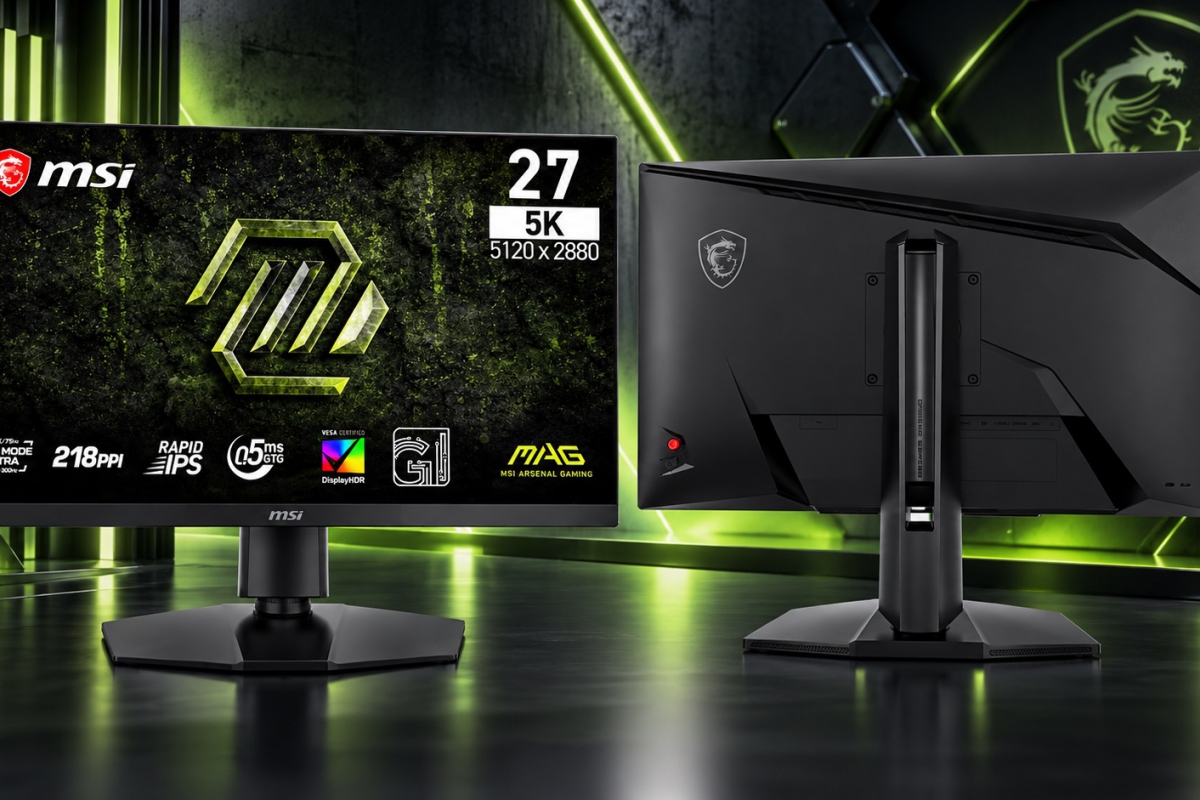
The MSI MAG 271KPD7 combines 5K at 75 Hz and WQHD at 300 Hz in a 27-inch IPS panel
MSI has set the Japanese launch of the MAG 271KPD7 for October 1, 2026 for 98,800 yen. The monitor was presented at the beginning of the year, but now it has a date, price and definitive commercial sheet. Its 26.9-inch Rapid IPS panel runs at 5K and 75Hz or switches to WQHD to reach 300Hz.
The combination aims to cover high pixel density work and fast gaming from a single screen. MSI calls Dual Mode Ultra to change between 5,120 x 2,880 pixels and 2,560 x 1,440 pixels. The announced availability corresponds to Japan and the company has not yet communicated the price or date for Spain.
5K resolution at 75 Hz or WQHD at 300 Hz
Native mode delivers 5,120 x 2,880 pixels at a 75Hz maximum. On a visible diagonal of 26.9 inchesthe density reaches 218 pixels per incha figure suitable for displaying text, interfaces and photographs with very defined edges. The operating system can apply scaling to maintain a comfortable size of menus and fonts.
When you activate the second mode, the resolution drops to 2,560 x 1,440 pixels and the frequency goes up to 300 Hz. This configuration reduces the graphic load and shortens the interval between images, making it more appropriate for competitive titles. The user decides which priority fits each application from the monitor controls.
The brand also includes a mode that simulates a 24.5-inch screen. The image uses a smaller area of the panel to concentrate the content and allow all the action to remain within the field of view. It can be useful in shooting games, although it leaves unused borders around the active area.
He Minimum advertised response time is 0.5 ms GtG. As with this type of figures, it corresponds to specific conditions and settings of the manufacturer. The display supports AMD FreeSync Premium in 300Hz WQHD mode, and MSI lists it as G-SYNC compatible as well, with the caveat that some certifications may still be in process.
Rapid IPS panel with DisplayHDR 400
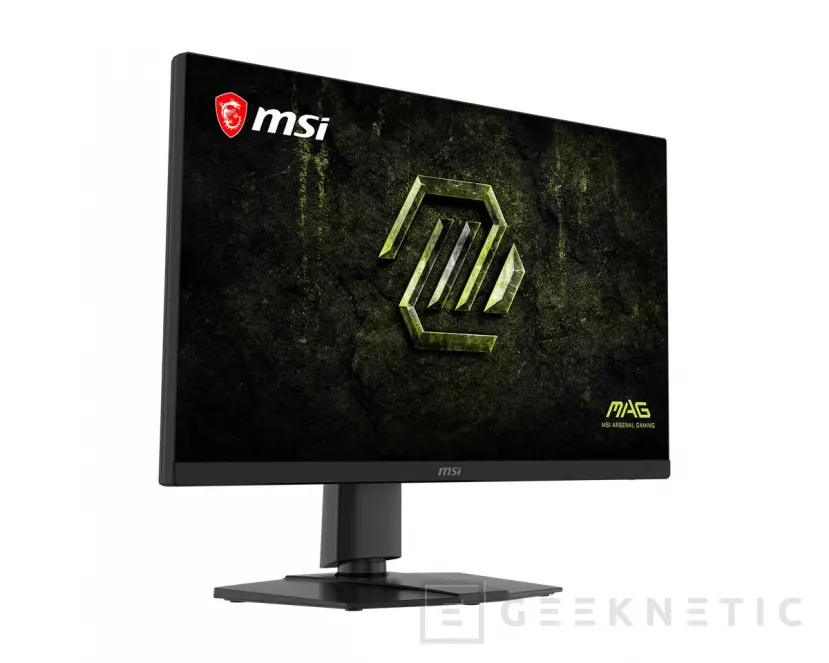
The panel has a Typical brightness of 350 nits in SDR and reaches 500 nits in HDR. Its declared static contrast is 1,500:1, above the 1,000:1 value common in many IPS. VESA DisplayHDR 400 certification confirms basic HDR processing and brightness requirements, but does not imply the advanced local backlight control available on Mini LED or OLED monitors.
The specified color coverage reaches 95% DCI-P3, 92.6% Adobe RGB and 122.9% sRGB under the CIE 1976 standard used by MSI. The panel reproduces 1.07 billion colors using 8 bits plus FRC and has an anti-reflective finish. The declared viewing angles are 178 degrees horizontally and vertically.
Video inputs include two HDMI 2.1, one DisplayPort 1.4a and one USB-C with DisplayPort Alt Mode. The three connection types support 5K at 75 Hz and WQHD at 300 Hz according to the official sheet. MSI does not specify on that tab whether any combination requires DSC compression.
He USB-C delivers up to 15Wenough for certain small devices, but not enough to power most laptops while they work. The monitor incorporates two 5Gbps USB-A and an upstream USB-B for the hub. It also has a headphone output and a KVM switch that allows you to control two computers with the same keyboard and mouse.
The consoles can use 1080p, 1440p and 4K signals at 60 or 120 Hz via HDMI. The monitor supports VRR with PlayStation 5 and Xbox. The 5K resolution and 300 Hz are mainly intended for PC.
Adjustable base and internal power supply
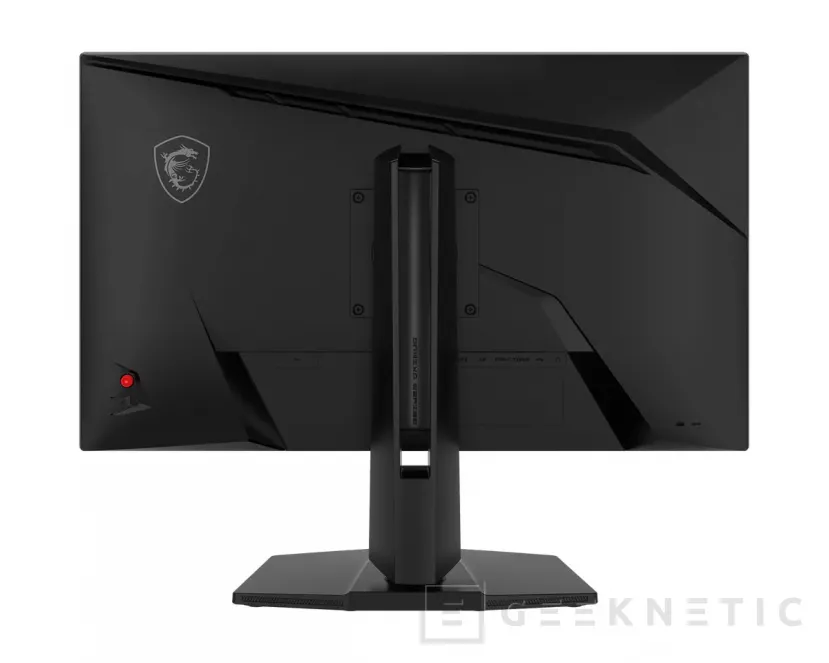
The base allows you to regulate 130 mm high, rotate 30 degrees to each side, tilt the screen between 5 degrees forward and 20 degrees back, and place it vertically. It also supports 100 x 100mm VESA arms and mounts. With the base installed, it measures 613.8 x 227.9 x 406.3 mm and weighs 6.7 kg.
MSI has integrated the power supply inside the case. Included in the box are a DisplayPort 1.4a cable, a USB-B to USB-A cable, the power cable, and base screws. The warranty announced for Japan is three years.
The MAG 271KPD7 can be purchased in Japan from October 1 for 98,800 yenabout 550 euros at the direct exchange rate used in the advertisement.
