
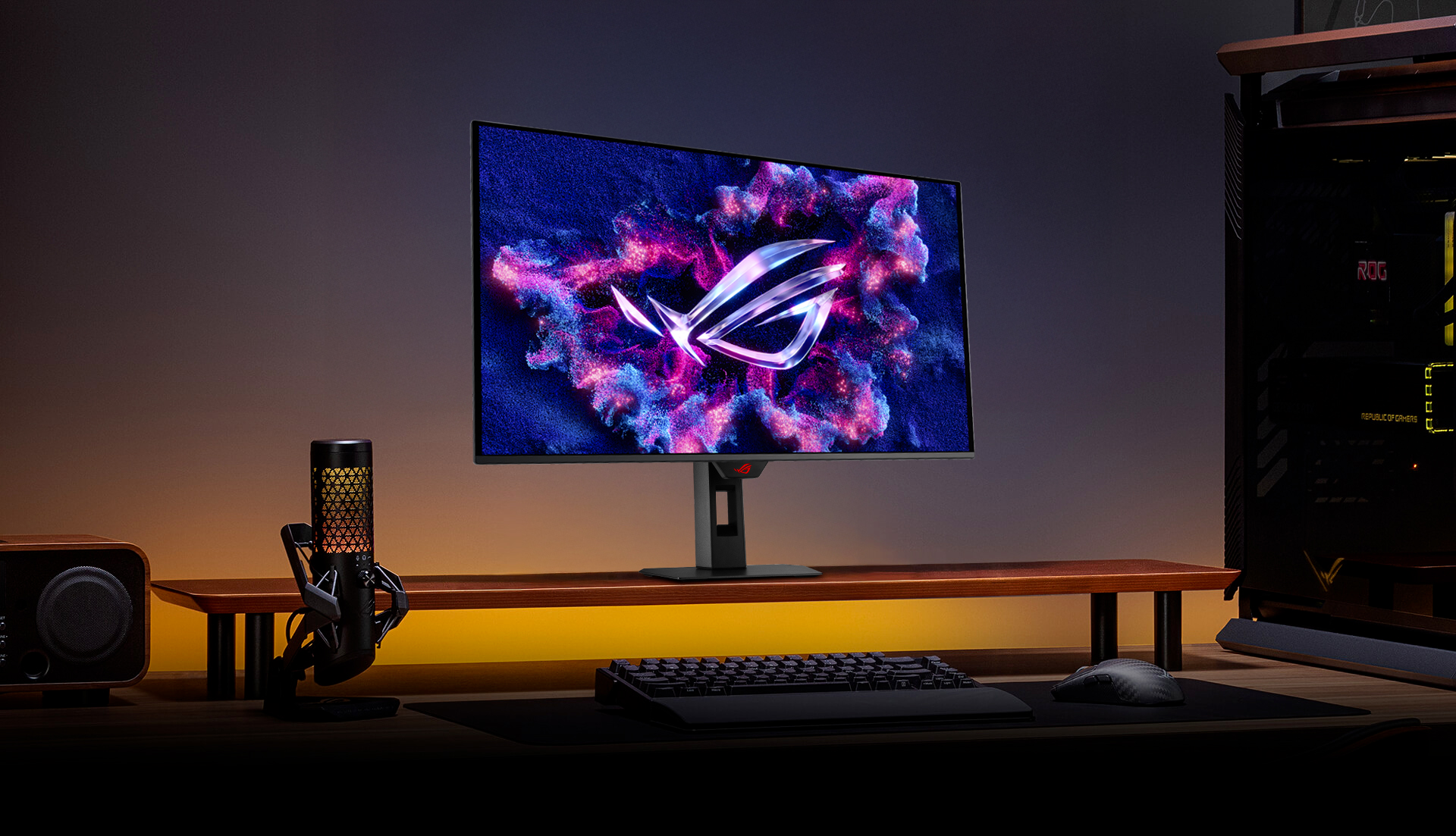
ASUS confirms the ROG Strix OLED XG32UQDS: 4K at 180 Hz and a new protection for the panel
A protective film called BlackShield It is one of the differences of ROG Strix OLED XG32UQDS compared to other ASUS QD-OLED monitors. The company claims that it improves scratch resistance and reduces the purplish tone that can appear in blacks when there is a lot of ambient light. These are claims made by the manufacturer, pending verification in a product test.
The model already appears on the official website with a third generation QD-OLED panel. 31.5 inches4K resolution and up to 180 Hz. It had appeared in August in a leak about upcoming ASUS OLED monitors. Now its detailed characteristics are known, although the brand has not yet communicated a price or a sales date for Spain.
BlackShield modifies the panel surface
ASUS attributes this film a 2.5 times higher scratch resistance than previous QD-OLED panels. The comparison comes from the company itself and refers to the surface layer; It does not imply that the monitor can be cleaned with abrasive materials or that it is immune to damage.
It also speaks of an improvement of Up to 40% perceived black level under ambient lighting. The figure is compared to previous generations and describes a specific condition of use. In a dark room, the panel’s behavior depends on other factors and that percentage improvement should not simply be transferred to any scene.
The tab defines the surface as anti-glare and specifies a typical contrast of 1,500,000:1. ASUS does not provide an independent measurement of the finished model in that figure. BlackShield will be one of the features we are most interested in checking out when testing the screen in different lighting conditions.
4K resolution, 180 Hz and 10-bit color
The XG32UQDS offers 3,840 × 2,160 pixels in 16:9 format. ASUS announces a maximum frequency 180Hz and a 0.03 ms gray-to-gray response time. This last data describes a pixel transition measured under the manufacturer’s conditions, not the total delay that a gamer will perceive when using the monitor.
For color, the tab indicates 10 bits, 99% coverage of DCI-P3 space and a Delta E deviation less than 2. They are factory specifications. Coverage and accuracy describe different things: covering many DCI-P3 colors does not alone ensure that all of them will be reproduced within the advertised deviation in each picture mode.
The typical declared brightness is 250 cd/m² and the maximum HDR reaches 450 cd/m². The sheet confirms compatibility with HDR10. ASUS includes a smooth brightness adjustment that limits peaks to reduce visible variations when you resize a white area of the image.
Variable timing supported AMD FreeSync Premium Pro and NVIDIA G-SYNC support. ASUS adds Extreme Low Motion Blur and OLED Anti-Flicker 2.0. This last function combines luminance adjustments with a configurable frequency limit to reduce flicker associated with certain variable refresh conditions.
A sensor turns off the pixels when no one is using the monitor
OLED Care Pro It brings together the functions aimed at reducing the risk of permanent marks. He Neo Proximity Sensor It detects when the user walks away and changes the image to black. When you return, the content is displayed again. The detection distance can be adjusted.
There’s pixel cleaning, periodic image scrolling, static logo fading, and taskbar detection. The screensaver reduces brightness after two minutes of inactivity. These measures reduce the continued exposure of the same areas of the panel, although ASUS does not promise to completely eliminate the risk of burning.
DisplayWidget Center Allows you to manage various settings from your computer with your mouse, including OLED care functions and firmware notifications. For gaming, the monitor incorporates options such as a reticle whose color changes depending on the background and an adjustment that lightens dark areas. These are optional features of the monitor, not features of the QD-OLED panel.
Three video inputs and position adjustments
Connectivity includes a DisplayPort 1.4 with DSC, two HDMI 2.1 and a headphone output. The official listing does not list USB ports or integrated speakers. ASUS announces HDMI 2.1 4K output at 120 Hz with variable frequency for PS5 and Xbox Series X, while 180 Hz is the maximum of the monitor with a compatible source.
The support allows you to adjust the height up to 110 mm, rotate 25 degrees to each side and tilt the screen between -5 and +20 degrees. It also supports 100×100mm VESA mounting. At the top is a quarter-inch tripod thread for attaching a camera or other compatible accessory.
ASUS indicates a three-year warranty that includes panel burn-in. The specific conditions must be consulted for the market where it is purchased. The global listing is already published, but the ROG Strix OLED XG32UQDS still has no confirmed price or date for Spain.
