
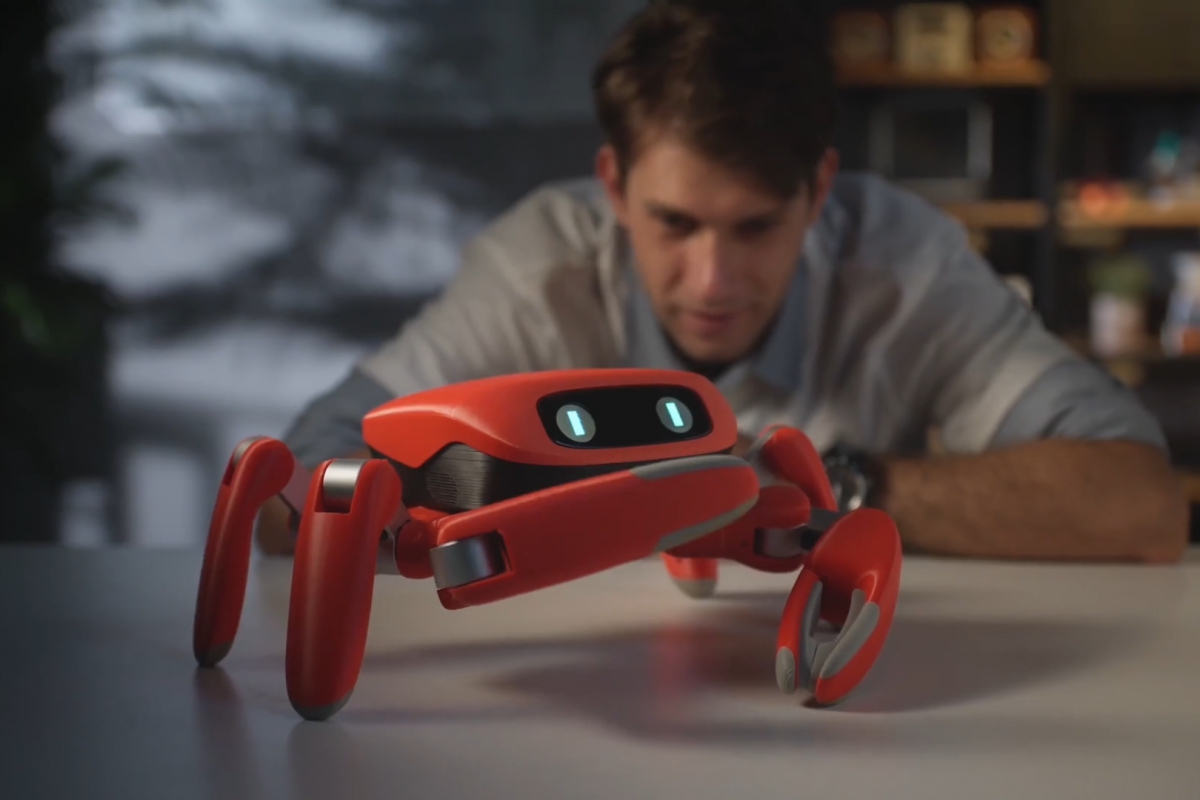
KingKong presents Jumper, a 6-legged robot with integrated NPU and open source
The KingKong company has announced the launch of Jumper, a 6-legged robot with a design inspired by a crab that combines 22 degrees of freedom with a completely open development environment. As detailed by the manufacturer, the platform has a repository on GitHub designed so that the community can design, train and transfer new motor behaviors to the hardware using artificial intelligence models.
Unlike other closed architecture commercial proposals, this project includes both three-dimensional physical simulation and deployment tools on the physical robot. In this way, developers can test different displacement routines without having to manually program the behavior of each joint from scratch.
To manage the control algorithms in the field, the equipment incorporates an eight-core processor together with an NPU with a power of 6 TOPS.
Technical specifications of the KingKong Jumper robot
| Component | Technical specification |
|---|---|
| Processor | 8 cores |
| Neural Unit (NPU) | 6 TOPS |
| RAM memory | 4GB |
| Internal storage | 64GB |
| Motor joints | 22 servomotors with tactile feedback |
| Motion sensors | 6-axis inertial measurement unit (IMU) |
Simulation in MuJoCo and reinforcement learning
If we focus on the mechanical section, this robot distributes its 22 tactile servomotors between the six limbs and the front attachment points. This configuration allows it to execute multi-directional movements, in addition to jumping, completing dance sequences and manipulating objects with its pincers.
Likewise, the 6-axis IMU unit It monitors the orientation and acceleration of the chassis in real time, which helps correct the balance of the structure in the event of unevenness or jostling.
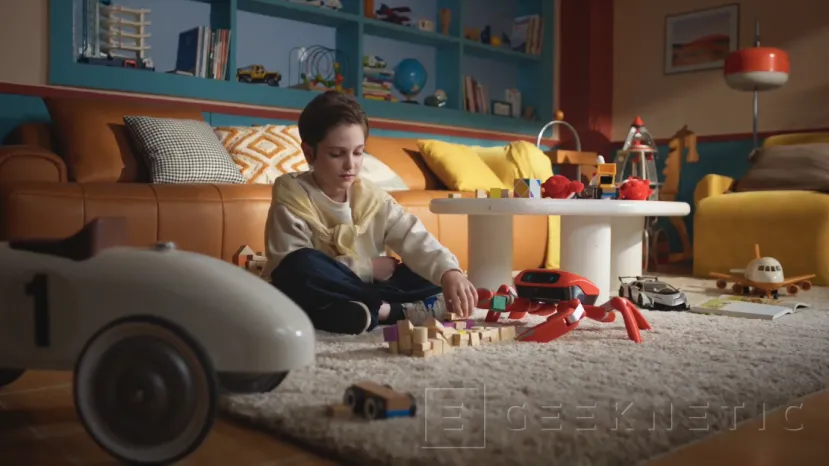
The control software is supported by MuJoCoa physics simulation engine commonly used in training autonomous systems. The set of tools released by the brand ranges from digital models of the device to reinforcement learning environments, a technique in which the computer system acquires new locomotion skills through virtual test and correction cycles.
KinKong has also integrated a wizard to experiment with design variants and movements through text instructions. To encourage the creation of motion libraries, KingKong has launched the Crab Robot Open Motion Challenge community challenge, an open call where users can share their software developments while the code base remains available to be consulted and downloaded.
