
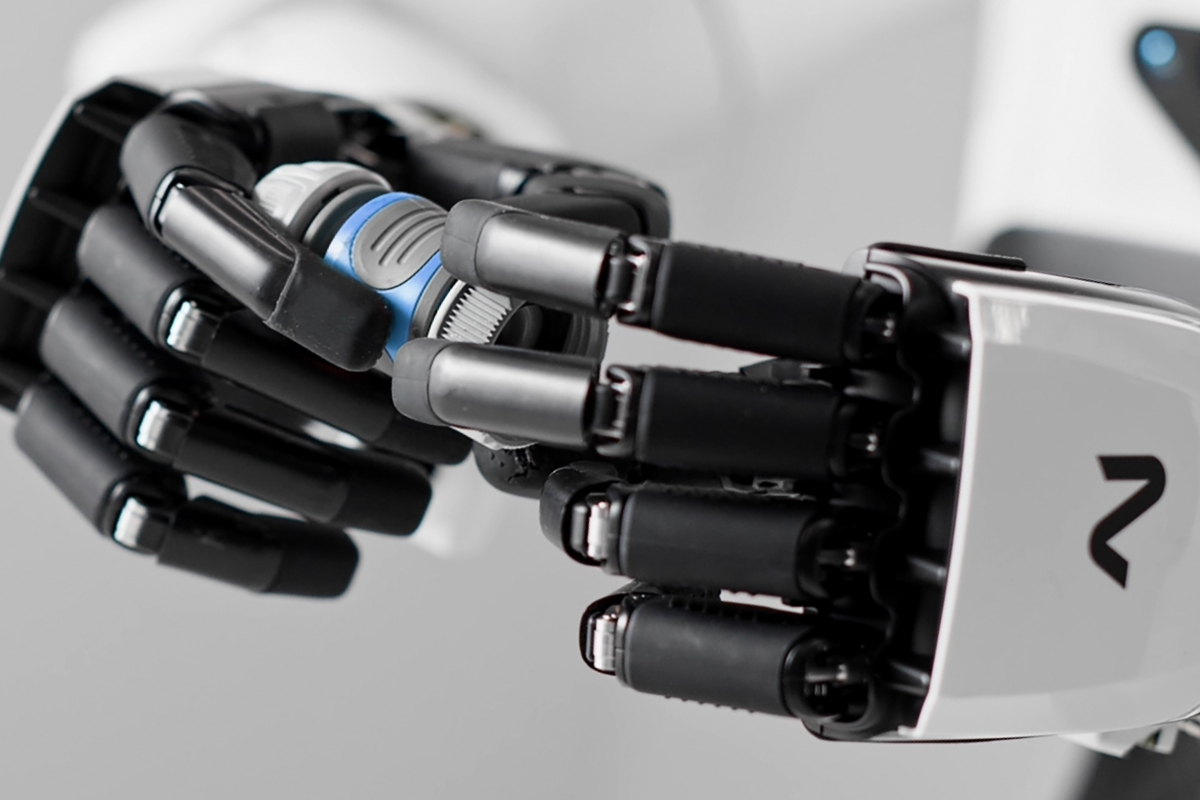
NEURA Robotics presents Neuron AI: a model that combines vision, touch and memory to control robots
NEURA Robotics has presented Neuron AIa model for controlling robots that brings together information from cameras, touch and force sensors, microphones, the state of the robot itself, and instructions expressed in language. The German company has designed it to retain information about previous actions and objects that leave the field of vision, something necessary when a task requires several consecutive movements.
NEURA has announced the model and its training method. He has not put a new humanoid on sale. The company claims that a single Neuron AI base can work on five types of robots in its catalog and adapt to your hands or grippers. It has also scheduled a demonstration for NVIDIA GTC Berlin with its humanoid 4NE1, which must manipulate clothes for eleven minutes without human intervention. That testing does not yet equate to deployment in homes or factories.
Vision, touch and sound in the same architecture
Neuron AI uses an architecture that NEURA calls Perception-Language-Action, or PLA. The model receives signals from the sensors, relates them to an order and generates actions for the robot. Three-dimensional vision provides the position and shape of objects. Touch and force sensors register contact, while sound can indicate whether an operation has been completed.
The company gives the example of a lock or a connector. A camera can track hand movement, but the click or resistance to touch provides another signal about the result. In a grasping task, finger pressure also allows a reaction when part of the object is hidden. They are cases that explain the design of the system; the announcement does not include a measured success rate of Neuron AI in each of them.
The model incorporates robot status data, such as its position and movementsto relate what you perceive with what you have already done. NEURA explains that its memory seeks to maintain the continuity of a task when an object temporarily disappears from view. If one item of clothing is covered by another, for example, the robot would have to keep a reference to where it was before looking for it again.
Data from robots, simulations and human demonstrations
NEURA trains Neuron AI with records from robots performing physical tasks on their NEURA Gyms facilities and in other real environments. These records gather signals of vision, touch, force, sound and movement during performance. The company expands the suite with simulated variations of tasks and spaces, and adds demonstrations by people equipped with sensor suits.
The three origins fulfill different functions. Physical tests collect the consequences of touching and moving objects; Simulation allows a scene to be varied without repeating each test in a real space, and human demonstrations provide examples of execution. NEURA has not provided amounts of data or an evaluation to establish how much each source contributes to the result.
The company claims that The model is used in five robot configurations in its catalog. The statement does not identify the exact five combinations nor does it ensure that a learned skill transfers without adjustment to any machine.
For these adaptations, NEURA proposes Neuraverse, your capacity management and deployment platform. Customers will be able to adjust the model to their own processes and distribute skills among their fleets, according to the company. They can also keep them private. The note does not specify prices, access conditions or a general availability schedule of Neuron AI for third-party developers.
NEURA also uses the Time-to-Skill expression to measure the time it takes for a robot to learn a new task and execute it reliably. It is a criterion that the company wants to follow, not an improvement figure announced in this presentation. No comparable times have been published for its five robotic platforms.
A laundry test announced for Berlin
The planned demonstration with 4NE1 will will celebrate during NVIDIA GTC Berlin, October 20-22. NEURA announces an eleven-minute sequence that includes sorting clothes, putting them in a washing machine, closing and opening the door, taking out the clothes and transferring them to a dryer. The company claims that the humanoid will complete the process without human intervention.
Neuron AI has been developed and trained by NEURA in Metzingen, Germany. The company cites data agreements with industrial firms such as Bosch and Schaeffler, but has not announced which facilities already use this version of the model in production. The capabilities shown in Berlin will allow us to observe a specific case; its overall performance and access conditions remain undetailed.
