
The economic analysis that deflates optimism with AI: 98% of S&P 500 companies do not perceive profitability
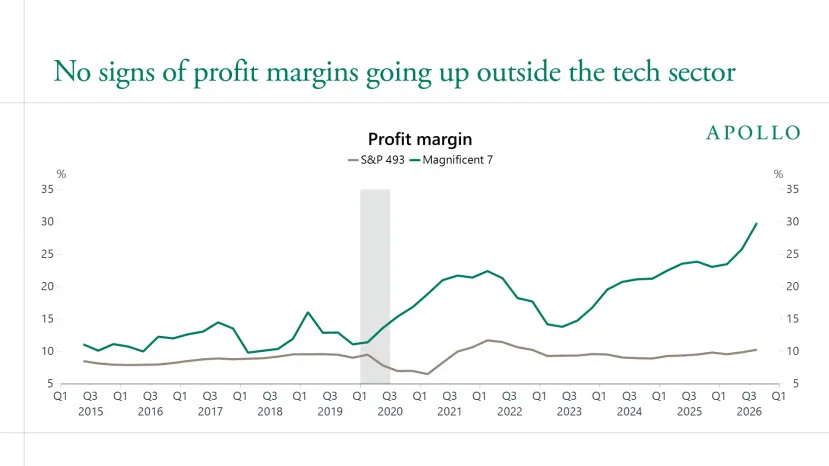
The adoption of AI in US companies shows a marked gap between the giants of the sector, that is, the big technology companies, and the rest of the corporations. According to a recent report published by the investment firm Apollo and prepared by its chief economist, Torsten Slok, this technology has not provided any tangible financial return to date to companies that are outside what would be the technological field.
The economic data suggests that, while income per employee and profit margins continue to rise within the group known as the seven magnificent (Apple, Microsoft, Amazon, Alphabet, Meta, NVIDIA and Tesla), both metrics remain completely stagnant at the S&P 493the segment that includes the rest of the S&P 500 listed companies.
Likewise, the analysis highlights that there are also no measurable records that AI is driving overall productivity growth in the US economy. What is curious is that those that report the greatest profitability benefits derived from AI are, precisely, the companies that have invested the most in this technology and that most need it to be widespread.
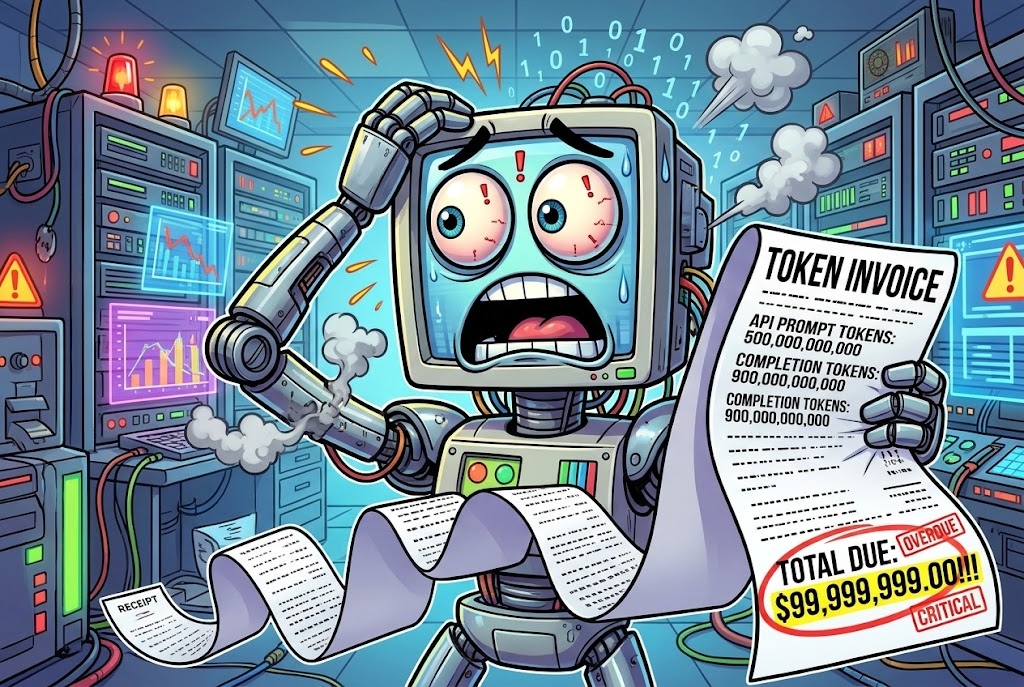
Processing spending goes from revenue driver to cost center
As it could not be otherwise, this lack of reflection in the final balance is causing traditional companies to begin to slow down their spending in this area. In practice, recurring token disbursement is no longer considered a growth-oriented investment for become operating costs that reduce business margins.
And, unlike emerging firms financed by venture capital, non-technological corporations do not demand the most recent frontier models nor are they willing to assume their cost. In other words, they see no incentive in adapting their workflows to use the latest shift model from Anthropic, OpenAI or Google. This trend fits with the request to stop the development of these frontier models by those responsible for AI. If their demand is low, then the waste of money dedicated to their training becomes even more unaffordable.
The Apollo study argues that while AI performs accurately on structured calculation tasks, business decisions require human judgment, context, and accountability. Factors such as trust, internal standards and ethical issues directly determine the reputational risk of a brand and its sales.
For this reason, the real macroeconomic impact of technology will not be defined in Big Tech, but in the future ability of the S&P 493 to convert computing that should become more affordable into a tangible increase in its margins.
