
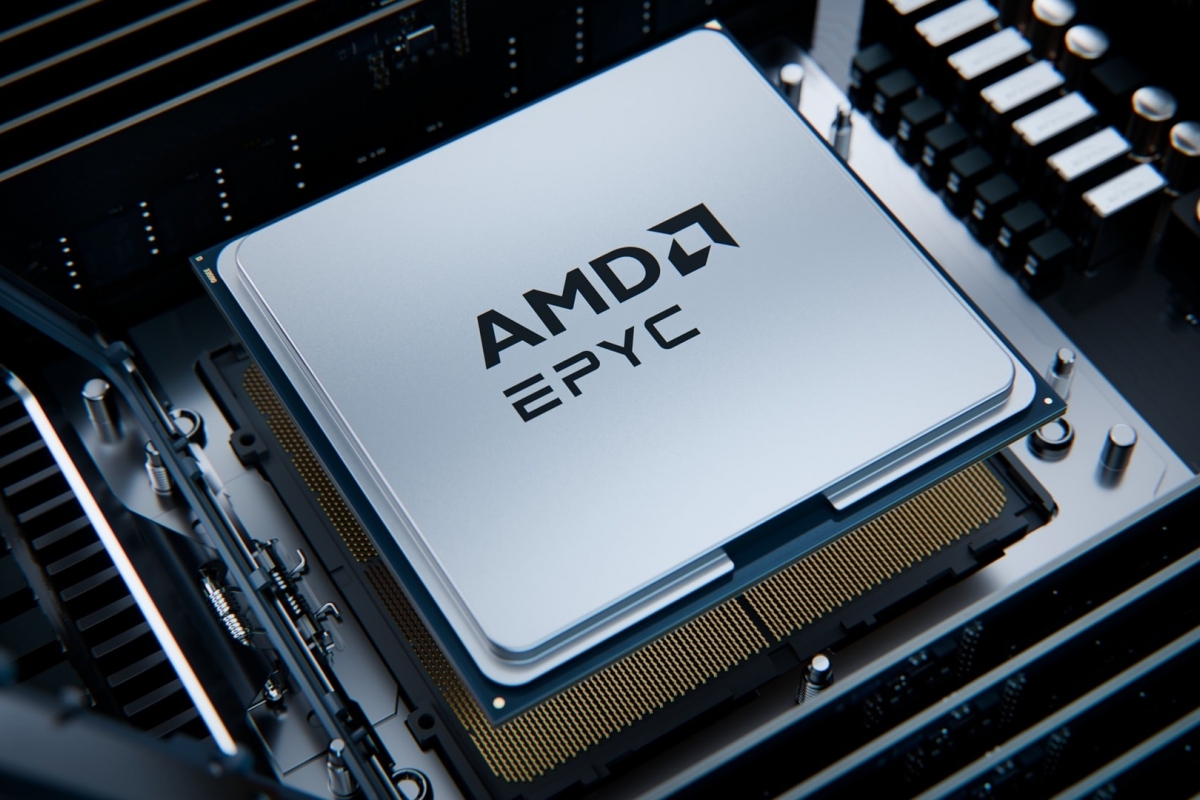
AMD launches sixth-generation EPYC with Zen 6 architecture for data centers
AMD ensures that a server with its new EPYC 9996 Delivers up to 3.7 times more performance than a system based on NVIDIA’s Vera CPU. With this comparison, AMD has announced the general availability of its sixth generation EPYC processors for servers, the SP7 family, which debuts the Zen 6 architecture. Compared to the Intel Xeon 6980P, the brand talks about up to 2.2 times more performance and twice the performance per dollar.
Systems with these processors are already shipping from major server manufacturers. Without going any further, Microsoft Azure and Oracle Cloud Infrastructure will soon offer cloud instances based on them. AMD comes to this launch after the fifth generation became the highest volume and fastest adoption in EPYC history.
“AI is significantly expanding the role of the CPU across all layers of the data center,” said Dan McNamara, senior vice president and general manager, Enterprise Computing and AI, AMD.
A processor for each role of AI agents
AMD’s strategy is to offer different models depending on the task. In fact, agentic AI itself is the prime example. An AI agent needs servers for general services, nodes that power the GPUs, and isolated environments in which to run code, known as sandboxes.
For GPU nodes, high-frequency models reach 5.3GHz and, according to AMD, they generate up to 1.8 times more text with language models than the previous generation. For isolated environments, high-density models would offer about 3.3 times more agents per watt than NVIDIA Vera and about 2.5 times more than the Xeon 6980P.
The approach also reaches the complete rack. The sixth-generation EPYCs are part of AMD Helion, an open design that the company introduced in October and is offered in three variants. Helion Liquid is the highest density and is designed to work together with Helios racks in large deployments.
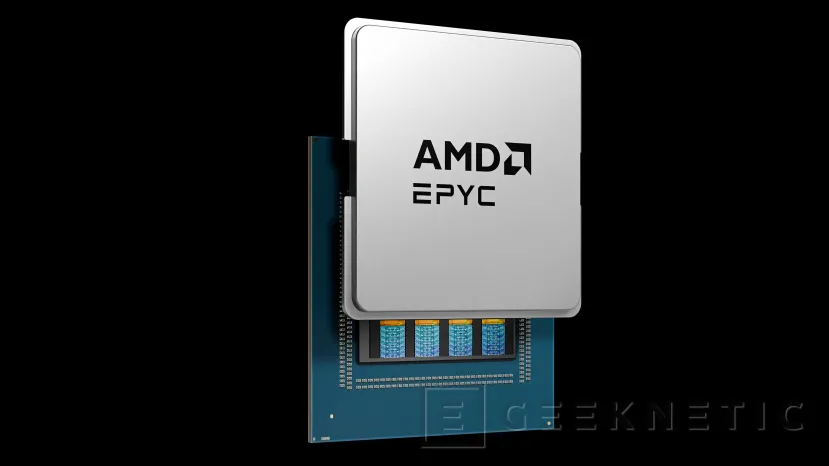
For its part, Helion Air is aimed at air-cooled data centers and Helion Air Inference combines CPU and GPU for local inference in the same cabinet. Some configurations reach 73,728 threads in a single rack.
Meta, Azure and Oracle, the first customers
As for the first customers, AMD explains that Meta is already validating platforms with these processors before deploying them on a large scale. Microsoft Azure, for its part, has previewed HDv2 instances, aimed at data processing for AI, agents, and high-performance computing. In addition, it prepares the HXv2 for electronic design and technical calculation, in addition to the ND MI455X v7 for large-scale inference. Finally, Oracle will use the new EPYC in its Compute E7 instances.
