
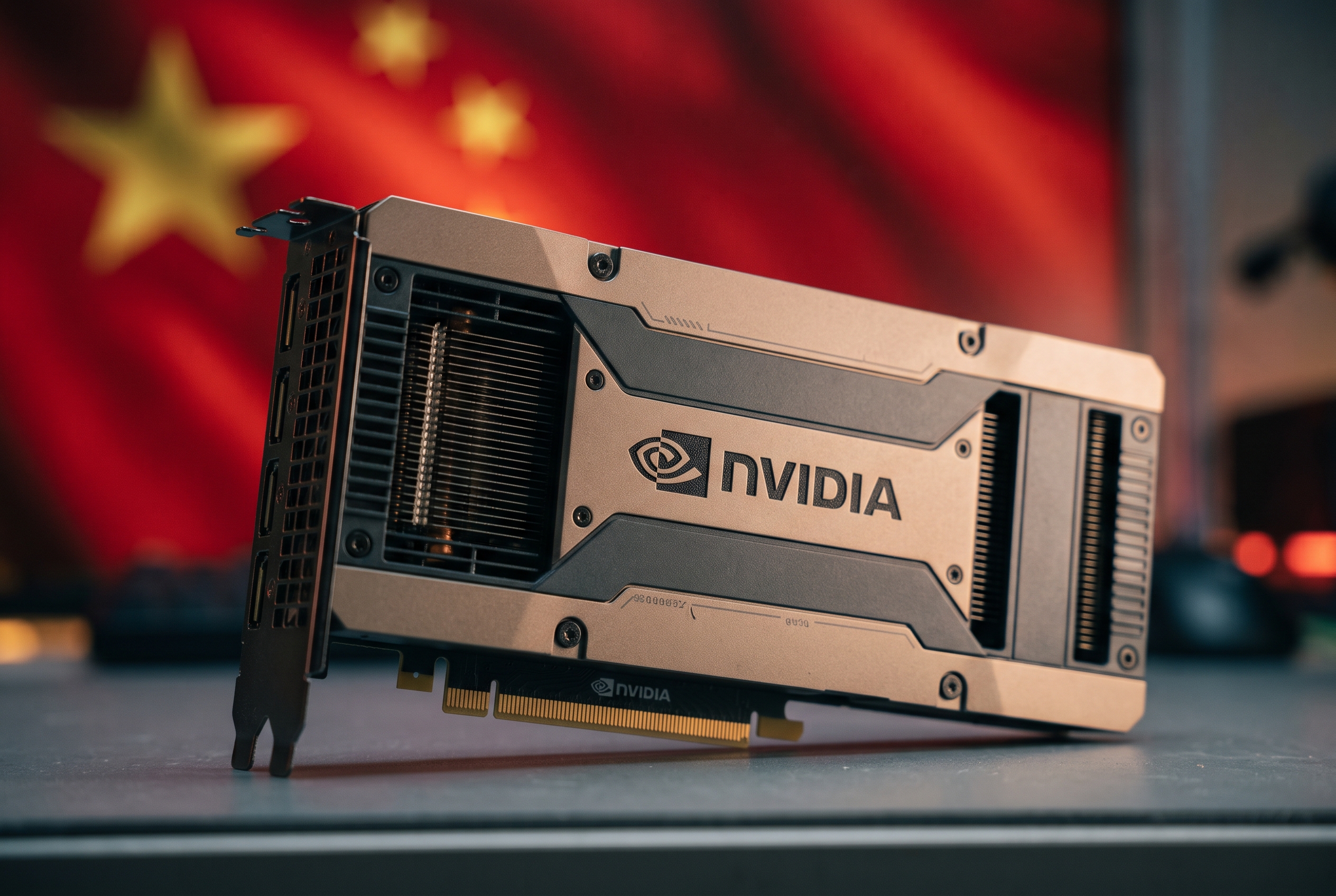
Reuters locates more than $3.2 billion in Chinese AI projects based on restricted NVIDIA chips
In northwest China’s Gansu province, a data center planned to install thousands of NVIDIA chips before the end of the year. It’s unclear if those processors reached their destination, but the project is one of many it has identified Reuters in an investigation into Chinese demand for restricted American hardware.
This is a much bigger issue than it seems. And in total, the agency has located projects worth more than 23 billion yuanabout 2.9 billion euros, designed around NVIDIA’s H100, H200 and H800.
To reach that figure, Reuters has reviewed more than 150 documents, including public tenders, investment plans, construction contracts and company communications. The estimate includes planned investments, signed contracts and completed installations, and covers buildings, electrical systems and other infrastructure, so it does not only reflect spending on chips.
Some of the projects are already operating or under construction, so they could face delays, supply outages or redesigns to use Chinese chips if controls are tightened.
A market share that went from 95% to zero, according to NVIDIA
The data conflicts with what the company itself has publicly stated. Jensen Huang claimed last year that NVIDIA’s share in China had gone from 95% to zero. As Reuters recalls, in its August report the company claimed to be practically excluded from the Chinese data center market.
In fact, it no longer includes that income in its forecasts due to regulatory uncertainty. However, an IDC report estimated in October that NVIDIA still represented the 34% of shipments of AI accelerators in China during the first half of 2026. They are different metrics and none explain how the banned hardware has reached Chinese users.
In light of all that, what Sunny Cheung, an analyst at the Jamestown Foundation, mentions is interesting. Cheung believes that “Washington needs to stop focusing solely on who buys the chips ostensibly and start examining who ultimately uses the computing power and for what purpose.”
Scrutiny grows after Jensen Huang resigns
The investigation comes a day after Huang resigned as CEO of NVIDIA, amid a scandal over his relationship with Alice Huang, a former executive linked to Megaspeed. This company is an NVIDIA cloud partner based in Singapore. The point is that US authorities suspect that Alice Huang has links to Beijing’s intelligence services.
Of course, Megaspeed denies having diverted NVIDIA chips to China illegally. For its part, NVIDIA’s board has opened an independent investigation, although it claims to have no reason to believe that company secrets or US national security have been compromised.
For now, there is no public finding that Huang violated export control laws. AND Reuters clarifies that the identified projects have no relationship with Megaspeed. Neither the Chinese Ministry of Commerce nor NVIDIA had responded to the agency at the time of publishing the information.
