
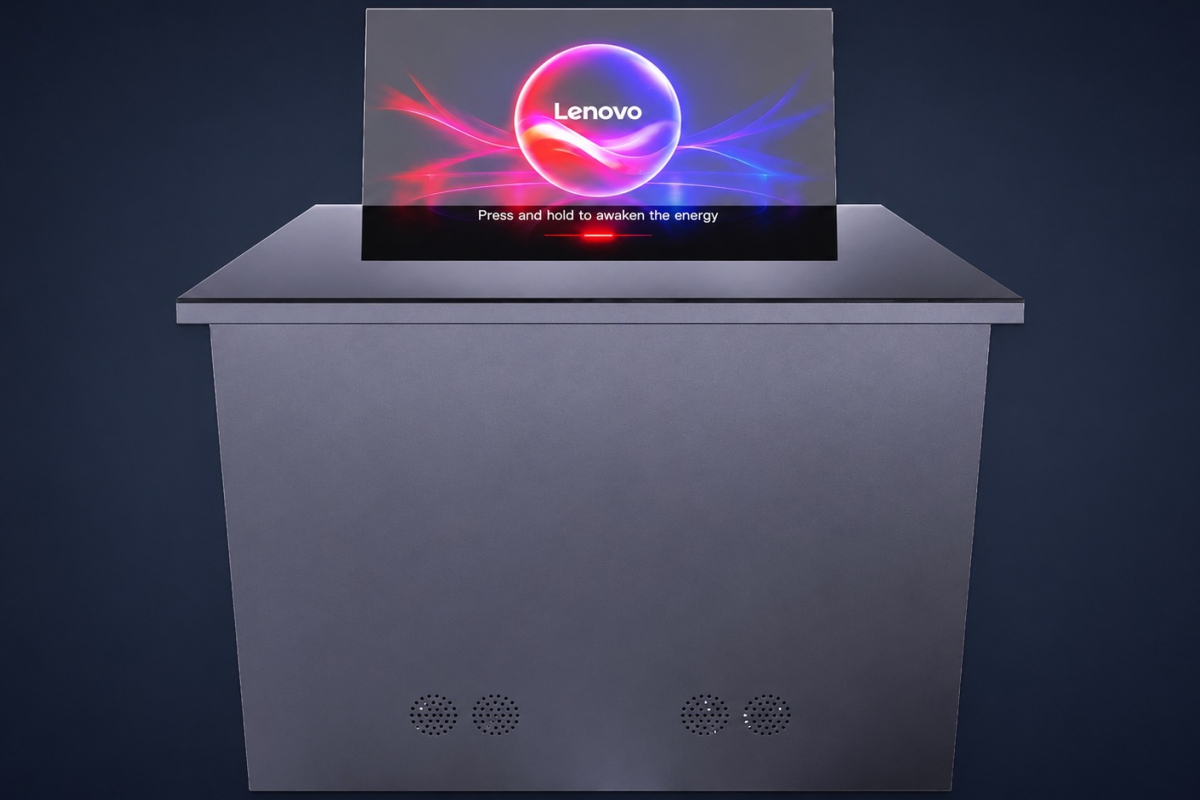
Lenovo Project Hoverview is leaked, a concept with a 2D screen that seems to float on its base
Some leaked published images show a Lenovo device known as Project Hoverview. The concept would produce a flat image that appears to float above a base, using an aerial visualization technique. The publication places it among the projects that the brand could show at CES 2027.
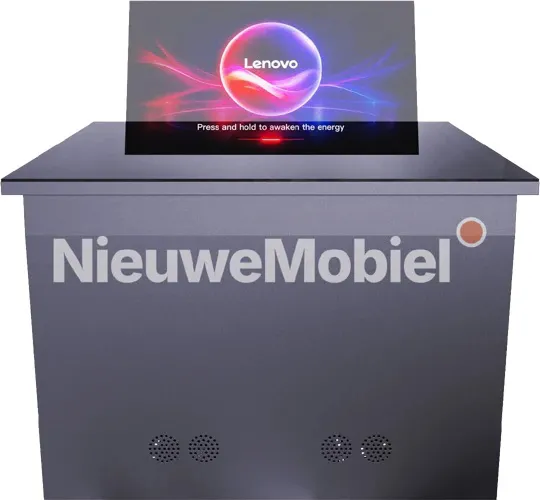
The images show a gray casing with a glass top surface and a raised interface above it. The screen shown shows a message inviting you to press and hold to activate a function. This element points to some form of interaction, although the photographs do not allow us to identify sensors, controls or the complete operation of the system.
A flat image located above the casing
The most striking aspect of the project is the apparent separation between the image and the body of the equipment. In photographs, the content appears in a vertical plane on the top surface. The base takes up much more space than the image itself and is shaped like a module to be placed on a table or integrated into a counter.
A diagonal of close to 12 inches is estimatedbut that figure comes from the interpretation of the images. The leak does not provide a file confirming resolution, brightness or refresh rate. It also does not identify the panel that would generate the image or the optical components located inside the case.
The visible representation is two-dimensional. To assess apparent depth, viewing angles, and legibility in ambient lighting, a moving demonstration would be required. The published images show the design and the effect intended to be achieved, but they leave these conditions of use unmeasured.
How can an image be formed in the air
There are commercial systems of aerial displays that optically move the image from a panel to a position outside the computer. Asukanet, for example, describes special plates of glass or resin that form a real image on the other side of their surface, at a distance equivalent to that of the original object.
This example allows us to understand that an apparently suspended image may remain flat. The user observes a plane of light formed by optical elements, although there is no physical screen exactly in the position where the content appears to be. The housing is still necessary to house the image source and light directing assembly.
Interaction and demo are still pending
The message visible in the interface raises another question: How would the device detect a user action? The images do not clarify whether the input is registered on the glass surface, through gestures or with a proximity sensor. An invitation to click can be part of the graphical demonstration without revealing the control mechanism.
Lenovo has confirmed that Tech World will be held again in Sphere, Las Vegas, within CES 2027. Its official announcement includes new devices and concepts related to its hybrid AI strategy, but leaves Project Hoverview unnamed. The possible presence of this equipment comes from the filtration.
For now, a public demonstration, final dimensions and any marketing data are missing. Lenovo has not yet announced a price or confirmed that the Hoverview will become a retail product.
