
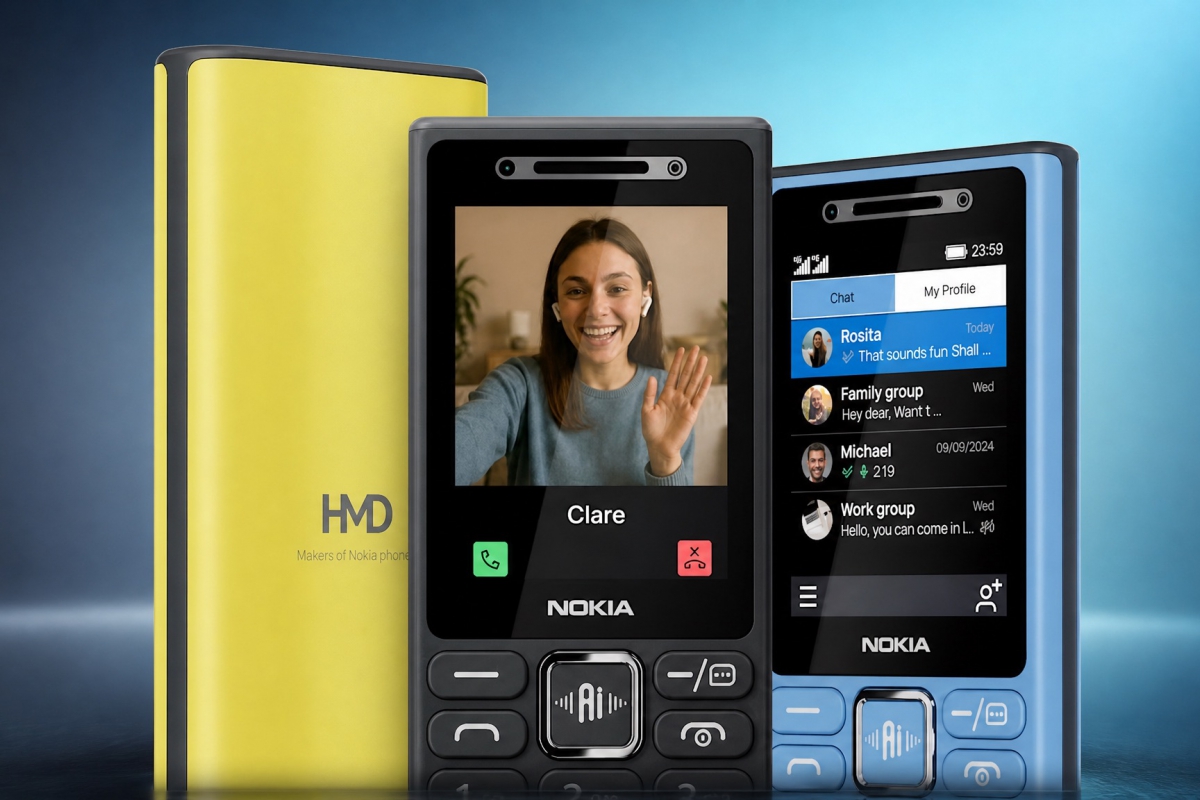
HMD launches four Nokia phones with physical keyboard and integrated artificial intelligence
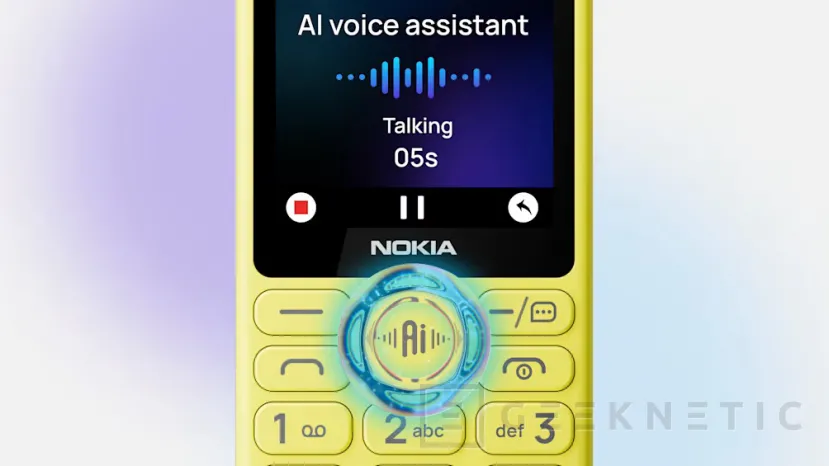
HMD has expanded its catalog of basic terminals with four new models of the Nokia familyall of them with an addition that until recently seemed reserved exclusively for smartphones: a voice assistant based on artificial intelligence. The new ones Nokia 200 4G, Nokia 210 4G, Nokia 215 4G (2nd edition) and Nokia 235 4G (2nd edition) They arrive with support for basic queries and voice control of the functions of the phone itself.
HMD’s commitment to providing AI functions to physical key terminals may seem, at first glance, an unusual move within the sector. However, this type of basic terminal still has a loyal audience, made up of both users looking for a secondary phone with great autonomy and those who prefer to reduce their screen time without completely giving up mobile connectivity.
Sikey AI, the assistant behind the new terminals
The artificial intelligence functions of these four new models are powered by Sikey AIan assistant that allows you to perform basic queries as well as control certain device functions using voice commands. According to the information published by HMD on the specifications pages of these terminals, the assistant will be free for the first 180 daysafter which it will require a paid subscription to continue using it.
One of the most curious details of this approach is that, in order to contract that subscription once the trial period has ended, the user will need to have an additional smartphonesince the payment process cannot be completed directly from the basic terminal itself. This is a striking limitation for a device whose main attraction is precisely the possibility of doing without, at least partially, a conventional smartphone.
Screen differences between the four models
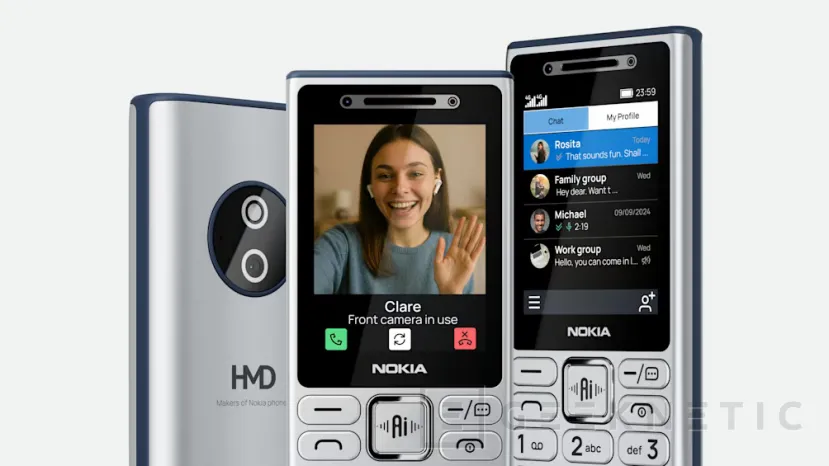
The four terminals have variations in their screen panel depending on the model. The Nokia 210 4G and the Nokia 215 4G (second edition) set up a 2.4-inch screen with QVGA resolutionwhile the Nokia 215 4G and the Nokia 235 4G, both in their second edition, make the leap to a 2.8 inch IPS panel maintaining the same resolution as previous models. HMD has not yet detailed the specific specifications of the Nokia 200 4G in this section, although it is part of the same family of releases.
As for the camera, both the Nokia 210 4G and the Nokia 235 4G incorporate a rear camera, the latter being the one that offers a slightly higher resolution, with a 2 megapixel sensor. The rest of the models in the range do without this component, in line with the minimalist approach that usually characterizes this type of terminals.
Common specifications for all four terminals
Beyond the screen and camera differences, the four new models share a practically identical specification base. They all execute the S30+ operating systemthe platform that HMD usually uses in its range of basic terminals, and all of them incorporate a 1,450 mAh batterya figure that in this type of devices usually translates into several days of autonomy thanks to the low general consumption of the hardware.
The connectivity of these Nokia is resolved with Bluetooth 5.0while in the rest of the sections the four terminals include a USB-C charging porta headphone jack 3.5mm (an increasingly rare detail even in basic phones) and integrated FM radioa function that continues to be highly valued in certain markets and by a specific user profile that prioritizes simplicity over advanced features.
Price and availability, not yet confirmed
For now, HMD has not revealed the price or availability date of any of the four new terminals. It has also not been confirmed whether the four models will arrive simultaneously in all markets or if, as has happened on other occasions with the brand’s range of basic terminals, availability will be staggered by region over the coming months.
Although the vast majority of media attention in the mobile sector focuses on high-end smartphones and their latest additions of generative artificial intelligence, the segment of basic phones with a physical keyboard continues to have a relevant gap in the market. HMD, heir to the Nokia brand in the field of mobile telephony, has maintained a constant commitment to this type of devices during the latest launchesperiodically renewing its models with progressive improvements in connectivity, autonomy and, now also, basic artificial intelligence functions.
The incorporation of a voice assistant with AI in a terminal of this type also raises an interesting question about where this product category is evolving. If these functions end up catching on among users of basic terminals, it would not be strange to see other manufacturers in the segment follow a similar path in future launches, incorporating light voice assistants as a complement to the traditional calling and messaging functions that continue to be the main attraction of this type of phones.
