
ADATA XPG renews its cooling range with INFINITY fans and MAESTRO heatsinks
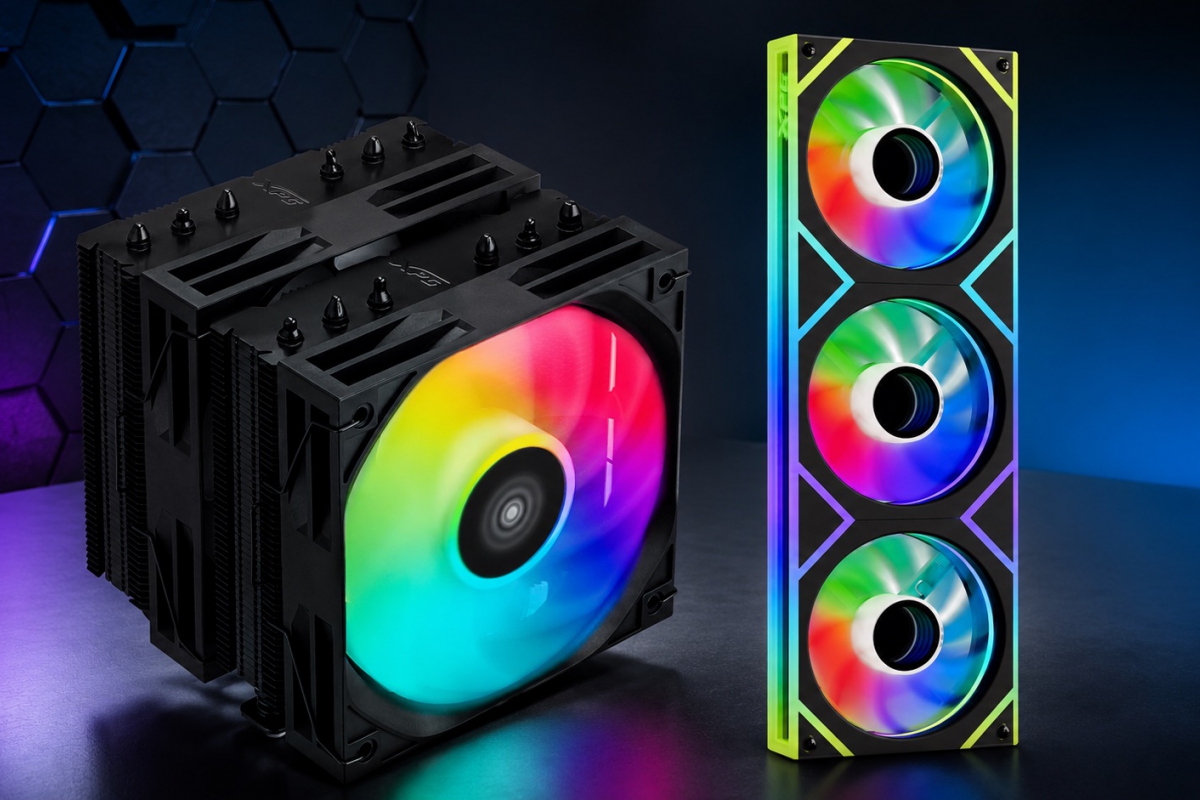
ADATA XPG has launched two new PC cooling lines designed for those who want to build a powerful computer without blowing up the budget in this section. On the one hand comes the INFINITY fan seriesin its variants F360, F120 and R120, and on the other hand the MAESTRO air cooler familywith the 42SA and 62DA models as protagonists.
The brand presents this launch in a market context in which the prices of memory components have risen significantly in recent months, something that, according to XPG, is forcing many users to better distribute their budget between the different components of their tower, including cooling and the aesthetics of the set.
INFINITY: fans with unibody design to eliminate wiring
The INFINITY range focuses on simplifying mounting and reducing visible wiring inside the box. The largest model, the INFINITY F360, incorporates a unibody frame design which, according to XPG, completely eliminates loose wiring between fans, making assembling multiple units a much simpler chaining process, similar to joining building pieces together.
Along with the F360 comes the INFINITY F120in standard flow configuration, and the INFINITY R120with reversed flow. Both models are compatible with daisy chain connection (daisy chain), which allows you to customize the air inlet and outlet arrangement according to the needs of each box, maintaining in all cases the infinity mirror visual effect that we had already seen in other products of the brand, such as RAM memory NOVAKEY RGB DDR5.
MAESTRO: two air coolers to cover different budgets
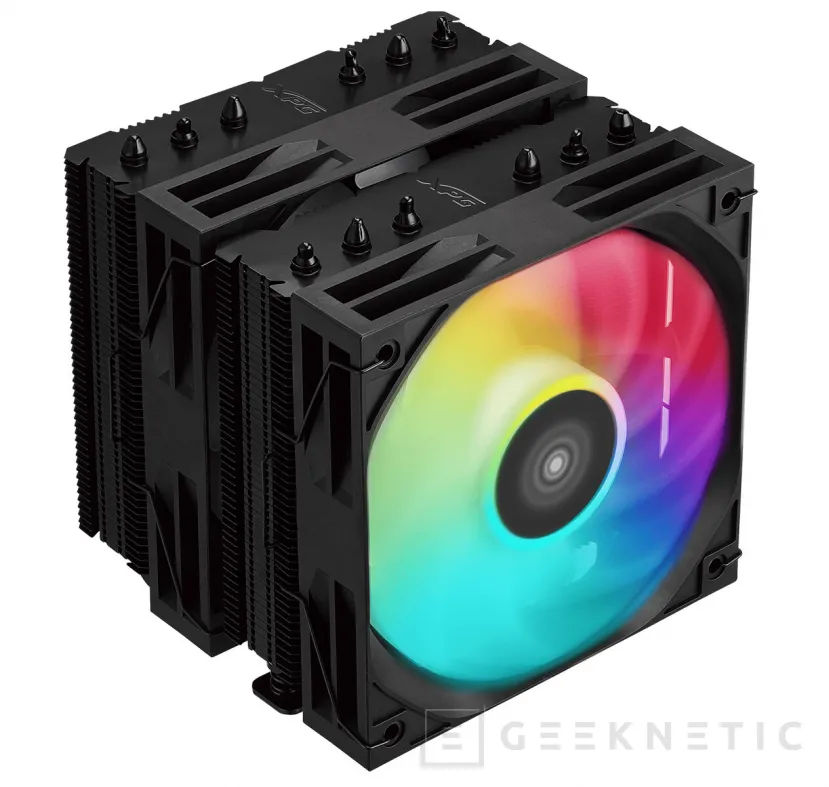
In the air coolers section, XPG expands its catalog after the launch of the MAESTRO PLUS last year with two new models aimed at a more affordable segment. The MAESTRO 42SA is a single tower heatsink equipped with four direct contact pure copper heatpipescapable of dissipating up to 200W TDP according to XPG data.
Above this is the MASTER 62DA, a double tower heatsink that mounts six high-performance heatpipes and that the brand places in up to 230W TDP. Both models include fans with hydrodynamic bearings (FDB) and lighting ARGBseeking a balance between the heat dissipation required by current mid- and high-end processors and silent operation during daily use.
Designed to accompany mid-high range processors
According to the data provided by XPG, both the MAESTRO 42SA and the MAESTRO 62DA are aimed at covering the thermal needs of processors located in the medium-high range of the current marketwithout the need to resort to more expensive liquid cooling solutions. The combination of copper heatpipes and fans with FDB bearings seeks to offer sufficient dissipation margin to maintain controlled temperatures even under sustained loads, such as those generated by long gaming sessions or rendering tasks.
Both the INFINITY fans and the MAESTRO heatsinks are presented as a direct response to a market where the cost of memory and storage has risen considerably in recent months. XPG proposes these releases as a way for users to continue building powerful and visually attractive equipment without having to allocate a disproportionate part of the budget to coolingone of the sections that has traditionally been seen as secondary to components such as the CPU or graphics.
For now, the company has not confirmed specific prices or exact availability date for none of the announced models, although the joint presentation of three fans and two air sinks indicates that XPG wants to have a broad air cooling catalog ready as soon as possible before the year progresses further. For those who are assembling new equipment or renewing the cooling system of an existing one, these models add additional alternatives within a segment where competition between manufacturers remains quite intense.
That XPG presents both single-tower and double-tower fans and heatsinks at the same time also suggests that the brand wants to cover different levels of power within its own catalog, from more moderate consumption processors to chips that are around 230 W TDP under load. It will be in the coming weeks, with the arrival of units in stores and the first independent analyses, when it will be possible to verify whether the real thermal performance of these components lives up to the figures that for the moment have only been provided by the manufacturer itself.
