
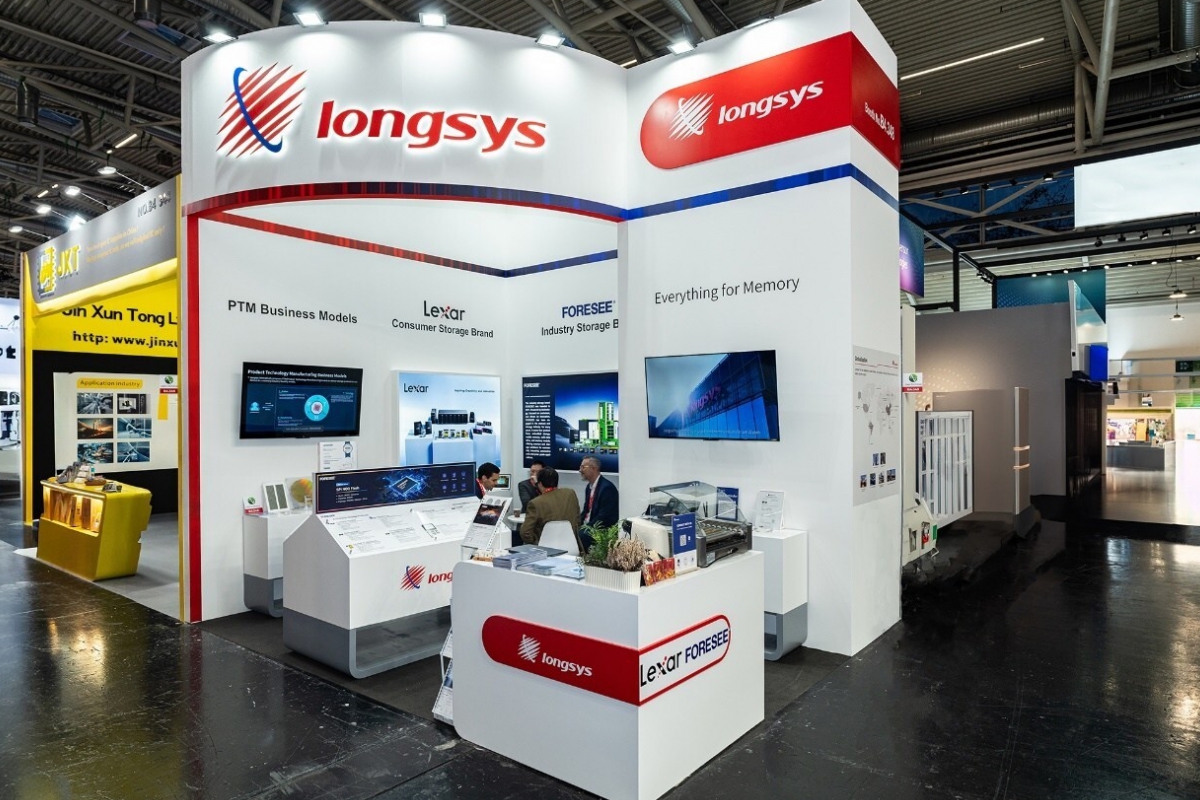
Longsys plans to multiply its profit by more than 60,000% in the midst of global tension over memory and storage
The terrible memory and component crisis in general is giving manufacturers good joy. For example, Shenzhen Longsys Electronics, the Chinese memory and storage firm that owns Lexarhas advanced spectacular profit forecasts for the first half of 2026. The company expects a net profit of between 9,200 and 11,000 million yuan, equivalent to about 1,190 and 1,418 million euros, compared to just 1.9 million euros recorded in the same period of the previous year.
This represents a year-on-year jump of between 61.818% and 73.636%also accompanied by a revenue forecast of between 22,000 and 25,000 million yuan, approximately 2,800 to 3,200 million euros. The figure also more than doubles the nearly 1,313 million dollars obtained a year ago. In other words, Longsys not only improves margins, but also grows strongly in business volume.
The company attributes this result to the increase in demand for memory and storage chips caused by the global deployment of AI infrastructure. That growth is competing for limited memory wafer capacity, something that continues to put pressure on pricing and availability. To respond to this situation, Longsys says it has signed long-term agreements and memorandums of understanding with global memory wafer suppliers with the aim of stabilizing supply.
Pressure on supply opens space for more Chinese players
Longsys has not detailed which manufacturers it has closed these agreements with, but the market context points to a relevant change. In recent months, several Chinese memory brands have been reducing their dependence on Micron, Samsung and SK hynix to lean more on silicon from CXMT and YMTC. That transition comes at a time when even American manufacturers are considering turning to those suppliers to alleviate shortages.
The dynamics of the market itself help to understand this movement. Samsung and SK hynix have already warned that supply restrictions linked to the rise of AI could last until 2027 or even longer. Therefore, firms like Longsys find a clear opportunity to gain weight as an intermediate supplier in memory and storage, just when customers and manufacturers are looking for alternative sources of supply.
Stock market rise and more financing for high-end products
Longsys’ forecasts have also had an immediate effect on the market. The company’s shares rose a 12.5% on the Shenzhen Stock Exchange over the weekend and they have already easily doubled their level from just three months ago. Added to this is the authorization received from Chinese regulators to raise up to 3.7 billion yuan, approximately 476 million euros, through a private placement of shares.
This capital will serve to reinforce research and development in high-end memory productsincluding AI-oriented storage solutions and memory and storage controllers. The move fits with a broader trend in the industry. While the chip shortage continues to affect PC manufacturers and the end consumer, Chinese companies such as CXMT, YMTC, Longsys or Biwin are trying to take advantage of the moment to expand their presence in a market that until recently was much more concentrated around large traditional suppliers.
