
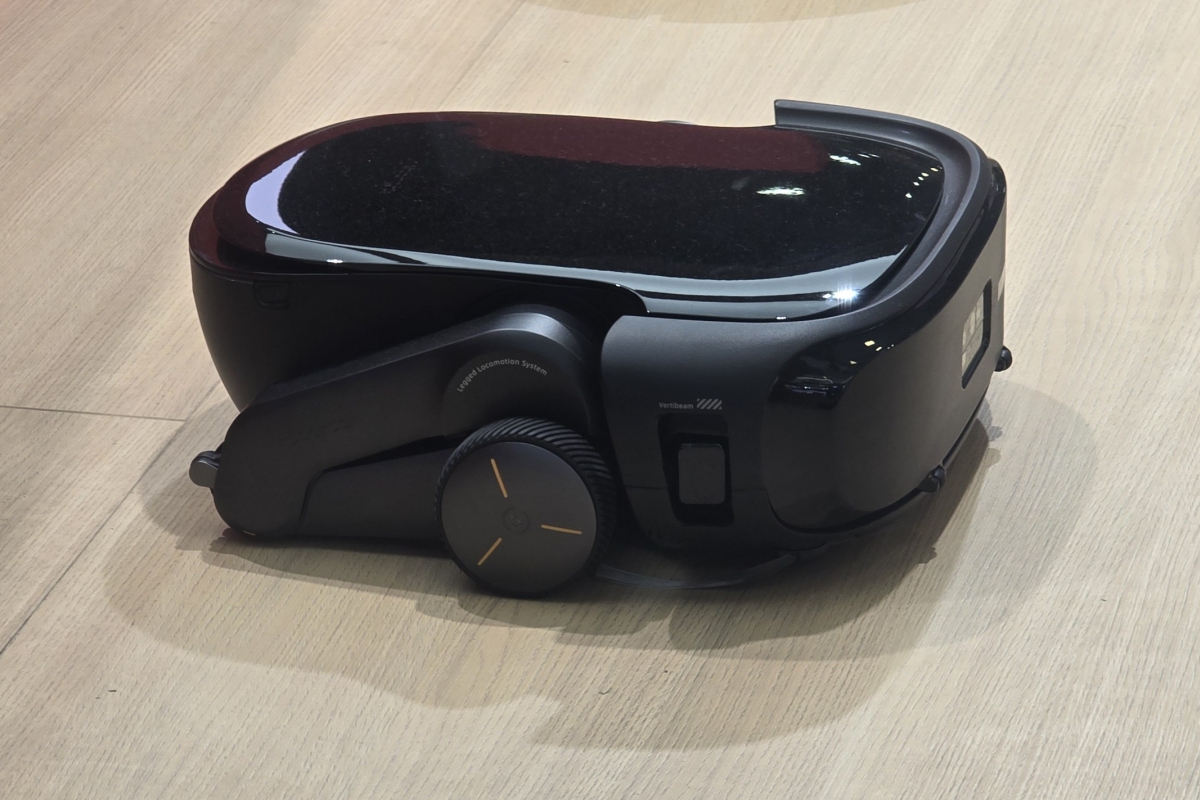
We have seen at IFA 2026 the Roborock Saros Rover that climbs stairs while cleaning them
Roborock has brought one of its most striking developments to IFA 2026: the Saros Rovera robot vacuum cleaner that uses two articulated legs ending in wheels. We have been able to see it in Berlin and see how its design departs from the conventional circular format to address one of the great limits of these devices, the stairs.
The Saros Rover originally presented in January during CES 2026so its presence at IFA does not constitute a world premiere. Roborock shows it again within its catalog of domestic innovation while continuing to develop it. The company still hasn’t provided a release date, price, or full spec sheet.
Two legs with wheels to climb and clean stairs
Each leg can be raised or lowered. independently. The robot thus adjusts the height and inclination of its body when it encounters a step or changes surface. The wheels remain in contact with the ground while the joints perform the movement necessary to move forward.
This architecture allows the Saros Rover to go up and down stairs while keeping the body level. Roborock claims that it can also make small jumps, quick turns, sudden stops and changes of direction. The objective is to maintain stability even if the two wheels are at different heights.
The proposal has another peculiarity: the robot can clean the steps while moving along them. Systems based on a transport platform are limited to moving a conventional vacuum cleaner from one floor to another. The Rover uses its own structure to access each step and work on its surface during the journey.
Roborock mentions compatibility with straight stairs, curved stairs, and carpeted steps, including those with a rounded front edge. The brand also includes slopes and complex transitions between areas located at different heights.
Artificial intelligence to coordinate your movements
Moving two legs independently requires knowledge of both the position of the robot and the geometry of the environment. The Saros Rover combines artificial intelligence algorithms, motion sensors and spatial information in three dimensions to decide how each joint should be placed.
The system analyzes changes in the ground and adapts the response of the legs to keep balance. This coordination is especially important when moving from one step to the next, since one wheel may find itself supported while the other searches for a new position. Roborock has not detailed the specific sensors or processing capacity used.
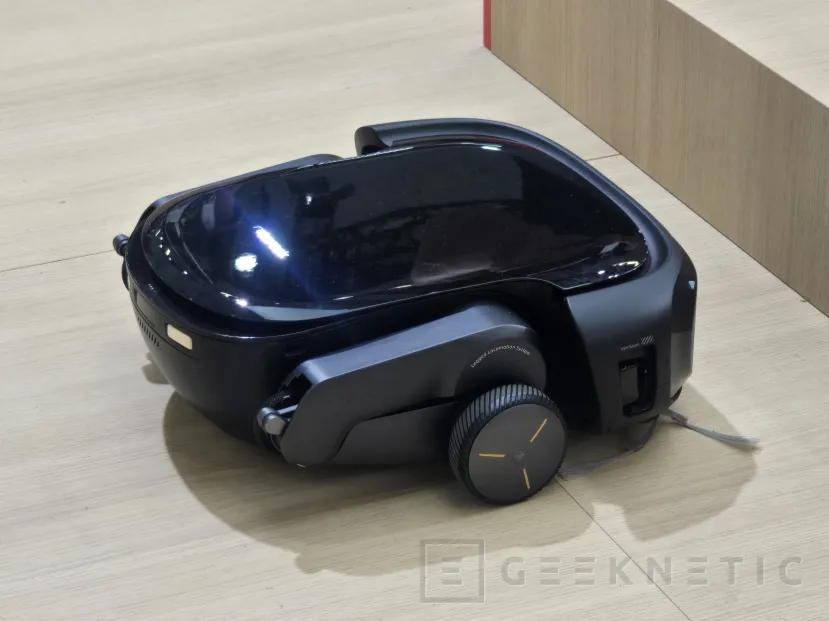
During our contact at IFA 2026 we were able to observe the articulated structure and size of the set.
The Berlin display is not accompanied by data on suction power, battery, scrubbing system or maintenance station. We also do not know the final dimensions, weight or autonomy available when using the legs to climb stairs.
It remains to be seen how it will resolve practical aspects such as edge safety, corner cleaning on each step, energy consumption of the articulated system or recovery from loss of support. These elements will be decisive in a product that must be moved without supervision near unevenness.
Roborock maintains the Saros Rover as a real product in development. Its new public appearance at IFA 2026 allows it to be seen outside of its initial presentation in Las Vegas, but the company has not yet confirmed when it will hit the market or if its current design will be the one that reaches commercial production.
