
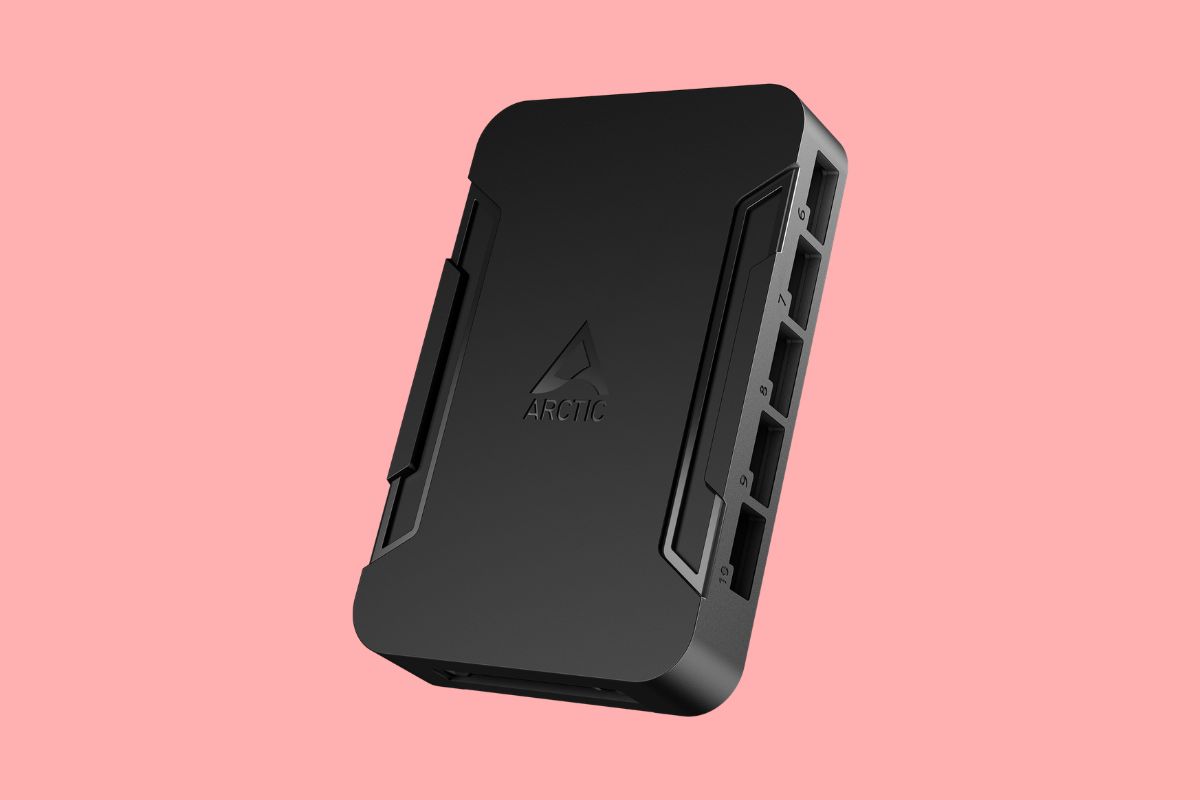
Arctic launches a controller capable of managing ten fans independently for 16.99 euros
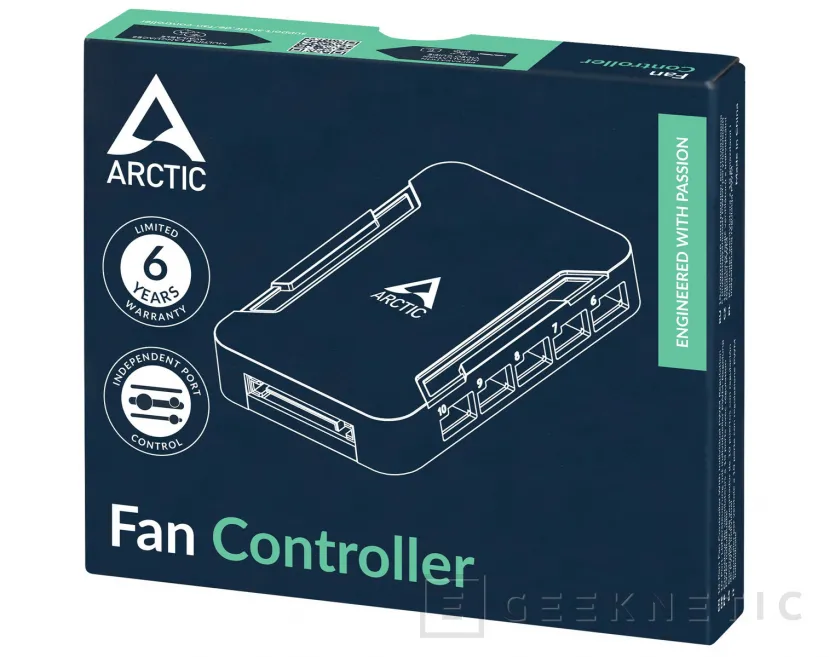
We had already seen it at this year’s Computex, but now Arctic has definitively launched its new Fan Controllera device dedicated to managing up to ten fans completely independently. It is now available in the brand’s official store, Amazon and eBay, with a launch price reduced to 10.19 euros compared to its recommended price of 16.99 euros.
The product responds to a common problem in PC builds. And many motherboards, especially those aimed at Mini-ITX or entry-level, do not include enough 4-pin connectors to power all the fans in a tower. The most common solution until now was hubswhich distribute power between several fans, but share a single PWM signal between all of them.
Arctic Fan Controller technical sheet
| Specification | Fact |
|---|---|
| Available ports | 10 x 4-pin PWM connector |
| Current per port | 2A |
| Maximum total current | 4.5A |
| Power input | SATA Power (≤4.5A) + internal USB 2.0 header |
| Software Compatibility | Windows; Linux via kernel 7.2 (coming soon) |
| Supported software | SignalRGB, Fan Control, Free Hardware Monitor, HWiNFO |
| Fixing system | Magnetic and adhesive |
| Dimensions (L x W x H) | 86 x 55 x 14mm |
| Weight | 59g |
| Ambient operating temperature | 0 – 40°C |
| Warranty | 6 years |
| Recommended price (RRP) | €16.99 |
| Launch price | €10.19 (25% discount) |
| Availability | Official Arctic Store, Amazon, eBay and select retailers |
The difference between a hub and a controller
That is precisely the distinction that Arctic wants to highlight. A conventional hub forces all connected fans to rotate at the same speed, since they receive the same control signal. A controller like this, on the other hand, uses an internal USB connection to send a independent signal to each portallowing the speed of each fan to be adjusted separately according to its function within the case.
This independent control has a practical consequence that interests more advanced users. You already know that the fan curves managed from the BIOS can only be based on the thermal readings of the CPU or motherboard, without distinguishing what each fan does. With a dedicated controller, the software can monitor the actual speed of each unit and assign it its own curve, useful for differentiating, for example, an air intake fan from an exhaust fan.
The device is compatible with third-party tools already established in the community, such as SignalRGB, Fan Control, Libre Hardware Monitor or HWiNFO, instead of depending exclusively on a manufacturer’s own application. This opening allows different fan curves to be linked to different system sensors, something that most motherboards do not offer natively from the BIOS.
In the power section, the controller receives power directly from a SATA connection, delivering up to 2 amps per port and 4.5 amps total. This is a relevant figure because many fans with ARGB lighting consume more current than a motherboard connector can reliably supply, especially when multiple units are daisy chained on the same header.
Arctic too confirms support for Linuxalthough it is not yet available. According to the brand, it will arrive with the 7.2 kernel update. This is unusual information for this type of peripheral, where compatibility is usually limited to Windows, and suggests that the manufacturer is also targeting users of workstations or configurations outside the Windows-centric ecosystem common in gaming hardware.
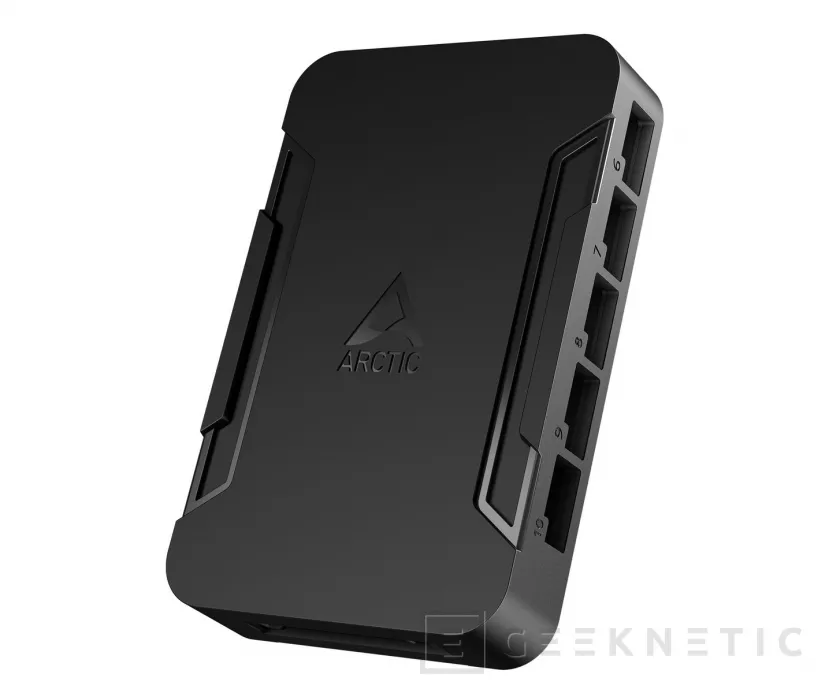
The assembly is solved by magnetic or adhesive fixation inside the chassis, without the need for screws, and the manufacturer itself highlights the reduction in wiring involved in centralizing all connections in a single point, avoiding power extenders and additional Y adapters.
