
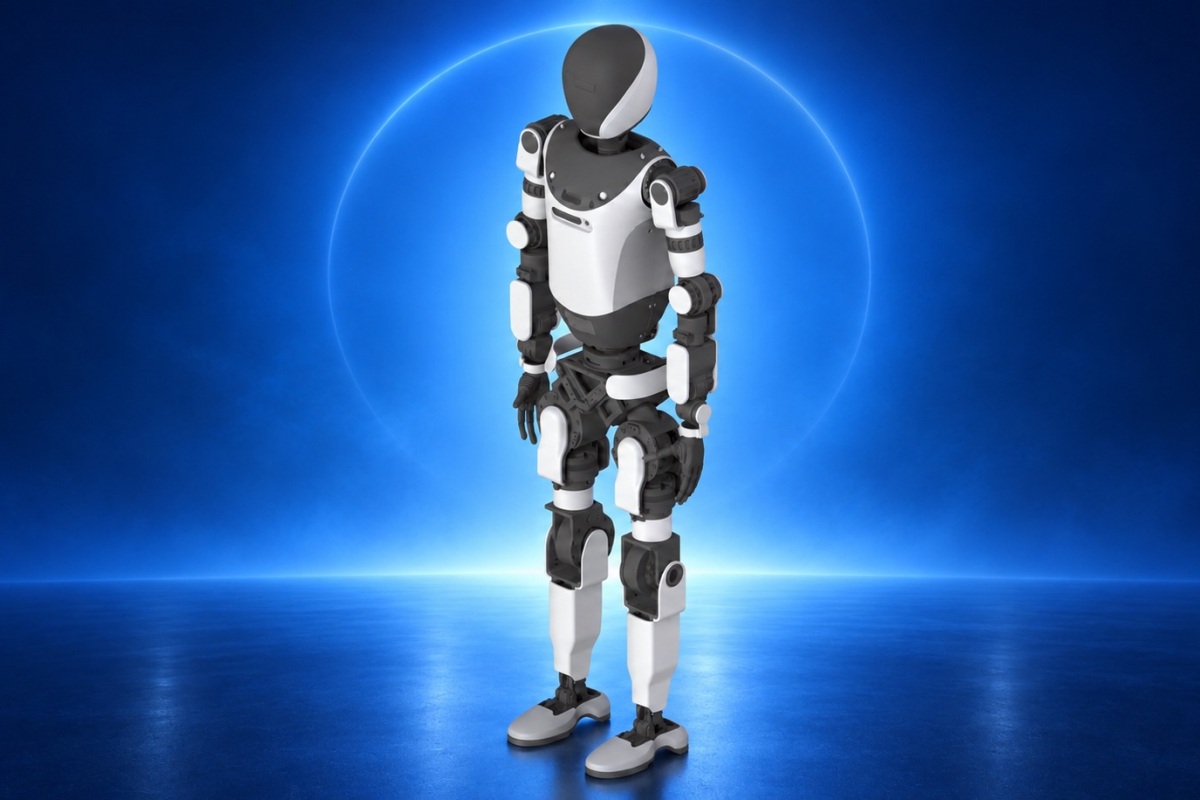
BYD registers the design of its humanoid robot with a patent
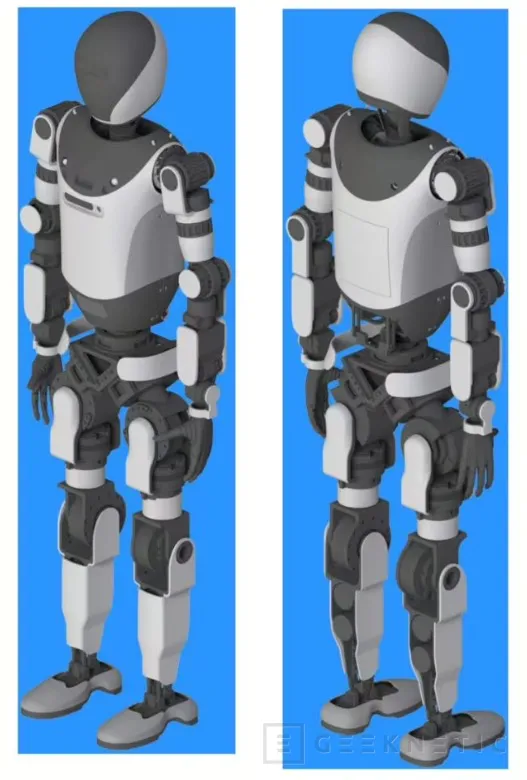
The China Intellectual Property Office published the design patent for a built-in intelligence robot whose owner is BYD. The document, identified with the number CN310247768S, contains views of a humanoid with two arms, two legs and hands with articulated fingers. The description presents it as a robot capable of walking, maintaining balance and interacting.
Registration allows you to better understand the aspect that BYD has associated with its robotics project, but it is not equivalent to the launch of a product. The patent protects the design and does not provide a technical sheetfunctional tests or information on its mass production. In addition, another specialized media reported that the robot had already had a physical appearance in August at a Di Space center in Zhengzhou.
A mechanical-looking humanoid
The images in the registry show an oval head with a dark front and a light covering in different areas of the torso and limbs. The shoulders, elbows, hips and knees have visible joints. Mechanical elements can also be seen in the waist and legs, with a structure that maintains proportions similar to those of a person.
Views are used to document the shape from different anglesnot to explain how the robot moves. The patent does not indicate how long it measures, how much it weighs, what autonomy it has or what sensors it incorporates. Nor does it detail the capacity of his hands or the precision of his movements. Although the description mentions walking, balancing, and interacting, those features are listed as design intent, not published test results.
The name Xiao Di has been associated with the robot in previous information about the project. However, the title of the Chinese registration describes it as an “incorporated intelligence robot.” Therefore, the consulted patent does not by itself confirm that Xiao Di will be its commercial name or that the model shown in the illustrations will arrive unchanged at BYD centers.
The patent is not its first public appearance
CnEVPost explains that BYD had announced its intention to introduce a robot in August, but notes that the company had not yet formally presented it. An appearance at an experience center is not necessarily a commercial launch or a press presentation event.
BYD had confirmed in July that it would show a robot in August at its Di Space centers. In statements reported by the South China Morning Post, the company indicated that the humanoid could interact with visitors. These spaces feature BYD technologies and vehicles, so the demonstration there fits with a public-facing use.
The BYD Executive Vice President Stella Lihad talked about the possibility of dealerships having two or three robots to greet customers, explain the models and give demonstrations. It was a future goal, not a confirmed deployment schedule. The patent also does not link the design with a specific date to take it to dealers.
What is known about its uses and what remains pending
The text associated with the design includes applications in services, education and industry. They are broad areas and do not specify what tasks the robot will perform in each one. The information about its appearance in Di Space points to a function of interaction with visitors, while the references to industrial uses come from the patent description and do not demonstrate that BYD already uses it in its factories.
Verifiable data on its components remains unpublishedthe system that controls your movements, your ability to work without supervision, or the conditions in which you can operate. The production cost is not known either.the price, the manufacturing schedule or the markets in which it could be offered.
What has been seen is an official project document and allows you to consult its industrial design. To know what the robot can do and where it will be deployed, we will have to wait for information from BYD about its functions, tests and production plans. The patent, by itself, does not answer those questions.
