
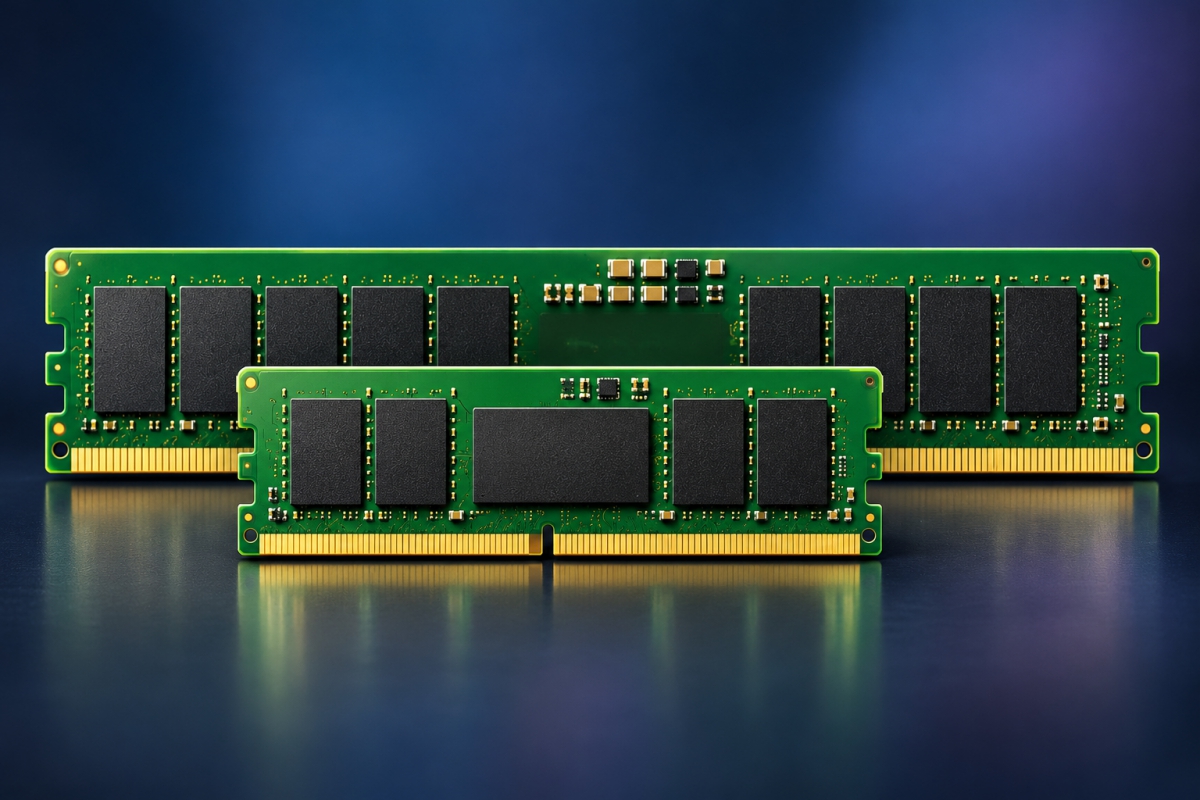
DDR6 memory will be much smaller than DDR5: JEDEC proposes modules of only 74 mm
When the DDR5 memory is through the roofbefore this memory crisis caused by AIthe JEDEC has published new data on the next DDR6 standard. The DDR6 memory preview can significantly reduce its size compared to current DDR5 DIMMs. The body in charge of setting DDR6 standards has published that the proposed length for these new modules is only 74 mm.
DDR6 modules could reduce their length to 74 mm compared to 133 mm for DDR5
The JEDEC has released a preview of DDR6 memory featureswhere you can also find the bandwidth specifications, capacities and even the dimensions of the physical memory modules. The size proposed by the organization is surprising, with only 74 mm long compared to just over 133 mm for standard DDR5 modules. The reduced size of the DDR6 modules seeks to introduce a more memory in a smaller space which can benefit servers and data center systems.
This will allow you to introduce more memory slots within the same motherboard spaceadding a greater amount of memory without having to increase the size of the motherboard. A useful option on servers that need a large memory capacity, such as any used for large AI loads. For the moment, the JEDEC has not indicated that all modules will have this size either.and the agency in charge has cited several formats such as RDIMM, UDIMM and CAMM.
DDR6 will allow the use of chips of up to 128 Gb and increase memory density
The DDR6 will arrive to offer greater memory density per moduleusing Chips up to 128 GB (Gigabits) which means up to 16 GB for each memory chip. Another technology that will stand out in DDR6 will be memory chip stackingwhich would allow increasing capacity without increasing chip size.
DDR6 will reach speeds of 14.4 GT/s and increase bandwidth
Regarding the technical specifications, the JEDEC has announced speeds from 12.8 GT/s, which can be extended to 14.4 GT/s. He bus will increase from 64 bits to 96 bits and the number of banks will also double. This is supposed to offer Up to 50% more bandwidth in the first DDR6 modules compared to DDR5. It is also expected to offer a better performance per wattadding a low power mode which can benefit systems that install a greater number of DDR6 modules.
For now It is not known when DDR6 will be readybut we do know that will initially begin rolling out to servers and data centersfor later reach consumer PCs. This, if the current crisis gets the RAM memory back to more normal values when buying this type of memory, essential for our PCs.
