
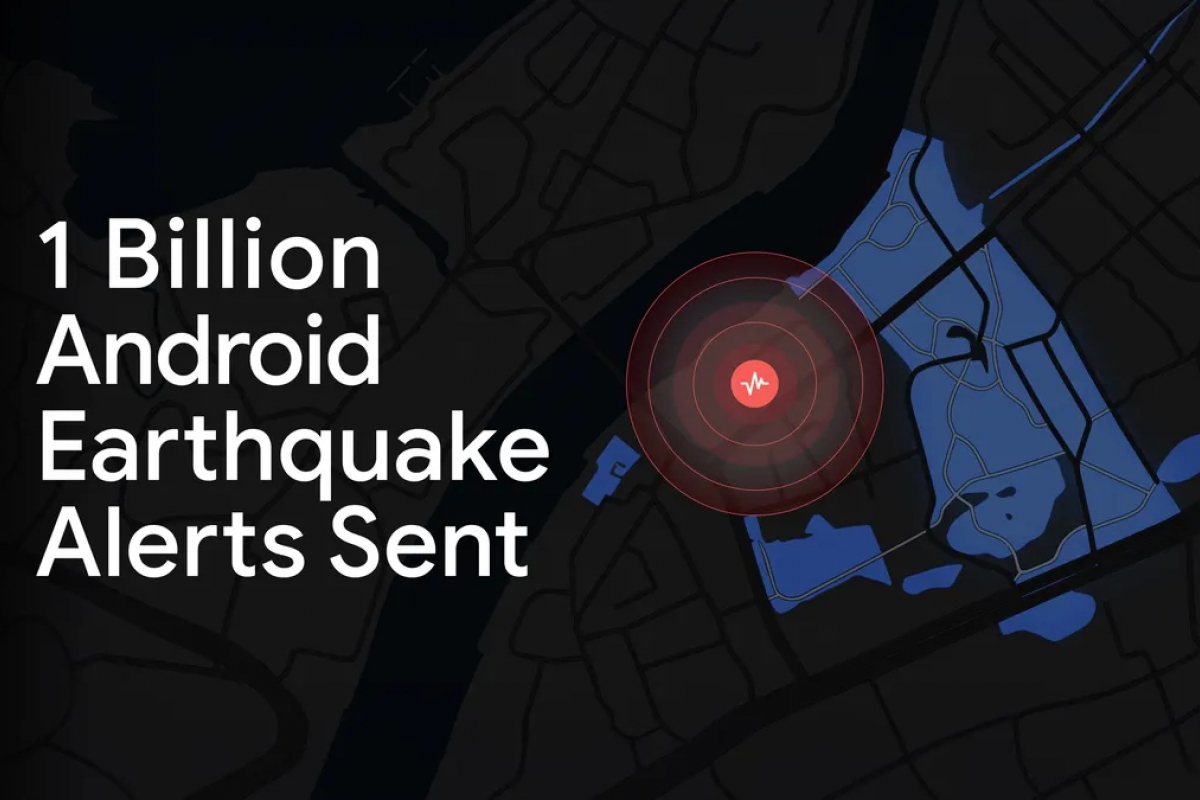
Google expands its earthquake alert system for Android to more than 200 regions
Beyond the techniques to retain our attention, generate dependency and force us to pay month after month, the big tech They also release features that are really worth it. In this sense, we have to talk about Google. The company has just announced that it is colossally expanding your earthquake alert system for Androidthe mobile-based detection network created by the company in 2021.
As confirmed by Boone Spooner, product manager for the seismic alert area, the coverage of the service goes from covering 98 countries to operating in more than 200 territories from all over the world, including areas such as Panama and Guatemala. In case you were wondering, the system was already available in Spain.
As for the figures, since its launch, Google says that the platform has already sent more than 1 billion ads to warn the population before the movement of the ground begins. The protocol classifies tremors into three categories based on the intensity recorded by the sensors built into the phones.
The initial level, called Be Aware either Be awarereports mild shaking in nearby areas. On the upper echelon is Take Action either Act nowa full-screen warning when moderate or severe oscillations occur, offering direct instructions to protect yourself. Between both extremes is the warning Be Ready either Get readyaimed at more noticeable shocks that require quick precautions.
Maps with detection radius and estimated magnitude calculation
Beyond expanding the feature’s availability, Google has made other changes. In fact, it is precisely in that intermediate alert that we already talked about where the greatest modifications will be applied in the coming months. The new notification design Be Ready will show a graphic map that delimits the geographic radius where the phones have recorded the tectonic movement, along with the estimated magnitude of the event.
The interface will also display an immediate action guide and a specific button to obtain updated details as the servers process new technical records. It must be remembered that this technology takes advantage of the accelerometers present in the terminals themselves to act as a dense network of distributed seismographs.
By detecting an acceleration compatible with a seismic wave simultaneously on multiple devices, the servers calculate the epicenter and issue the notification to users located in the path of the phenomenon. In this way, the system provides valuable seconds of warning to take shelter before perceiving the main shock.
For now, beyond the ES-Alert notices, which are mandatory, Apple has not designed any similar system. Without a doubt, it would be very interesting if this technology also reached the iPhone and, incidentally, worked in collaboration with the Android network to expand its effectiveness.
