
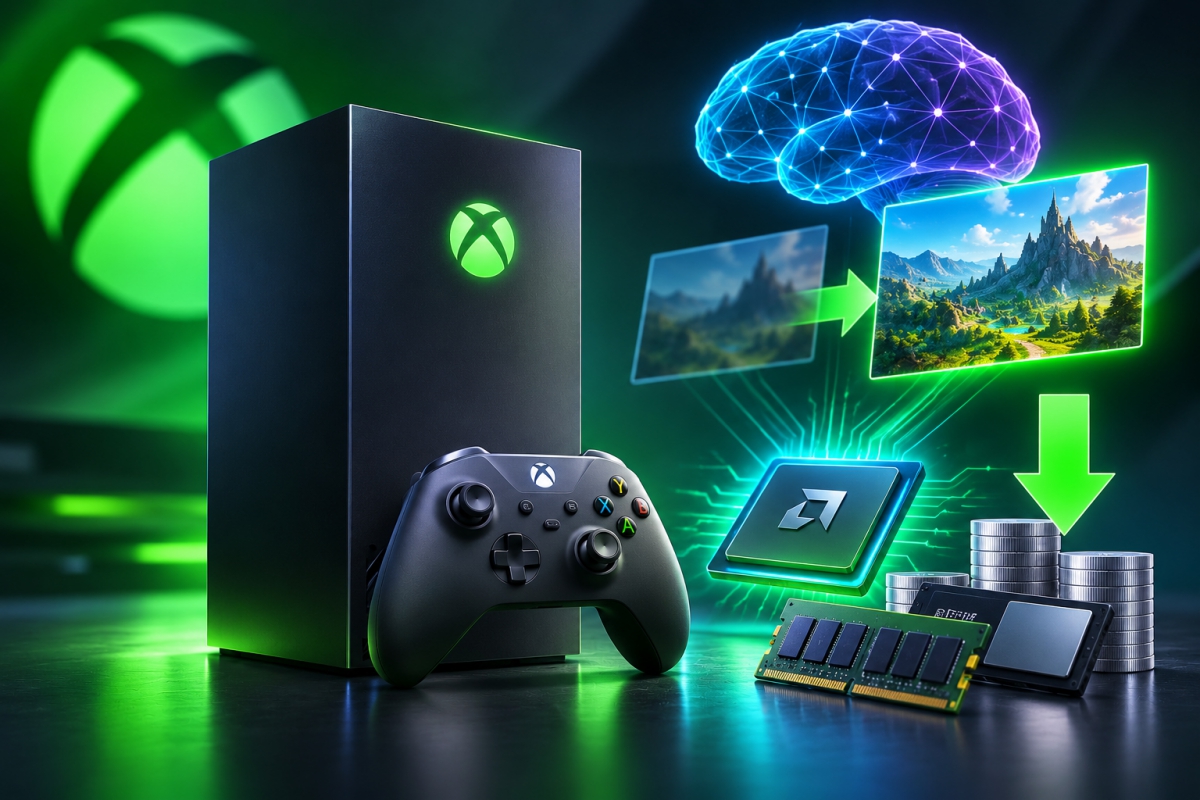
Microsoft wants to reduce the price of Xbox Project Helix thanks to neural rendering
He vice president of xbox has talked about the next Microsoft console, the Project Helix. He precisely insists that this next generation will be a console capable of running PC gamesand not the other way around. But in addition to these statements, which place a development based on a console and not on a gaming PC à la Project Helix, he has also cited the cost savings using neural rendering technology to improve game visuals.
Microsoft wants to reduce the cost of Xbox Project Helix through neural rendering
According to Jason Ronald, Xbox VP for Project Helixthe Neural rendering technology can help reduce console hardware costsand do the More affordable Project Helix. At least more than we expect given the current RAM memory crisiswhich has placed this component through the roof. According to his statements, the Neural rendering can help deliver better graphics without having to increase processing power or memory.
The high memory and storage costsalong with the shortage of these componentshas encouraged developers to prioritize making this console more affordable for users. Microsoft is investing in new rendering technologies to make producing better graphics more efficient. This includes the next generation of the AMD scaling technology, known as FSR Next.
Xbox Project Helix will use a custom AMD SoC with AI technologies to improve graphics
This is part of your AMD Custom SoCwhich will have the power to execute this technology together with the neural rendering with machine learning. But these data are basic for the moment, without including figures of what this next Project Helix processor will be capable of.
A technology that can help console does not exceed $1,000rumored cost figure for this upcoming Microsoft entertainment system. Thanks to the help of neural rendering that can help introduce lighter hardware to save costs which can be translated into a lower final price for the user.
Juan Antonio Soto
I am a Computer Engineer and my specialty is automation and robotics. My passion for hardware began at the age of 14 when I broke down my first computer: a 386 DX 40 with 4MB of RAM and 210MB of hard drive. I continue to give free rein to my passion in the technical articles I write for Geeknetic. I dedicate most of my free time to video games, contemporary and retro, on the more than 20 consoles I have, in addition to the PC.
