
Samsung presents the ISOCELL HPC, its first 200 MP sensor with DeepPix technology
Putting more megapixels in a sensor that occupies practically the same physical space has a cost that is often overlooked: the more pixels that fit on the same surface, the smaller each one of them has to be, and a smaller pixel captures less light. It is the problem that 200 megapixel sensors have had since they arrived on mobile phones, and the one that Samsung says it has attacked directly with its new ISOCELL HPC sensor.
The novelty is not so much in the resolution (Samsung already has several 200 MP sensors in its catalog) but in the internal structure of the pixel itself. He ISOCELL HPC launches an architecture called DeepPixthe first of its kind in the ISOCELL family, with which Samsung ensures that each pixel can capture up to 60% more light than in the previous generation. The result, according to the company, translates into brighter highlights, more detail in the shadows and less visible grain in HDR photos.
DeepPix, the redesign that widens each pixel
Each pixel on a sensor has a limit of light that it can store before the image begins to show noise, a value that is technically known as full well capacity. DeepPix is designed precisely to raise that limit. Samsung builds this technology on its existing Front Deep Trench Isolation (FDTI) process, and according to the company, the new pixel structure manages to expand both the photodiode and the shared floating diffusion within each pixel, which is precisely where that extra margin of capacity resides.
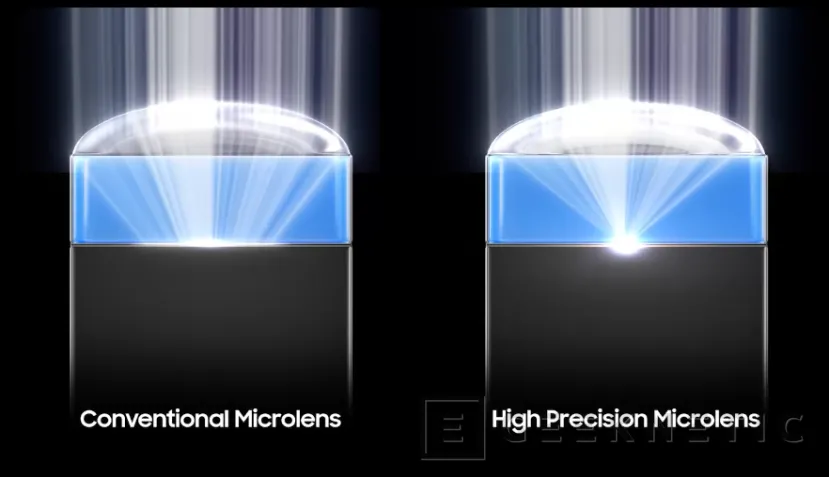
In practice, this means that the sensor can accumulate more electrical charge per pixel before saturatingwhich translates into a wider dynamic range and less visible noise, especially in scenes with high contrast between brightly lit areas and shadowed areas. Two additional technologies reinforce this improvement in light collection: a redesigned microlens layer with high refractive index materials, which concentrates more light on each photodiode, and a new anti-reflective coating that reduces the scattering of light before it reaches the sensor itself.
16-bit HDR without losing quality when zooming
Beyond the pixel structure, ISOCELL HPC introduces specific improvements in HDR processing. Samsung claims that the sensor supports single-frame HDR with 16-bit color depth, which the company estimates is up to four times more chromatic richness than conventional HDR.
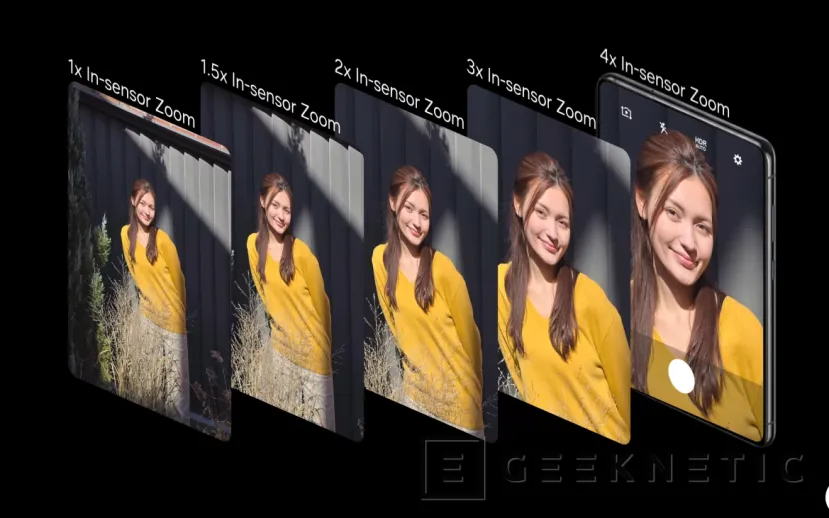
The most interesting detail for the real use of the sensor is that that single-frame HDR remains available at various zoom levels within the sensor itself: 1x, 1.5x, 2x, 3x and 4x. Most mobile sensors limit HDR to a handful of fixed zoom levels, so image quality drops noticeably as soon as you crop beyond that range. Samsung uses an intelligent rescaling system within the sensor itself to keep the quality and dynamic range reasonably constant throughout that zoom range, an approach similar to what Sony already applied last year on one of its own 200 MP sensors.
180fps video in 4K and faster bursts
The ISOCELL HPC also improves video figures compared to previous generations. The sensor records in 8K at 30 fps and in 4K up to 180 fps, although that maximum figure is only achieved with partial autofocus coverage; If phase detection autofocus is activated on all pixels, the cap drops to 120 fps in 4K. In Full HD, without autofocus activated, the figure rises to 360 fps.
In photo mode, the sensor can shoot at 7.5fps at its full 200MP resolution, rising to 30fps when working at 50MP via pixel blending, and up to 180fps if downgraded to 12.5MP. For autofocus, Samsung uses its Super QPD technology, based on partial phase detection, while for color it uses its Bayer RGB-type Tetra2pixel pattern.
Technical sheet and when we will see it on a mobile
The ISOCELL HPC It has a 1/1.3-inch optical format, with a native resolution of 16,384 x 12,288 pixels and an individual pixel size of 0.6 micrometersfigures very similar to those of other 200 MP sensors that Samsung already has on the market. The shutter is a progressive scan electronic type, and the sensor supports output in RAW10, RAW12, RAW14 and RAW16 formats, with an analog gain of up to 16x at full resolution and up to 160x working at 12.5 MP. Electrically, it works with 2.2 V for the analog part, 1.8 V for input/output and 0.85 V for the digital core, and supports an operating temperature range between -20 and 85 degrees Celsius.
Samsung has not yet confirmed which phone will release this sensorand has also not given any official release schedule. Historically, the new ISOCELL sensors have taken just a few months to reach a flagship terminal after their presentation, which has fueled speculation about whether the ISOCELL HPC could debut with the Galaxy S27 Ultra in early 2027.
