
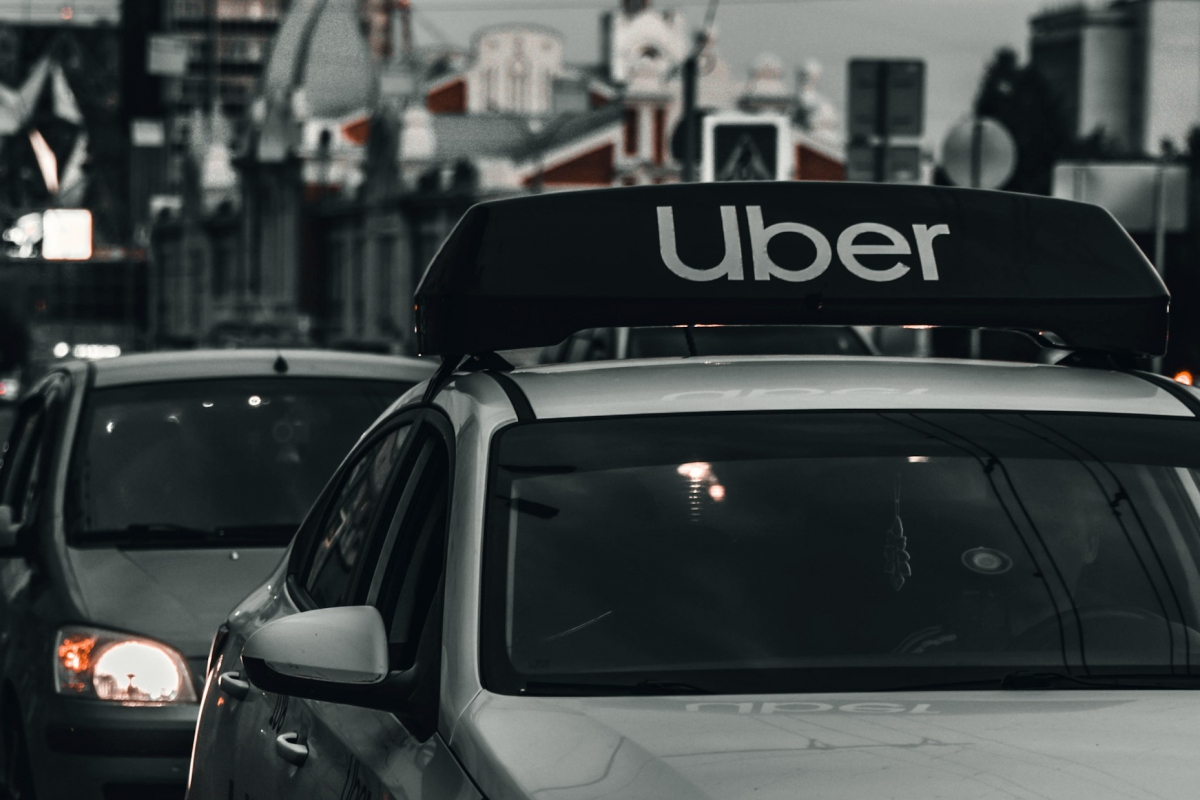
Self-driving cars arrive in Europe: Uber launches the first robotaxis service in London
The arrival of autonomous taxis is already a little closer to continental Europe. London has been the city chosen by Uber to launch its robotaxis service. As we have been able to know thanks to The Vergethe American company has gone ahead of Waymo by launching a fleet of autonomous cars that will be responsible for taking users who wish to do so from one point in the city to another. The truth is that we are used to seeing this type of deployment in the United States, China and other countries in the Middle East. However, this time we are talking about one of the most important European capitals.
Right now, users in the British capital can already request their trips in modalities such as UberX, Uber Confort or Uber Electric. All you have to do is configure it in the application. The vehicles chosen for this first phase are the Ford Mustang Mach-Eall of them electric. Over time, as sources confirm, other models will arrive. Specifically, Nissan Leaf models will be added that will be combined with the Mustangs. In any case, the entire fleet is going to be electric from the first moment.
Technology without maps or LiDAR, but with a driver to supervise
The mentioned cars will be equipped with Wayve’s AV2.0 technology. It is a platform that allows vehicles to move autonomously, but without the need for HD maps or LiDAR sensors. They also do not have pre-programmed rules. Everything is delegated to AI models with comprehensive learning that analyze the environment in real time. In this way, they draw conclusions in a similar way to how a human would do in situations such as intersections that are not on the map, complicated weather conditions or the unexpected behavior of pedestrians.
Saving resources is important, in this case, because one of the most expensive components is dispensed with, namely the LiDAR sensors. With this system, the car is capable of acting in any situation only with peripheral cameras and radars. An interesting detail is that this software is hardware agnostic. What does that mean in practice? Well, its integration into the processors of different automobile manufacturers. The British company recently raised $1.2 billion from investors such as Nvidia, Stellantis, Mercedes-Benz and Uber itself, as detailed at the time. TechCrunch.
Despite all this deployment of technology, for the moment the robotaxis that circulate in London will have a safety driver. This will be accredited by the competent authority and will be in charge of supervising the entire journey, although without intervening or touching the steering wheel at first.
The robotaxi party begins
The arrival of Uber in London is significant because it represents the approach of autonomous mobility to Europe. Predictably, this will cause the arrival of other competing brands and, most likely, an acceleration of the adoption of this model, not only in London, but in other European capitals. Although for the moment the capital of the United Kingdom will be the test bed, it is logical to think that very soon we will see similar announcements in Paris, Madrid or Berlin. Nothing is confirmed, but it is within what is expected.
And the money that Uber is investing also leads us to think that. The company will put $10 billion on the table to develop automated fleets around the world with companies like Zoox or Motional. In any case, for now, the company talks about a hybrid model where both human drivers and robotaxis coexist. We will closely follow this evolution that is already knocking on the doors of our market.
