
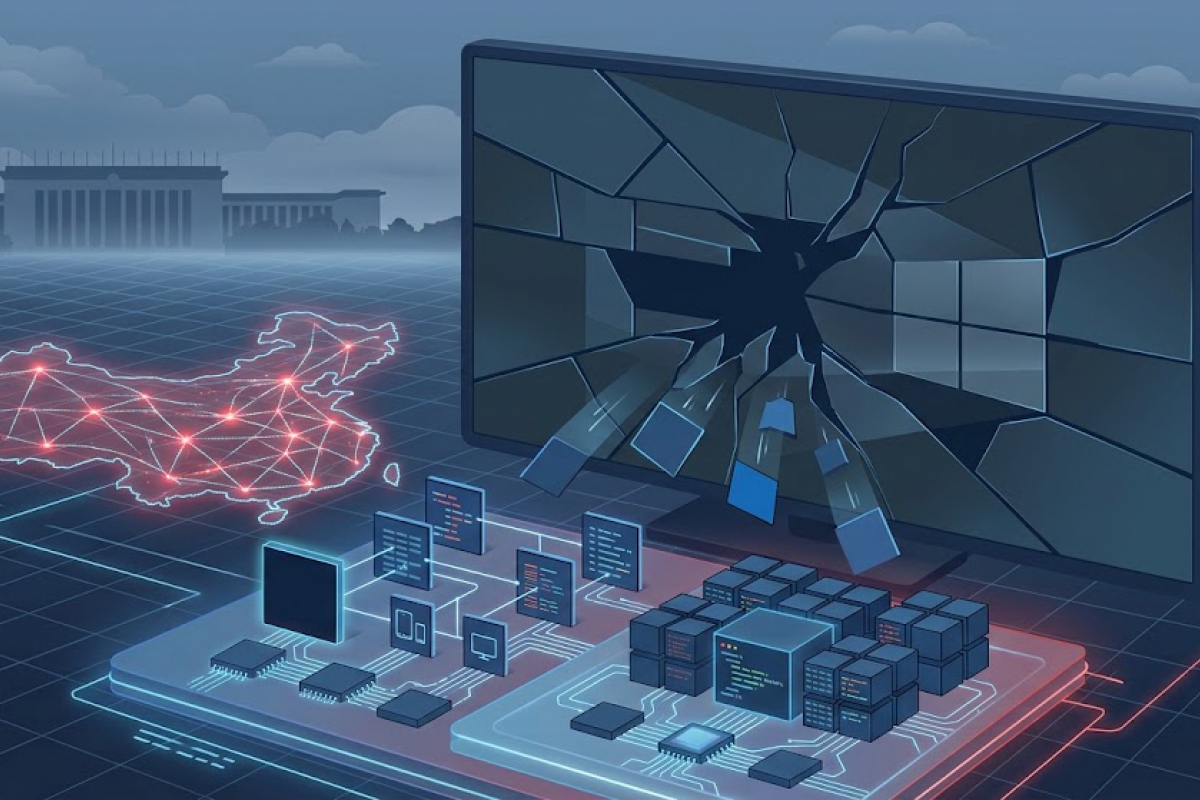
The Chinese government accelerates the end of Windows 10 on state computers and opts for local software solutions
China continues its attempt to maintain a own supply chainwithout depending on technology imported from other regions. This also includes the operating systems in government environments and organizations related to this. Until now, China had Windows 10 on these computers and its use was scheduled until February 2027. But it seems that the Chinese government has ordered to remove these facilitiesdespite having a version adapted for them.
China will remove Windows 10 adapted for use in China in government environments
Windows 10 installed on Chinese government computers and other state institutionswas a version of Windows 10 fully adapted for use in China. The company C&M Information Technologiesa joint venture between Microsoft and China Electronics Technology Group, which has specifically modified the version of Windows 10 Enterprise to meet the requirements demanded by the Chinese governmentwith updates within China and with the use of country crypto standards.
HarmonyOS and Kylin Linux as the main replacement alternatives for this Windows 10
But it seems that the government has prematurely ordered remove this operating system from government computers. China has several alternatives in its sights, such as HUAWEI HarmonyOS which is present in many of your devices, Kylin, a Linux-based operating system from Kylin Softwareeither Tongxin Software Technology Co. with his Tongxin UOS also based on Linux. The difference is that HarmonyOS has a custom kernelwhile Kylin and Tongxin UOS makes use of the linux kernel.
At the moment it is not known what choice the Chinese government will have made to replace this customized Windows 10, although it is expected to use a combination of these two systemsdepending on the use for which the computer that runs it is intended.
Juan Antonio Soto
I am a Computer Engineer and my specialty is automation and robotics. My passion for hardware began at the age of 14 when I broke down my first computer: a 386 DX 40 with 4MB of RAM and 210MB of hard drive. I continue to give free rein to my passion in the technical articles I write for Geeknetic. I dedicate most of my free time to video games, contemporary and retro, on the more than 20 consoles I have, in addition to the PC.
