
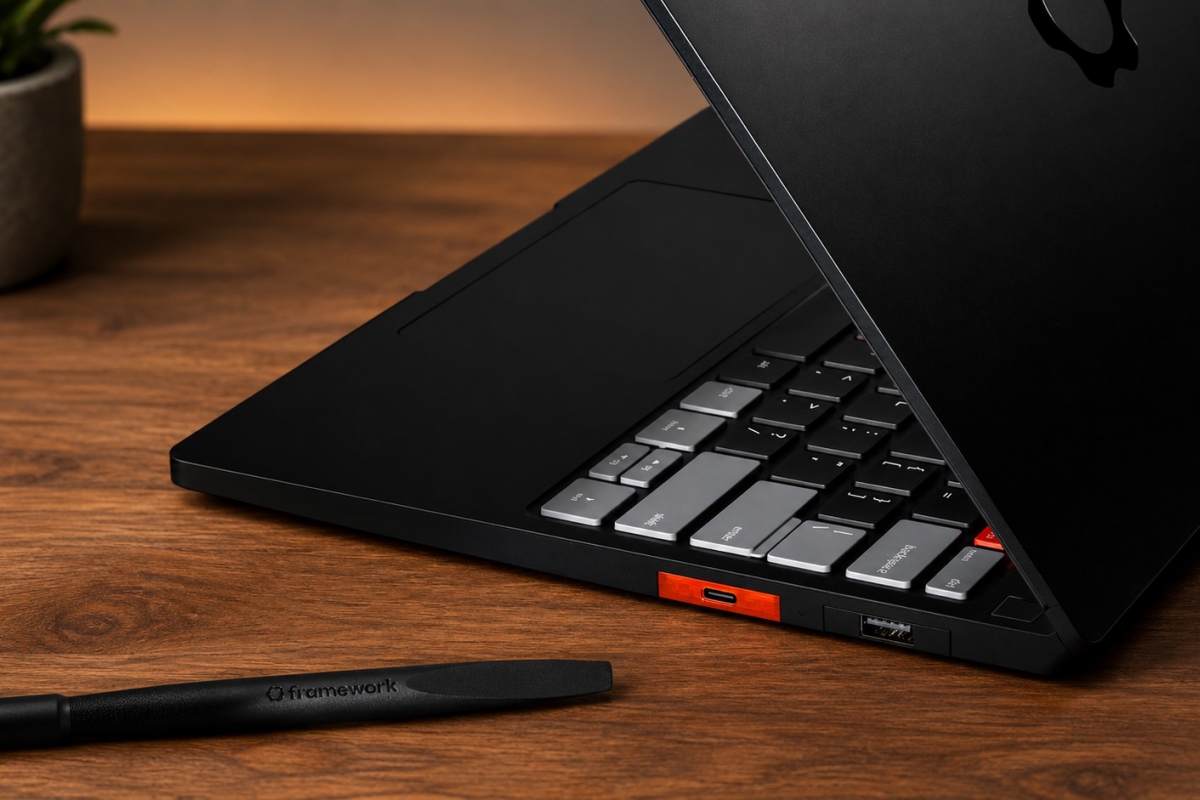
The Framework Laptop 13 Pro is delayed due to a failure in the haptic trackpad and another in the screen detected before production
Framework has communicated to its customers with pre-order of the Laptop 13 Pro that the first shipments will be delayed until July, and possibly until the end of that month or early August in some cases. The reason is not the DRAM memory supply crisis, which has affected the industry in recent months, but rather two technical problems detected during tests prior to the start of mass production: one with the new haptic touch panel and another with the screen.
Two different problems, two different solutions
The trackpad problem is the more serious of the two. During internal testing, Framework encountered a rare bug that caused the haptic touchpad to reset after a series of repeated clicks. After investigating the origin, the company traced it to a grounding problem in the printed circuit board (PCB) design. An attempt was made to resolve this with a firmware update, but the drives continued to fail. The final decision was to design a new PCB, the modules of which are scheduled to arrive at the assembly plant in mid-July.
The screen problem was different and less serious. On a test unit, the panel did not initialize correctly. Framework identified that the cause was in the firmware of the panel itself, supplied by CSOT. The solution came on two fronts: a firmware update for the units already manufactured, and the incorporation of that corrected firmware directly into the new panels that CSOT has in production. The combination of both corrections with the rest of the production calendar is, in part, what ended up moving the shipping dates.
A laptop that already generates expectations
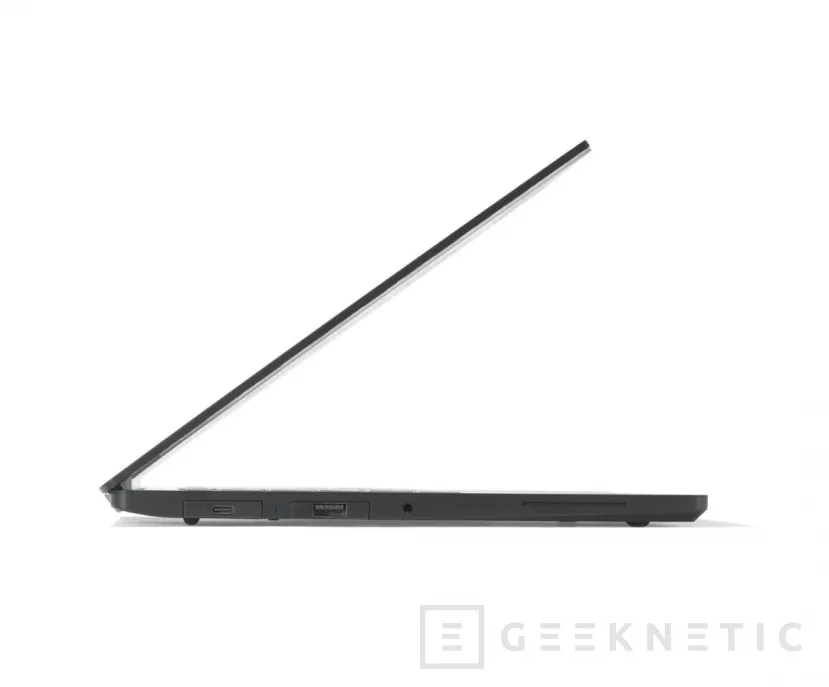
The Framework Laptop 13 Pro was announced in April 2026 as the company’s most ambitious redesign to date. As we already noted when covering the presentation of the Framework Laptop 13 Pro with Intel Core Ultra Series 3 and LPCAMM2, the new model arrives with Intel Core Ultra Series 3 (Panther Lake family), LPCAMM2 LPDDR5X memory up to 64 GB, PCIe Gen 5 storage up to 8 TB and an announced autonomy of more than 20 hours of video playback. The chassis becomes CNC aluminum in all its main parts, which represents a clear leap in rigidity and finish compared to previous generations.
The screen is also new: a 13.5-inch LTPS panel in 3:2 format with 2,880 × 1,920 pixel resolutionyes, variable refresh rate up to 120 Hz700 nits of maximum brightness and 100% sRGB coverage. The haptic trackpad, whose failure caused the delay, was precisely one of the most notable novelties of the model, designed to get closer to the experience of using high-end equipment without giving up the repairability philosophy that defines the brand.
Transparency as part of the business model
What sets this situation apart from what would happen with any other manufacturer is the way Framework has handled communication. The company sent emails directly to each customer with a prior order explaining the two problems detectedits technical causes and the correction schedule. This transparency is no accident: it’s part of Framework’s strategy to build trust with its user community, which expects that level of detail as part of the deal.
In the same communication, the company explained that it is implementing updates to the haptic touch module on the production line as new analyzes prior to assembly validate the improvements. For more recent orders, the estimated delivery time is between August and October depending on configuration. Framework also reported that it has conducted additional testing with a larger than usual number of drives to ensure the situation is not repeated.
The delay that does not change the context
The date shift comes at a time when the Framework Laptop 13 Pro is amassing considerable interest, especially among users coming from premium laptops from other brands. The bets on LPCAMM2 memory and the Panther Lake processor, manufactured on the Intel 18A nodeplaces the equipment in the high-performance segment without giving up the possibility of replacing components over time. Along the same lines, the Framework Laptop 16 now allows you to connect external GPUs via PCIe x8 thanks to the OCuLink Dev Kit, an example of how far the brand’s commitment to real modularity goes.
The prices of the Laptop 13 Pro, depending on the configuration, start from a level that places it in direct competition with laptops like the MacBook Pro in its entry variants. The equipment will be available in several countries in Europe and in the United States when the first production units begin shipping. Those who have pre-ordered can expect delivery in July if they have one of the initial orders, or between August and October if the order is more recent.
