
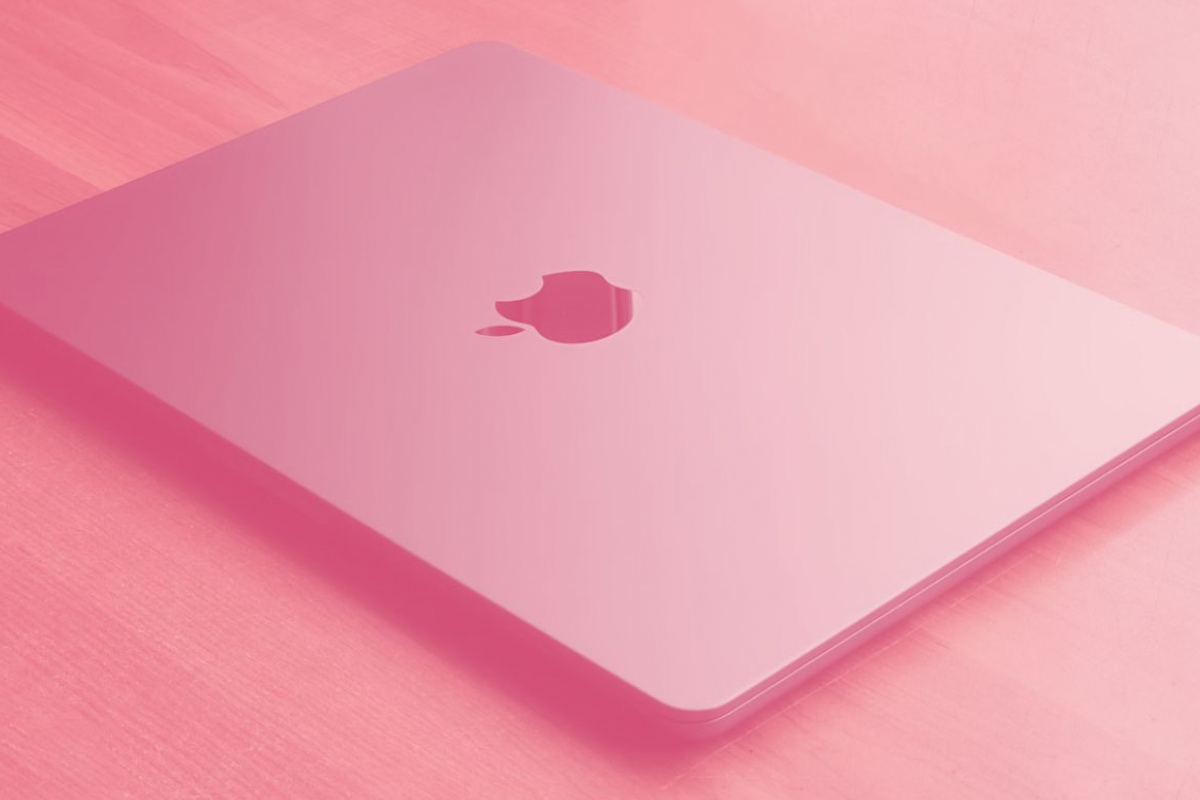
yellow, green, blue and pink
The low-cost MacBook that Apple will soon launch will take shape with a aluminum casing and a striking color palette reminiscent of current iMacs. According to Mark Gurman of Bloombergthe company has tested options such as light yellow, light green, blue, pink, classic silver and dark gray, although it is unlikely that all of these colors will eventually reach the market.
Despite the reduced price, which will be well below $1,000, Apple will not use plastic as a construction material. Instead, it has developed a new manufacturing process which allows aluminum cases to be forged more quickly and cost-effectively than the method currently used in the MacBook Air and MacBook Pro.
This focus on maintaining premium materials while reducing the cost of production marks a significant difference from other budget laptops on the market. The manufacturing technique could also incorporate elements of the iPhone 16 Pro thermal designwhich used a graphite-coated aluminum substructure to improve heat dissipation.
The iPhone 16e of the MacBook
For those of us who have been following Apple for a long time, Apple’s strategy with this device, codenamed J700, reminds us of models like the iPhone 16e. It is about attacking a segment of the market where price is beginning to be decisive without completely giving up construction quality. The laptop will be aimed primarily at students and business userstwo groups that look a lot at the price tag in their purchasing decisions.
To achieve that price positioning, Apple will introduce several technical compromises. The most significant is that it will incorporate the A18 Pro chipthe same processor as the iPhone 16 Pro Max, rather than an M-series chip. This raises questions about how a processor originally designed for mobile will perform in a desktop environment like macOS, although Apple has already demonstrated with the iPad Pro that its iPhone chips can handle more demanding workloads.
The closest the MacBook has ever been to the iPad
From what is known so far, the screen will be slightly smaller than 13 inches, specifically 12.9 inches according to the leaks, and the device will have only 8 GB of RAMa considerable reduction compared to the 12 GB that was initially rumored. This amount of memory will limit the device’s multitasking capabilities, especially compared to MacBook Airs that start at 16 GB.
In terms of connectivity, the laptop will incorporate a USB 3.2 Gen 2 controller with speeds of up to 10 Gb/s, but will lack Thunderbolt ports, a feature reserved for the most premium models. It will also not have a backlit keyboard, although it will maintain the haptic trackpad that Apple has been implementing throughout its line.
This is probably the closest a Mac has ever come to resembling an iPad, at least in product philosophy and price positioning. The key difference is that, unlike an iPad with Magic Keyboard, here the keyboard and trackpad are included in the base price, which is expected to be between $699 and $799.
Apple plans to sell between 5 and 8 million units of this model annually, which would represent a significant expansion of its Mac user base. The launch could occur as early as March, according to Gurman, who also anticipates that the MacBook Pro with M5 Pro and M5 Max chips could be presented that same month, which would make March a particularly active month for Apple’s line of laptops.
