
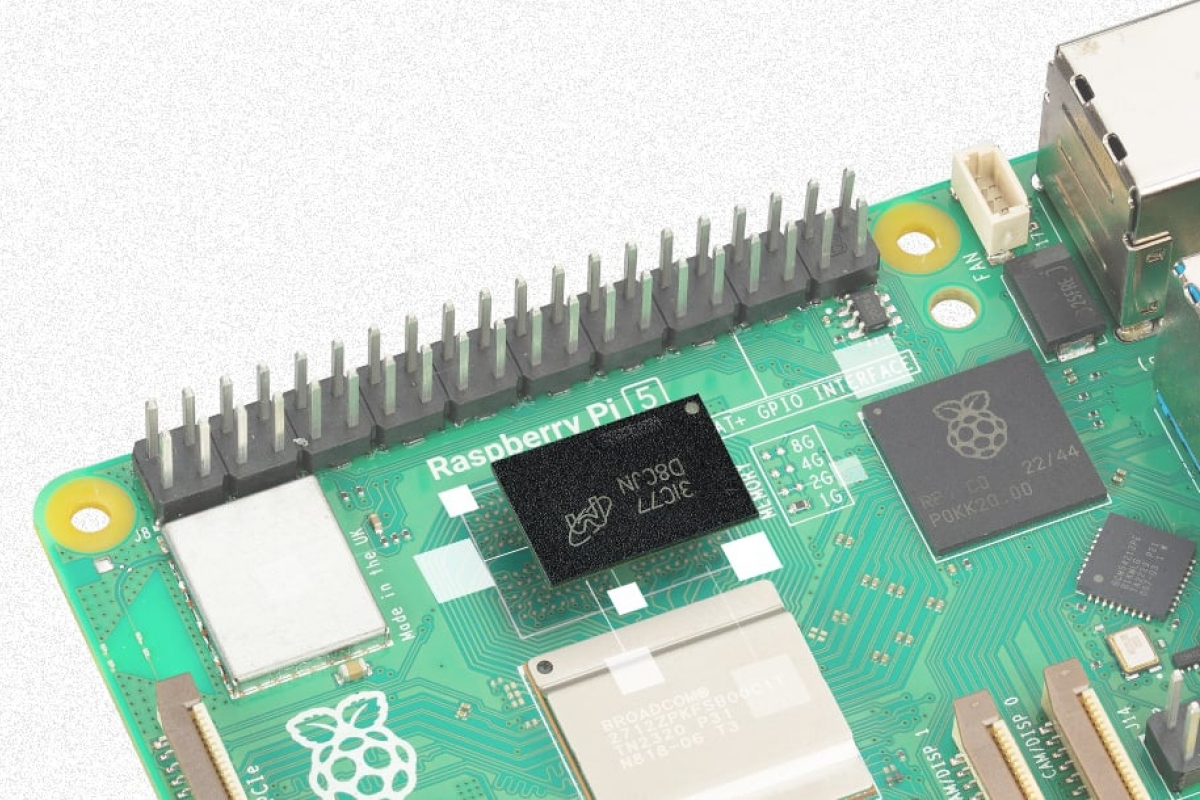
Not even the Raspberry Pi boards are spared: why the 2 GB models rise in price to $77.50
After a price adjustment in April of this year, Raspberry Pi is once again raising the rates for its boards. Obviously, behind all this is the price escalation in memory semiconductors. This meteorite now hits one of the strongholds of low-cost computing.
Raspberry Pi CEO Eben Upton has announced that the company has been forced to increase the price of 2GB RAM variants on its development boards. The business decision applies an immediate increase of $12.50 to offset component supply costs.
The 2 GB versions reach $77.50, while the basic range resists
With this rate update, the 2 GB Raspberry Pi 4 board now costs $67.50, while the Raspberry Pi 5 with the same amount of memory costs $77.50. The organization had managed to freeze the prices of these models last April in the increase that we mentioned.
What the company did was absorb the increase with models that came with greater memory, such as models with 4 GB or more. However, Upton has acknowledged that maintaining that position has currently become unviable, so sets the new prices at $67.50 and $77.50 to ensure the viability of production.
With these changes, the 1 GB variants of both models are the only ones that maintain their official cost without alterations, as do the 2 GB Compute Module 4 and Compute Module 5 industrial modules. Given this scenario, the manager has advised individuals and companies to review their projects in detail so as not to pay extra for memory that they will not need.
In fact, he himself has suggested using plates from previous generations such as the 3B+. Likewise, he has warned that some distributors can take advantage of the situation and sell Raspberry Pi boards at a much higher price, taking advantage of the fact that the situation makes many users jump through hoops and “understand” that they have to pay more.
There is no light at the end of the tunnel
Raspberry Pi is just one more example of how such a strained supply chain impacts the market. Beyond the large manufacturers of smartphonesPC or data centers, small electronics also suffer.
Just yesterday we told you that Micron is talking about an even more severe shortage of memory components during 2027 and 2028. With major chip manufacturers assigning more than 75% of their production lines to corporate AI contracts, what is available for consumer electronics continues to shrink month by month. Anyway, Raspberry CEO ends on a positive note. As he mentions, the situation will not last forever and “the price of memory will end up going down.” When that happens, they confirm that they are going to reverse these increases.
