
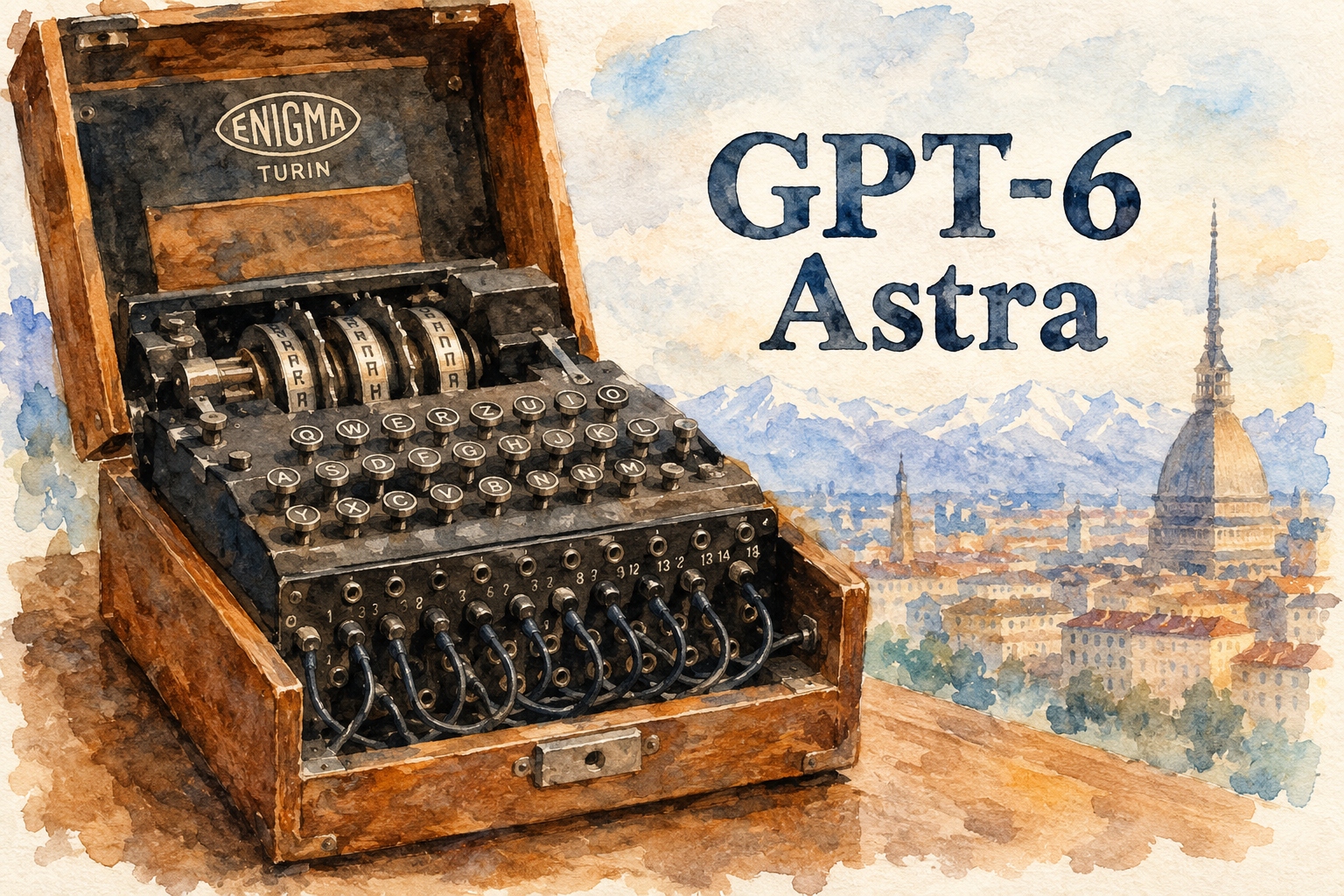
OpenAI GPT-6 Astra deciphers a message from the Enigma machine that had been unsolved for 21 years
The applications that can be given to AI are many. Its ability to analyze data at high speed and detect patterns is, without a doubt, its strongest point. Although the models are far from being self-aware, it is clear that they allow us to think faster and solve decades-old problems. And that is just what OpenAI’s GPT-6 Astra has achieved.
What you have done exactly is decipher the German military message MVUEHissued during World War II on July 10, 1941 by the Nazis. As the consulted source recalls, the ciphertext, recorded as number 172 in the SS-Totenkopf division diaries, had resisted all attempts at resolution by mathematicians and historians since 2005. The resolution, by the way, has been validated by cryptanalysis experts after a test coordinated by researcher Carter Leffen.
And how has AI achieved this feat? It all started when Leffen asked the model to examine the still unresolved texts of the historical research project Crypto Cellar Research. Instead of just trying brute force combinations, which would have been very logical, the system selected message 172 as the most viable one to resolve.
Then he launched a hypothesis. He stated that it was directly related to another one resolved in 2017 by Alex Shovkoplyas, despite the fact that both presented divergences in their extension and in their original signature. So far, everything is quite fascinating, but the thing still has crumbs.
Python and C++ to decrypt Nazi messages over 60 years old
Far from remaining guesswork, GPT-6 Astra programmed tools in Python and C++ intended to simulate the wiring of the Enigma machine and recreate an Enigma Bomb. In case you knew, this last device was the one designed by Alan Turing and Gordon Welchman to help the British army decipher encrypted messages.
Taking as a basis the repetition of the toponym Rosenow as a probable text, The model determined that the configuration used the 253 rotorsa completely different combination to the usual order of wheels 512 in the daily code of that day of war.
Subsequent analysis revealed the reasons why the message had not been able to be deciphered by conventional computer decryption methods for two decades. The original transcription contained typographical errors in the German text and the left rotor of the machine experienced an advance at letter 72. This strange internal rotation altered the mechanical behavior of the algorithm, misleading the statistical analysis programs used previously.
Cross-referencing of documentary sources with the archives of the German Bundesarchiv
Beyond the prowess of AI when it comes to programming or doing calculations, there is another important detail. We refer to its ability to cross-reference data with other contextual data. As explained in the original article, the system tracked historical notes published on the Internet to locate exact references to files from the German Bundesarchiv.
The most interesting thing is that the AI located these clues in the archives without receiving direct instructions about which documents to consult or which official funds to compare. Without a doubt, the ability to resolve an encrypted message that had been stranded since 2005 in just 48 hours is impressive.
