
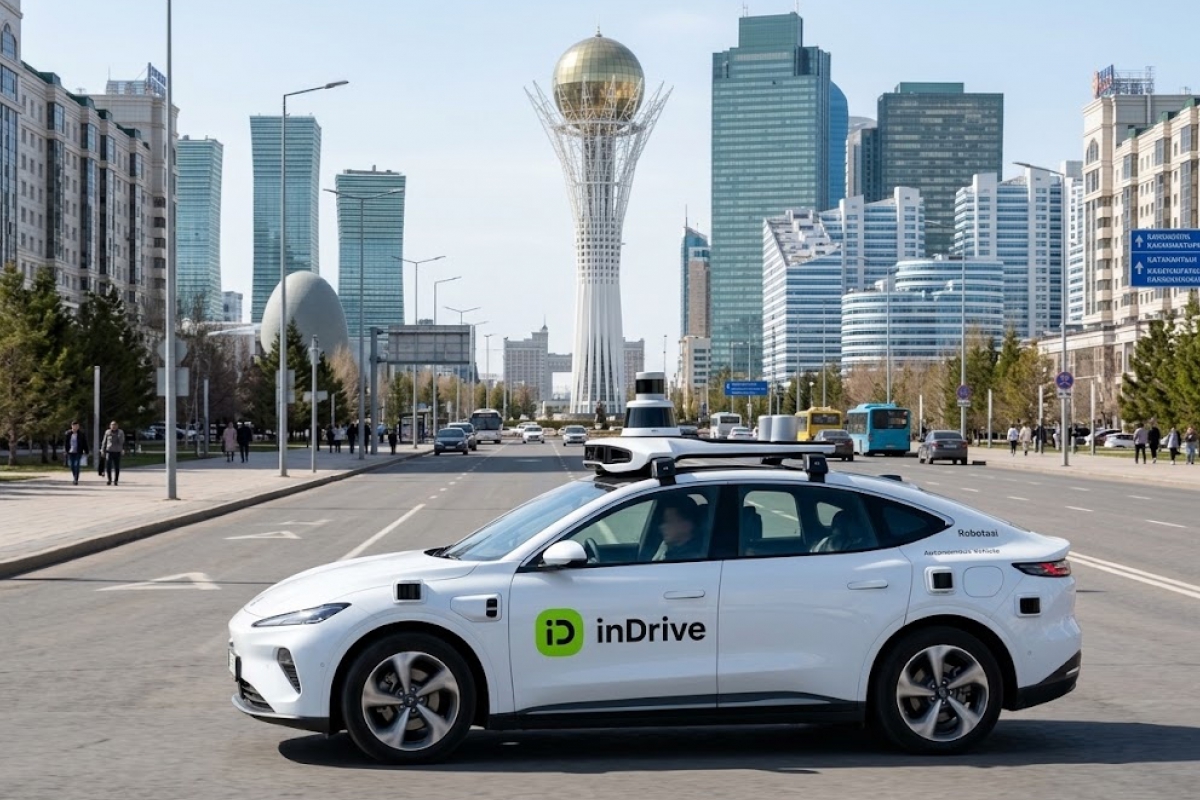
Robotaxis arrive in Astana, a city with months of snow and ice to test autonomous driving
The robotaxis map continues to stretch beyond the United States and China. The next stop is, perhaps, the one we least expected. And it is that inDrive has signed an agreement with China Pony.ai and with NVIDIA to start testing autonomous vehicles in Kazakhstan. The tests will start in Astana, the country’s capital, during the first half of 2027.
As explained to TechCrunch Yuri Misnik, inDrive’s chief technology officer, the first trips will have a safety operator on board. As usual, the goal is to reach completely driverless travel. The distribution of roles is clear in the memorandum of understanding that the three companies have signed.
Pony.ai would provide its seventh-generation robotaxis, inDrive would offer them from its own application and would be responsible for operating them in the field, while NVIDIA would provide AI technology with its Hyperion platform and the Halos security system.
Why is a city with months of snow so attractive to test driverless cars?
Astana has around a million and a half inhabitants. However, one of its most striking characteristics is that it chains months of snow and ice. You probably think they are conditions that make work quite complicated of autonomous driving systems. However, there is something good to take from all that.
Arsen Tomsky, founder and CEO of inDrive, maintains that launching the service there will serve to evaluate the technology in the middle of winter and that what was learned could later be applied in other places with the same problem. The country has been preparing the ground for months, having announced last month its intention to launch autonomous taxis in 2027, with trials planned in Astana and two other cities. It has even prepared the legal basis for it.
Cost is the other important argument. NVIDIA defends that Hyperion makes development cheaper. That’s because it delivers a ready-made foundation of sensors and computing, rather than forcing each company to build and integrate everything on its own. Likewise, it adds to that its Alpamayo model and tools to generate synthetic data with which to test different scenarios.
A race that is already being played on several continents at the same time
The movement fits into an expansion that is adding markets month by month. A few weeks ago, Uber announced its own trials with Pony.ai robotaxis in London, where it already offers supervised autonomous trips with the British Wayve, and works with several companies in the sector in other markets, including the Middle East.
In Spain, the calendar has also been set in motion, because Waymo has already begun testing its Jaguar I-PACE in the Community of Madrid, with a driver behind the wheel in the first phases and the expectation of transporting its first passengers in 2027. This announcement comes after the one made a month ago by the same company, but in this case talking about Singapore.
Pony.ai itself aims to close 2026 with more than 3,500 robotaxis distributed across more than 20 cities, when at the end of June its fleet totaled 1,975 vehicles. inDrive, which operates in more than 1,200 cities in 47 countries, already signed another agreement in December with the Saudi AI Driver to deploy WeRide autonomous vehicles starting in Riyadh, although it is not clear if that pilot has even started. Robotaxis, little by little, are ceasing to be a rarity and becoming widespread in large cities.
