
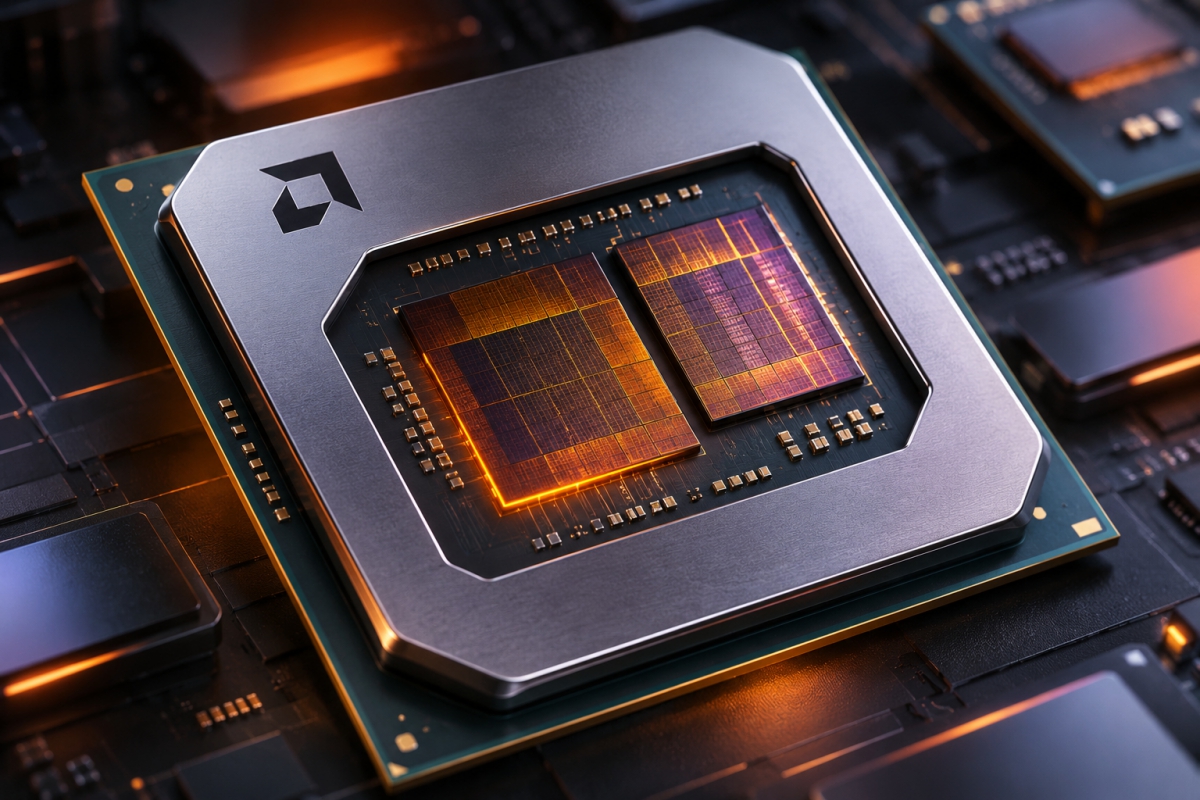
AMD has added two patches to Linux to differentiate CPU cores and assign tasks based on their capabilities
The AMD processors with Zen 6 cores have already been presented, the new 6th Generation EPYC for Servers and Data Centers. But AMD is still working on the Zen 6 cores, which are just released, and will offer a new low consumption version called LP. An example of this work is that the Linux kernel is preparing to support these new kernelssince it has received a series of patches to offer compatibility with these new kernels.
AMD Prepares Linux Kernel for Low-Power Zen 6 LP Cores
Specifically, AMD has sent a series of patches to offer compatibility with more types of cores in the Zen 6 family, such as Zen 6 LP. These patches allow the Kernel detect the capabilities of each CPU core, and assign tasks according to its capabilities. Currently the Linux Kernel treats all kernels equally, but with these new patches it will allow differentiation to improve performance.
The first patch makes amd-pstate inform Linux of the capacity each core hasusing the Capacity scaling interface for hybrid architectures. A feature that will arrive enabled by default on supported processorsalthough it can be disabled with amd_cas=disable. The second patch makes amd-hfi stops when CAS is activesince they both manage the same scheduler state.
The new patches could also improve the management of Zen 4 and Zen 4c cores
This also opens up the possibilities for improve performance on older processors with heterogeneous architecturelike the Hawk Point processors with Zen 4 and Zen 4c cores. AMD may have decided to implement this new solution given the capabilities of the new Zen 6 LP coreswhich may have a much lower consumption so that differentiating them represents a considerable energy savings when assigning tasks in Linux to these Zen 6 LP cores.
Juan Antonio Soto
I am a Computer Engineer and my specialty is automation and robotics. My passion for hardware began at the age of 14 when I broke down my first computer: a 386 DX 40 with 4MB of RAM and 210MB of hard drive. I continue to give free rein to my passion in the technical articles I write for Geeknetic. I dedicate most of my free time to video games, contemporary and retro, on the more than 20 consoles I have, in addition to the PC.
