
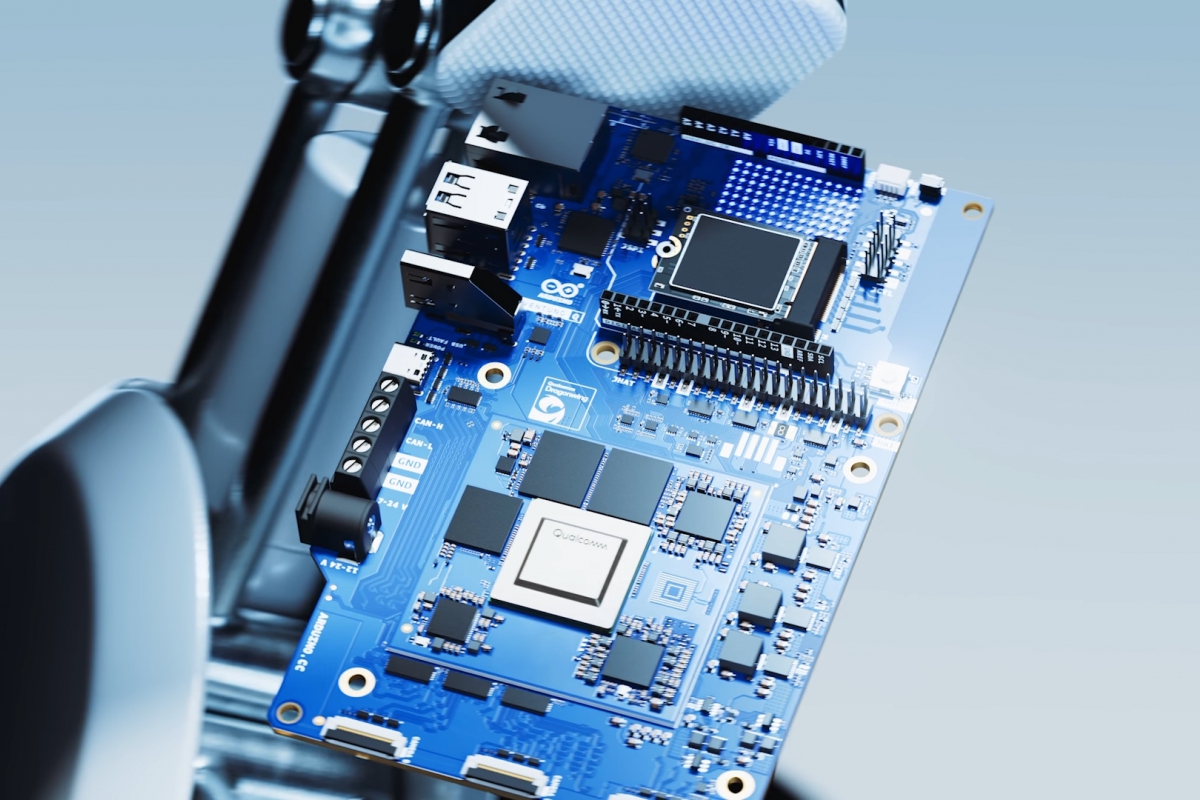
Arduino presents the new VENTUNO Q with Qualcomm Dragonwing IQ8 to bring generative AI to the edge
Arduinowhich is now part of Qualcomm, has announced the launch of its new platform VENTUNO Qa board designed for artificial intelligence at the edge, robotics and physical control systemswhich combine high performance AI with real-time control. This new device has been presented on the occasion of the next Embedded World 2026 which is held in Nuremberg, Germany.
The name WINDOWwhat does it mean twenty-one in Italianrefers to 21st anniversary of the founding of Arduinoand represents the evolution of the company beyond its historic family Arduino UNO.
Generative AI and real-time control on a single board
The plate Arduino VENTUNO Q It is based on an architecture of double brain very similar to the one seen in Arduino UNO Qbut with much more advanced capabilities. This incorporates a processor Qualcomm Dragonwing IQ8 Series capable of running workloads Traditional and generative AIalong with a NPU with up to 40 TOPS power for inference tasks.
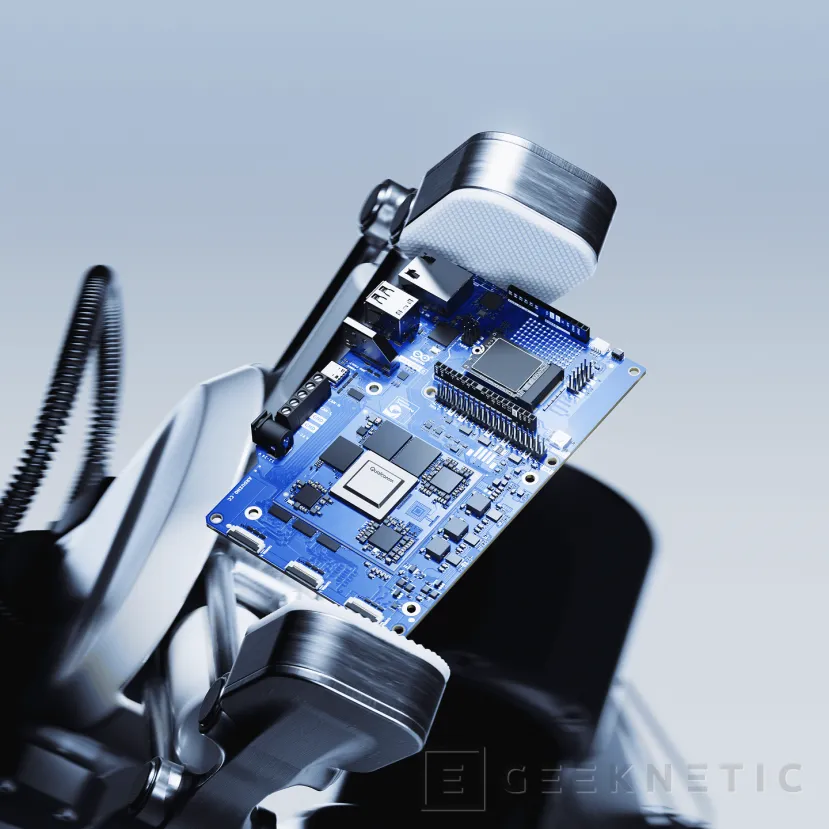
For real-time control tasks, a dedicated STM32H5 microcontrollerin charge of the motor actuation and control with very low latency. A combination that allows the development of systems capable not only of analyzing data, but also of interact directly with the physical environment.
The platform also has 16 GB of RAM and 64GB expandable storagewhich allows you to run multiple inference tasks and complex applications simultaneously.
According to Fabio Violantevice president and general manager of Arduino at Qualcomm Technologies, the new platform will allow the AI definitively leaves the cloud and enters the physical worldallowing the creation of machines capable of perceive, decide and act from a single board.
Applications in robotics, computer vision and AI assistants
Arduino proposes multiple uses for this new platform in different sectors. These include totally offline AI systemssuch as voice assistants based on local LLM modelssmart mirrors that respond to gestures or interactive kiosks that can be placed in a multitude of locations.
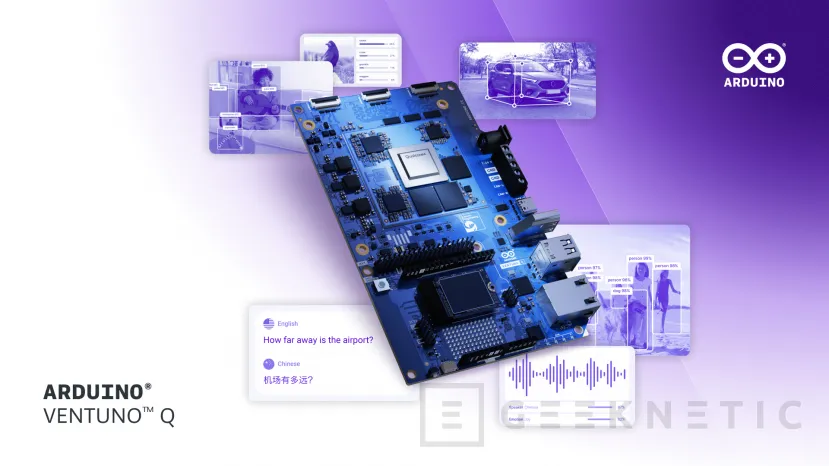
For applications related to roboticsVENTUNO Q will allow the development vision-guided precision robotic armsservice robots capable of following their user or autonomous robots that navigate through Visual SLAM and route optimization.
It is also designed for applications artificial vision and sensor analysis at the edgesuch as security systems that detect dangerous behavior, traffic control systems or industrial inspection solutions capable of detecting defects using vision models.
Unified development environment for AI at the edge
The new platform simplifies the development of complex applications by integrating perception, decision and action in a single device. The main processor runs Ubuntu or Debian Linuxwhile the microcontroller works with Arduino Core on ZephyrOSguaranteeing deterministic behavior for critical tasks.
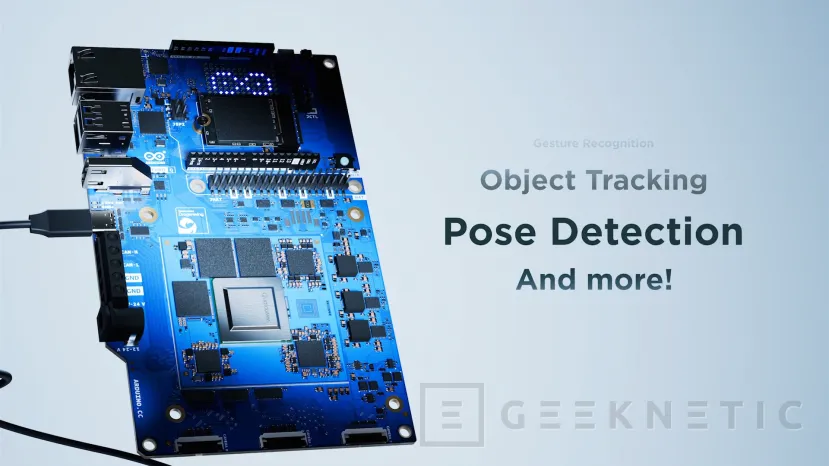
Additionally, the platform integrates with Arduino App Laban environment that allows developing projects combining Arduino sketches, Python and AI models ready to useincluding:
- models Local LLM and VLM
- voice recognition
- gesture recognition
- pose estimation
- object tracking
It also offers integration with Edge Impulse Studio to create custom AI models.
Extensive connectivity and compatibility with the Arduino ecosystem
At the hardware level, VENTUNO Q It incorporates multiple ideal interfaces in industrial environments and systems for robots, among them we find:
- CAN-FD
- PWM
- High speed GPIO
- connectors MIPI-CSI for multiple cameras
- advanced audio
- screens
- 2.5Gb Ethernet
Additionally, the board maintains compatibility with much of the existing ecosystem, including Arduino UNO shields, Modulino nodes, Qwiic sensors and Raspberry Pi HATs.
Availability
The Arduino VENTUNO Q will be available during second quarter of 2026 through the official Arduino store and distributors such as DigiKey, Farnell, Macfos, Mouser and RS. For now its price is not known recommended. We leave you with the complete specifications of this new Arduino Ventuno Q board.
Main processor (MPU)
- Qualcomm Dragonwing IQ8 (IQ-8275)
- CPU: Octa-core Arm Cortex
- GPU/VPU Adreno A623 to 877MHz
- AI processor Hexagon Tensioner (NPU) with up to 40 TOPS
- ISP Qualcomm Spectra 692
- Supported operating system: Ubuntu or Debian
Microcontroller (MCU)
- STM32H5F5
- CPU Arm Cortex-M33 to 250MHz
- 4 MB Flash memory
- 1.5MB RAM
- Operating system: Arduino Core on Zephyr OS
RAM memory
Storage
- 64GB eMMC
- Connector M.2 for external NVMe Gen4 storage
Connectivity
- Wi-Fi 6 (2.4 / 5 / 6 GHz) with integrated antenna
- Bluetooth 5.3 with integrated antenna
- 1 RJ45 2.5 Gbit Ethernet port
Camera
- Compatibility with usb cameras
- 3 MIPI-CSI connectors multiplexed with 2 MIPI-CSI in the connector JMEDIA
Video
- 1 HDMI output multiplexed with MIPI-DSI in the connector JMEDIA
- Video output via DisplayPort Alt Mode over USB-C
- Pins MIPI-DSI available in the connector JMEDIA
Audio
- 2 microphone inputs
- Headphone output
- Ear output
- Line Out
- Available in connector JMISC
Feeding
- Through USB-C (5V up to 3A)
- Power connector 5.5 × 2.1 mm (12-24 V)
- Screw terminal (7-24V)
- 7-24 V input on JOMEGA connector
USB ports
- 1 USB-C port with host/device role switching, power switching and video output
- 2 USB 3.0 type A ports
- 2 additional USB 3.0 ports in the connector JOMEGA
DOG
- 1 CAN-FD with PHY on screw terminal
- 3 CAN-FD (without PHY) in connector JOMEGA
- 1 CAN-FD (without PHY) in headers UNO Shield
Dimensions
