
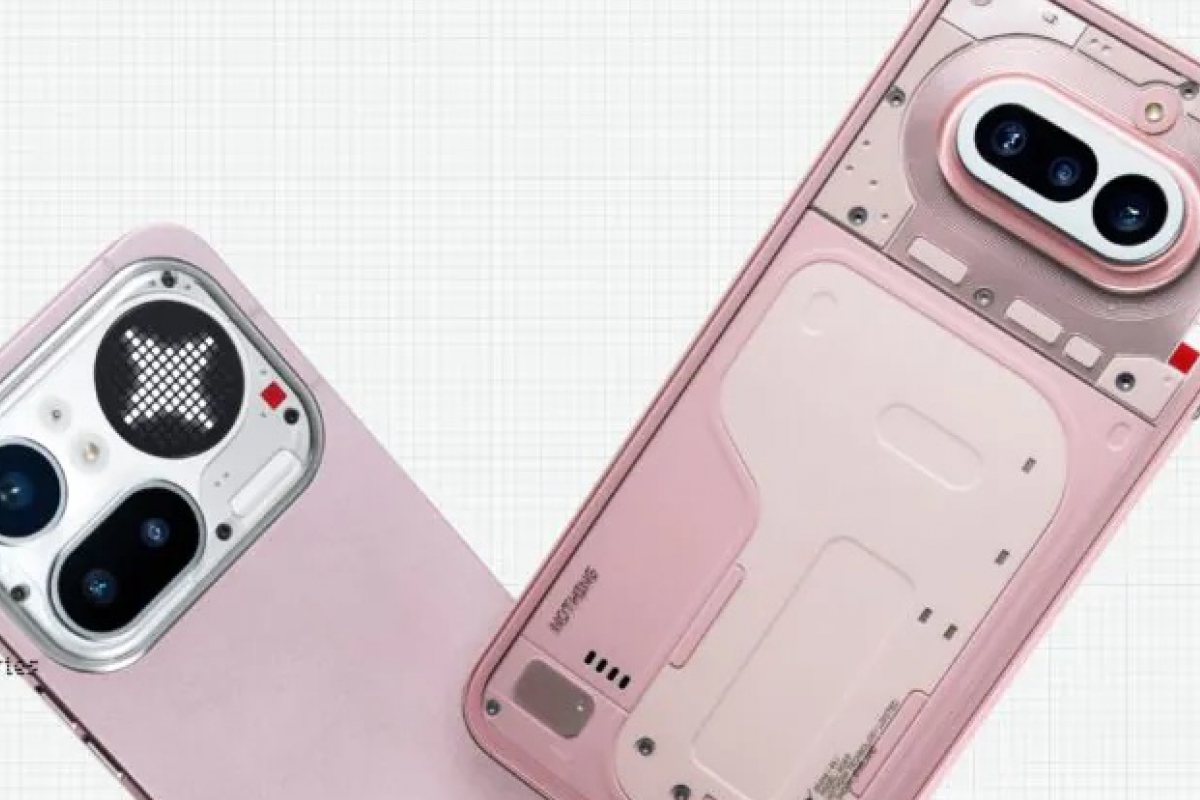
The Nothing Phone (4a) and (4a) Pro arrive with a 50 MP periscopic telephoto lens, new Glyph and 5,080 mAh batteries
Nothing has today presented its new Nothing Phone (4a) and Nothing Phone (4a) Pro with a very clear idea: to bring to the mid-range a piece of hardware that was normally left in much more expensive phones. The protagonist is the periscopic telephoto camerapresent in both models and with a very marked focus on zoom. The company also takes advantage of the launch to renew its Glyph lighting system with two different variants depending on the model, in addition to reinforcing key specifications such as screen, battery and fast charging.
The movement is significant for timing and ambition. In the middle of 2026, the mid-range has become the battlefield where everyone tries to promise “almost high-end” without skyrocketing the price, and Nothing tries to differentiate itself in two ways: periscopic telephotography and a visual identity, the transparent back and the Glyph system, which remains one of its most recognizable hallmarks.
Camera: 50 MP periscope for both, and the Pro boasts 140x
Nothing assures that this year it has focused on photography, and the numbers on the card reflect it. The Phone (4a) Pro arrives with a Sony LYT700C main sensor and a 50-megapixel periscopic telephoto lens with 3.5x optical zoom and a maximum zoom that the brand places at 140x. The company itself presents it as the largest zoom range that a Nothing has had to date.
The Phone (4a) “just” is not left out of the script. Also includes a 50 megapixel periscopic telephoto with 3.5xand in its case it is accompanied by a 50 megapixel main camera with OIS optical stabilization. Both also share a cultra wide angle camera (Nothing indicates that it is a Sony sensor) and a 32 megapixel front camera.
In software, both models incorporate the TrueLens Engine 4with functions aimed at improving the dynamic range in photos and videos, and AI editing tools such as object deletion. Nothing presents it as a complete package: ambitious hardware for the price and a processing layer that tries to make complicated scenes, especially lights and shadows, more balanced.
Glyph reinvents itself: Bar for the 4a and Matrix for the Pro
The other big block of the ad is the Glyph evolution. On the Phone (4a) a new “Glyph Bar” appears located at the top, with 63 mini LEDs spread over seven zones. Nothing claims it can reach up to 3,500 nits of brightness, and keeps the focus practical: notifications, timers, charging status, and use as a fill light for photos or video.
The Phone (4a) Pro ups the ante with a “Glyph Matrix” of 137 mini LEDs that occupies more surface area and aims to be more expressive. In addition to more visible notifications, it integrates with widgets such as a battery indicator, timer or digital clock, and adds more “playful layer” functions, such as a mirror-type mode. The reading is clear: the standard model uses the Glyph as a useful and recognizable tool, while the Pro makes it a more prominent element, both in size and possibilities.
Design and resistance: metallic unibody and IP65 on the Pro
Nothing maintains the transparent style, but speaks of important physical changes. The Phone (4a) Pro adopts a Metal unibody and boasts a thickness of 7.95 mm. It also improves resistance with IP65 certification for dust and water, as well as protection against short periods of immersion, according to the brand.
The Phone (4a) retains that “window” aesthetic to internal components, with the Glyph bar above and a lower area where the industrial design can be seen. Nothing indicates that the frame and the camera module have been reinforced, and that the mobile has IP64 protection. In colors, the standard model will be offered in blue, pink and neutral tones.
Processors and performance: Snapdragon 7 Gen 4 for the Pro, 7s Gen 4 for the 4a
This is where Nothing clearly separates both models. The Phone (4a) Pro integrates the Qualcomm Snapdragon 7 Gen 4with the promise of up to 27% more CPU performance and 30% more graphics compared to the previous generation. It comes with LPDDR5X memory and UFS 3.1 storage, aiming for heavier loads and multitasking.
The Phone (4a) bets on the Qualcomm Snapdragon 7s Gen 4. According to the announcement data, the jump in CPU and graphics is around 7%, and an efficiency improvement of 10% is insisted on. It is a more conservative profile, but aimed at supporting a fluid experience and contained consumption.
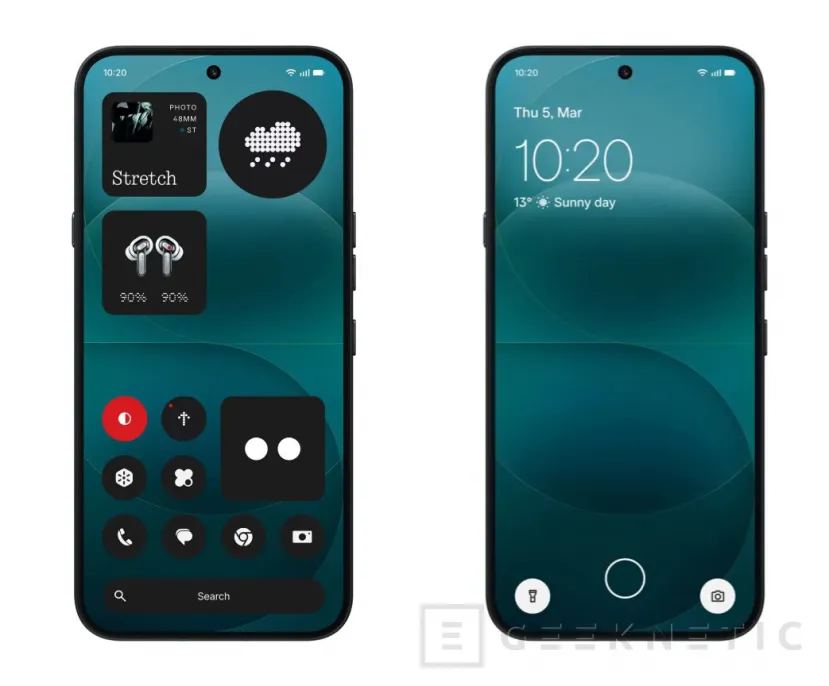
Screens: 1.5K and 144 Hz on the Pro, 120 Hz on the standard
The screen also makes a difference. The Phone (4a) Pro mounts a panel 6.83-inch AMOLED with 1.5K resolutionrefresh rate 144Hz and a peak brightness that Nothing estimates at 5,000 nits. The Phone (4a) stays on 6.78 inches, also AMOLED, with 120 Hz and up to 4,500 nits in HDR.
In both cases, Nothing confirms Gorilla Glass 7i protection. On paper, these are very high figures for their segment, especially in peak brightness, which is usually one of the big bottlenecks outdoors.
Both models arrive with Nothing OS 4.1 based on Android 16. The company talks about redesigned icons, floating apps, improved widgets and an AI Dashboard to manage AI functions. In support policy, Nothing promises three years of Android updates and six years of security patches.
On battery, both share 5,080 mAh and 50W fast chargingwith an approximate load reference of 60% in 30 minutes.
In prices, the Phone (4a) starts at 349 eurosand the Phone (4a) Pro starts at 479 euros. On calendar, reservations for the Phone (4a) begin on March 5 and sales open on March 13. In the case of the Phone (4a) Pro, reservations start on March 13 and sales open on March 27 in most markets.
Specifications of the Nothing Phone (4a) and (4a) Pro
| Specs | Nothing Phone (4a) | Nothing Phone (4a) Pro |
|---|---|---|
| Dimensions and weight | 163.95 x 77.57 x 8.55mm 204.5 grams |
163.66 x 76.62 x 7.95mm 210 grams |
| Screen | 6.78-inch LTPS AMOLED FullHD+ resolution (1,224 x 2,720 pixels) 440 dpi 10-bit color Adaptive refresh rate: 30-120 Hz Touch sampling: up to 2,500 Hz PWM Dimming: 2,160Hz Brightness: 800 nits / Maximum: 1,600 nits / Peak: 4,500 nits Gorilla Glass 7i |
6.83-inch LTPS AMOLED FullHD+ resolution (1,260 x 2,800 pixels) 440 dpi 10-bit color Adaptive refresh rate: 30-144 Hz Touch sampling: up to 2,500 Hz PWM Dimming: 2,160Hz Brightness: 800 nits / Maximum: 1,600 nits / Peak: 5,000 nits Gorilla Glass 7i |
| Processor | Qualcomm Snapdragon 7s Gen 4 | Qualcomm Snapdragon 7 Gen 4 |
| RAM | 8/12GB LPDDR4x | 8/12GB LPDDR5x |
| Storage | 128/256 GB UFS 3.1 | 128/256 GB UFS 3.1 |
| rear camera | Wide 50 MP f/1.88, OIS+EIS, PDAF Wide angle 8 MP, f/2.2, FOV 120º 50 MP periscope, x3.5 optical zoom, f/2.88, OIS+EIS, x70 digital zoom 4K Video@30 FPS |
Wide-angle 50 MP f/1.88, OIS+EIS, 2×2 OCL PDAF Wide angle 8 MP, f/2.2, FOV 120º 50 MP periscope, x3.5 optical zoom, f/2.88, OIS+EIS, x140 digital zoom 4K Video@30 FPS |
| front camera | 32MP, f/2.2 | 32MP, f/2.2 |
| Battery | 5,080mAh 50W fast charging |
5,080mAh 50W fast charging Reverse wireless charging: 7.5W |
| Operating system | Android 16 with Nothing OS 4.1 3 years of major updates 6 years of security patches |
Android 16 with Nothing OS 4.1 3 years of major updates 6 years of security patches |
| Connectivity | WiFi 6, 5G NSA/SA, Dual SIM, NFC, Bluetooth 5.4, FPS, USB type C | WiFi 6, 5G NSA/SA, Dual SIM, NFC, Bluetooth 5.4, FPS, USB type C |
| Other information of interest | Glyph Bar (63 mini LEDs) Fingerprint sensor on screen Stereo speakers IP64 resistance Essential AI Tools |
Glyph Matrix (137 mini LEDs) Fingerprint sensor on screen Stereo speakers IP64 resistance Essential AI Tools |
| Price | From 349 euros | From 479 euros |
