
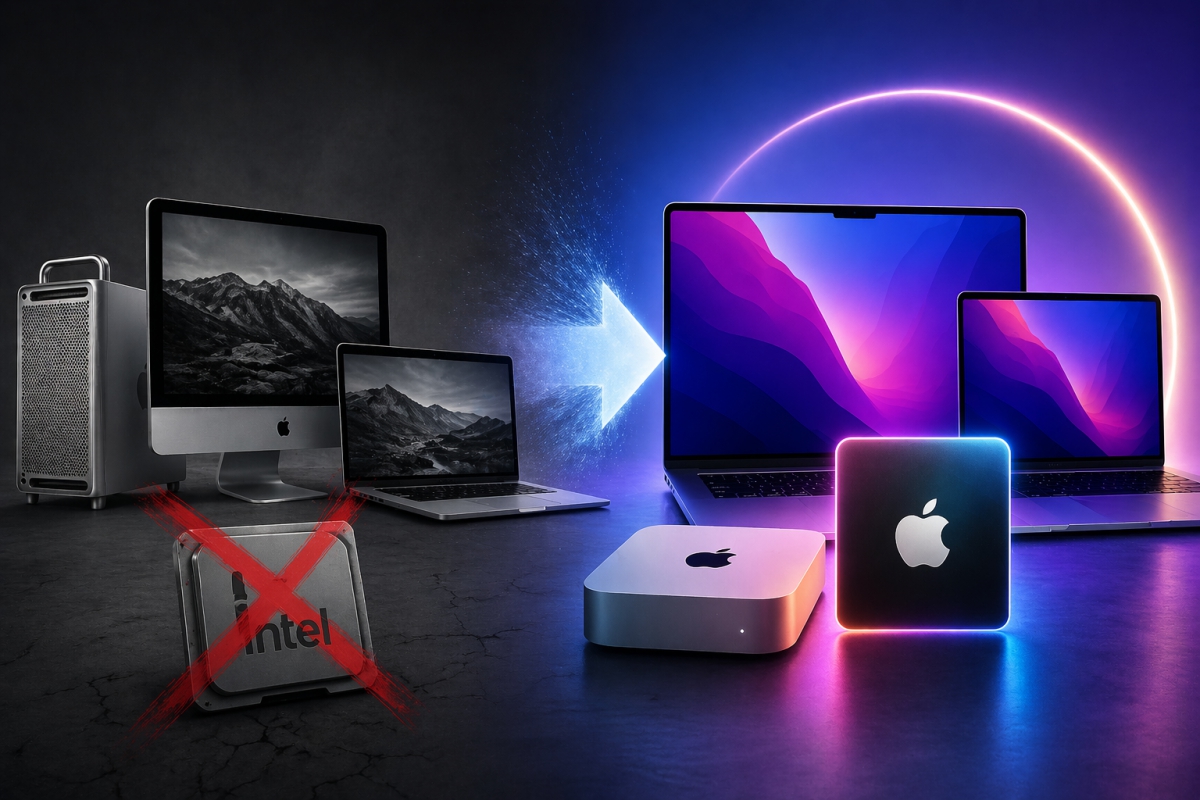
macOS 26 Tahoe will be the last supported version
Apple is finalizing a key change to its Mac computer ecosystem that will mark the definitive end of computers with Intel processors. The company has confirmed that macOS 26 Tahoe will be the last major version compatible with Intel Macsgiving way to a new stage where macOS 27 will be exclusive to Apple Silicon. With this move, Apple closes a period of almost two decades and reinforces its commitment to a fully integrated platform. This transition, which began in 2020, now enters its final phase.
macOS 27 will end support for Intel-based Macs
As Apple announced in its roadmap, the next version of the operating system will completely abandon compatibility with Intel. This means that all Macs based on this architecture will stop receiving new major versionsalthough they will continue to function normally and receive security updates.
The change will allow Apple to focus its efforts on optimizing macOS for its own chips. In this way, the company seeks to improve performance, efficiency and system integration, a characteristic that has always defined the brand.
macOS 26 Tahoe will be the last update for many current devices
The current version macOS 26 Tahoe It will be the last major update for a wide range of Intel computers, including relatively recent models. This leaves many users with hardware still in use without access to future developments in future operating systems. Among them we find equipment such as 2019 and 2020 MacBook Proas well as some iMac and Mac Pro from previous generations. All of these devices will continue to be functional, but they will remain in the current macOS 26.
macOS 27 compatibility: Apple Silicon only, list yet to be confirmed
Although Apple has not detailed the complete compatibility list, it has confirmed that macOS 27 will be exclusive for devices with Apple Silicon. This means that only Macs with M-series and A-series chips will be able to access this new version. For now, there is no official list of compatible models, something that will likely be revealed at the next WWDC. Until then, support is expected to focus on relatively recent devices with these chips.
Apple definitively closes the Intel era on Mac
With this step, Apple completes its transition towards its own architecturedefinitively abandoning Intel processors on its Mac platform. This decision will allow reduce fragmentation and offer a more optimized and consistent experience. For users, it represents a turning point that could accelerate the renewal of computers towards Macs compatible with the next version of their operating system. From now on, the future of macOS lies exclusively in Apple Silicon.
These are the Macs compatible with macOS 26 Tahoe
Macbook Air
- MacBook Air with chip M1 or higher (2020 onwards)
MacBook Pro
- MacBook Pro with Apple Silicon (2020 onwards)
- MacBook Pro 16 inches (2019)
- MacBook Pro 13 inches (2020, 4 Thunderbolt 3 ports)
iMac
- iMac with Apple Silicon (2021 onwards)
- iMac 27 inches (2020)
mac mini
- Mac mini with M1 chip or higher (2020 onwards)
mac studio
- MacStudio (2022 onwards)
mac pro
- Mac Pro (2019 onwards)
Others
- MacBook Neo (2026, A18 Pro chip)
