
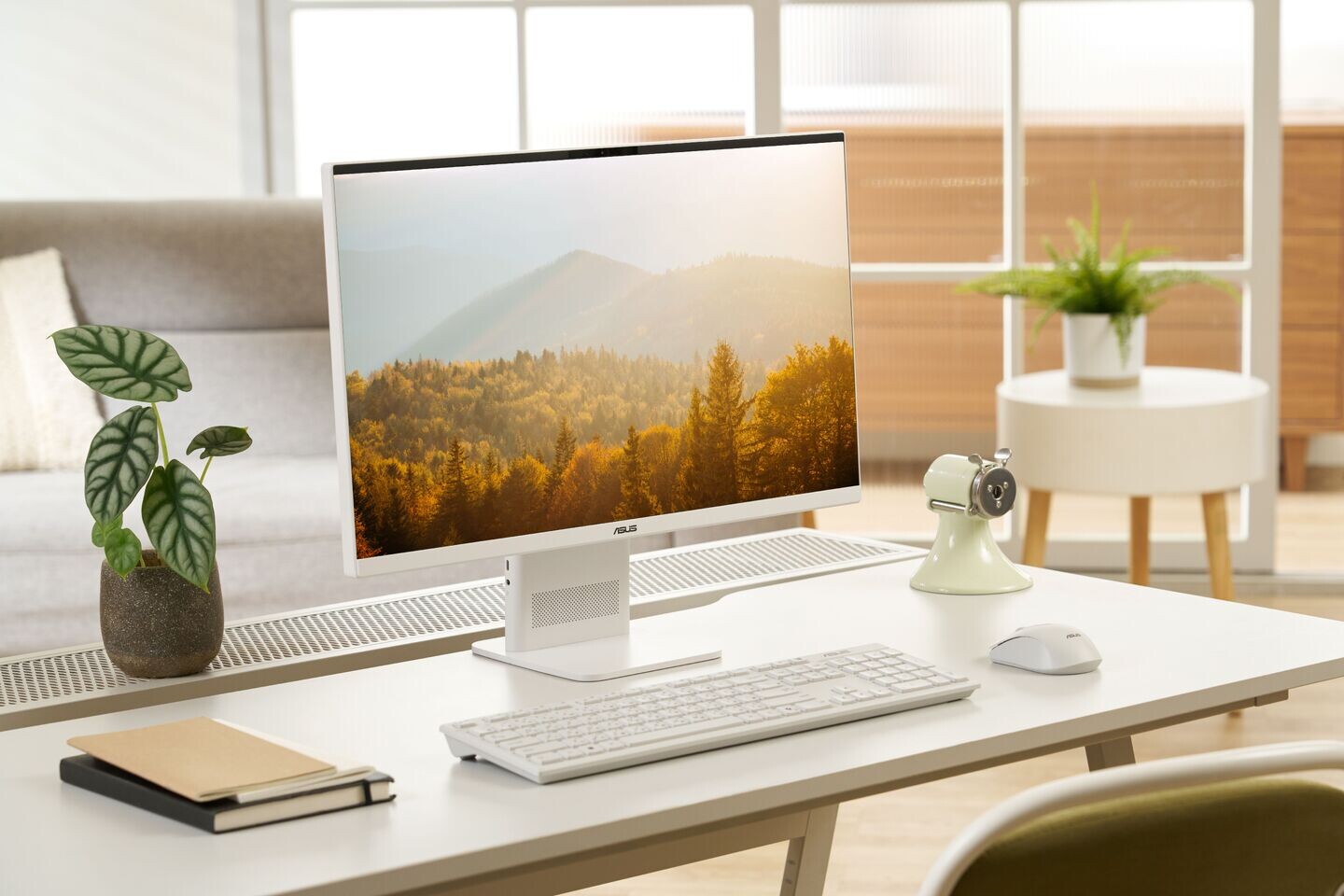
bring AI and clean formatting to the desktop
ASUS has reinforced its desktop catalog with a new offensive that mixes compact towers, all-in-one equipment and a very visible commitment to AI as part of the product story. The movement revolves around three great proposals for desktop and, among them, the one that attracts the most attention is the ASUS V400 AiOa model that is presented as the brand’s first all-in-one based on Snapdragon At its side, ASUS has also presented the V600 AiO and the ExpertCenter P700 Mini.
The V400 AiO is the great showcase of the movement
Within this new batch, the most symbolic product is the ASUS V400 AiO (VM441QA). The brand defines it as its first all-in-one with Snapdragon and as a machine designed to modernize the family PC with a much quieter, thinner and more efficient proposal.
A panel appears on your tab 24 inch Full HDuntil 45 NPU TOPS for Copilot+ functions, up to 32GB LPDDR5X and even 1TB PCIe 4.0 SSDall within a much more stylized casing than usual in this category.
That approach is important because it changes the perception of the all-in-one quite a bit. For years, this type of equipment has been sold as a practical solution for those who want fewer cables and little visual noise, but often at the cost of a feeling of an intermediate product, neither very powerful nor especially aspirational. ASUS tries to turn that image around with the V400 AiO.
ASUS emphasizes that this platform allows it to offer a operation quieter, more discreet cooling and a thinner chassisthanks to an architecture that generates less heat than other traditional tabletop alternatives. Furthermore, the use of a NPU up to 45 TOPS It places it directly within the Copilot+ ecosystem, something that makes the team a very visible piece within the new Windows strategy around local AI.
The key here is that ASUS is not trying to bring Snapdragon to the classic tower desktop, but to the all-in-one, which is precisely where its strengths best fit: low noise, clean design, lower thermal needs and a more integrated experience.
The V600 AiO accompanies the V400 with a larger proposal for family use
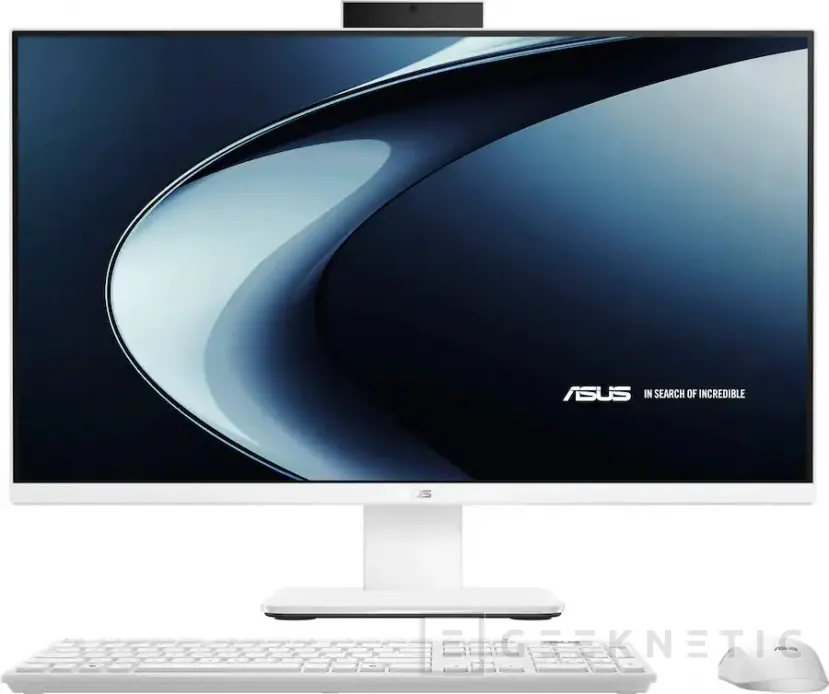
Along with the V400 AiO, ASUS has also shown the V600 AiOa larger all-in-one with which it reinforces its commitment to the integrated desktop. If the V400 stood out for being the first model of this format with Snapdragon in its catalogue, the V600 plays a different card: offering a broader, more visual and more comfortable experience for shared use at home or in spaces where the screen has an even greater weight.
This change in focus is immediately noticeable in the product proposal. He V600 AiO go up to 27 inches and bet on a panel Full HD touchaccompanied by design NanoEdge and a screen-to-body ratio of 93%. ASUS also emphasizes that the equipment is 25% thinner than its predecessora figure that fits very well with the general story of this new batch of after-dinner dishes. It does not seek to impress with an aggressive aesthetic, but with that feeling of integrated equipment that almost disappears within the domestic environment.
In hardware, the V600 AiO relies on processors AMD Ryzen AI 7 350 either Ryzen AI 5 330with NPU up to 50 TOPSintegrated graphics Radeon 860M or Radeon 820Muntil 32GB DDR5 memory and connectivity Wi-Fi 6. ASUS also adds a very useful detail: support for HDMI in and HDMI outallowing you to use your computer screen as a laptop monitor or expand your desktop with another external panel. This point gives it much more flexibility than is usual in an all-in-one, and reinforces the idea that it is not a product designed only to turn on and use, but also to coexist with other devices inside the home.
ASUS completes the move with the ExpertCenter P700 Mini Tower
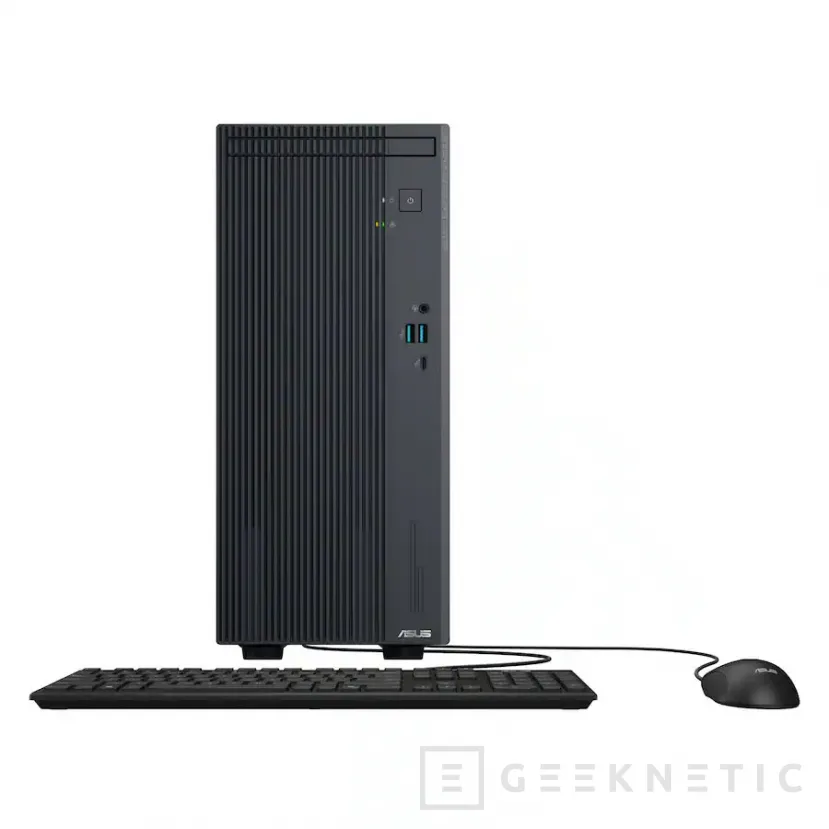
The third piece of this release is the ExpertCenter P700 Mini Towera desktop clearly aimed at companies and professional environments that seek to renew old positions with a more compact, quiet and efficient machine. Here ASUS completely changes the tone of the launch. The integrated screen and the more domestic speech of the V series disappear to make way for a work computer designed for offices, offices and small businesses that want a serious PC without resorting to a large and cumbersome tower.
He ExpertCenter P700 Mini Tower uses processors AMD Ryzen AI mobile class within a desktop format, a decision with which ASUS seeks to reduce consumption and noise without giving up a sufficiently solvent base for productivity, multitasking and daily work.
The announced configuration reaches Ryzen AI 7 350accompanied by 16 GB DDR5 memoryand also adds two PCIe 4.0 slotswhich leaves the door open for future expansions, including the possibility of mounting a dedicated graphics later. That detail is important because it differentiates the P700 quite a bit compared to the all-in-one of the same launch. While V400 and V600 opt for total integration and closed format, the ExpertCenter P700 maintains part of the classic logic of the professional desktop, where it still makes sense to have a certain margin for growth in the medium term.
ASUS also reinforces its business approach with tools such as AI ExpertMeetaimed at video calls, transcription, subtitle translation and collaboration improvement. It is not trying to sell the P700 as an aesthetic revolution, but as a practical machine for an environment where online meetings, energy efficiency and space saving are increasingly important.
