
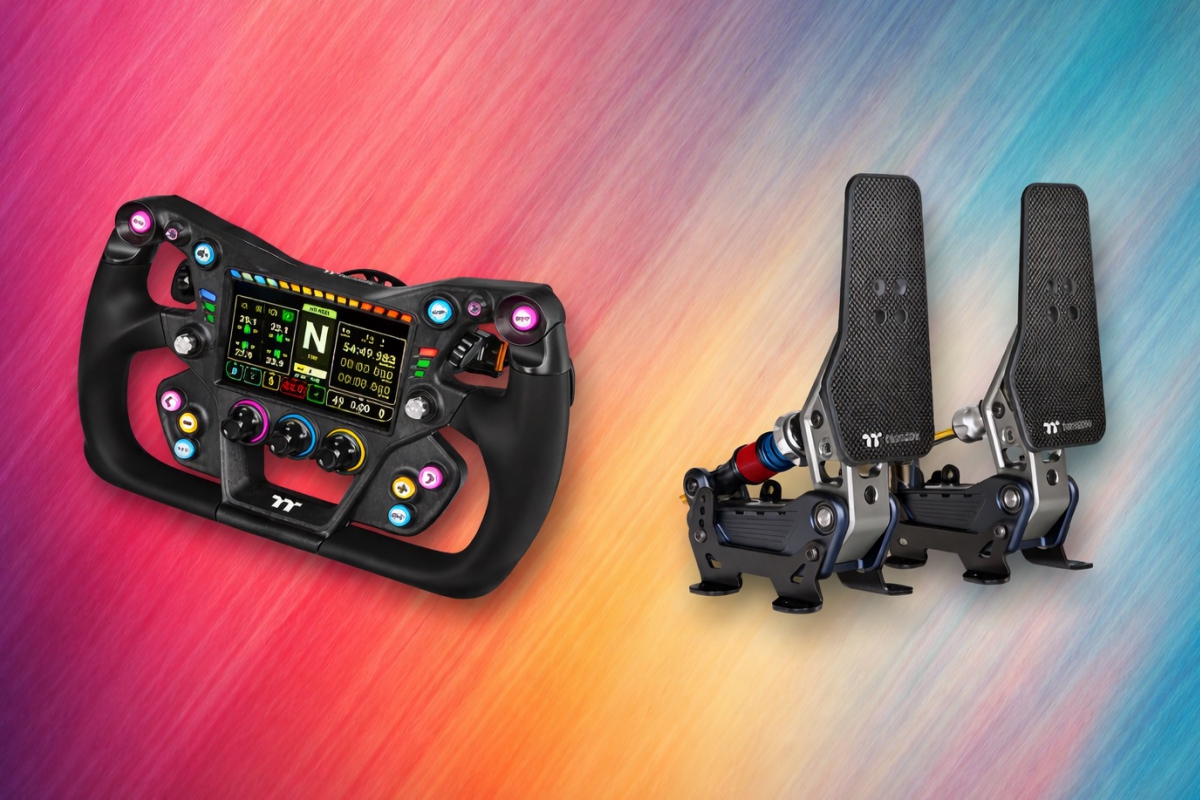
Thermaltake gets into serious sim racing with a new GT steering wheel and loadcell pedals designed for racing
Thermaltake has decided to take another step in a field that is becoming increasingly important within enthusiast hardware: the sim racing. The company has presented two new products with which it expands its virtual driving ecosystem: the XRW G1 GT Steering Wheel and XRP L1 Loadcell Pedal Settwo peripherals that are not aimed at the occasional player, but at that user who is already looking for something more similar to a competition cockpit than a simple accessory for playing.
The interesting thing about this movement is not only that Thermaltake adds more parts to its catalog, but in how it does it. Instead of launching an isolated product, the brand continues to reinforce its own system with which it wants to build a coherent and modular proposal. The message is quite clear: it is not just about selling a steering wheel or pedals, but about offering a complete platform, prepared for those who want to build a solid, adjustable setup with almost professional aspirations.
A GT steering wheel with more information, more controls and a clearly competitive approach
He XRW G1 GT Steering Wheel arrives with a 300mm format and a construction that combines CNC machined aluminum, carbon fiber and reinforced polymera mixture that seeks to offer rigidity without increasing the weight. The idea behind this approach is quite logical in a product of this type: that the steering wheel is solid in intense sessions, but without penalizing control or tiring you more than necessary when you have done several demanding laps.
One of its most striking elements is the 5 inch integrated touch screenplaced in the center of the steering wheel. It is not an ornament. Thermaltake proposes it as a way to have the View key data like RPMs, flags and other race information in real time without taking too much attention away. Furthermore, the panel works with a resolution of 854 × 480 pixels and is accompanied by different LED indicators that reinforce that quick reading while driving.
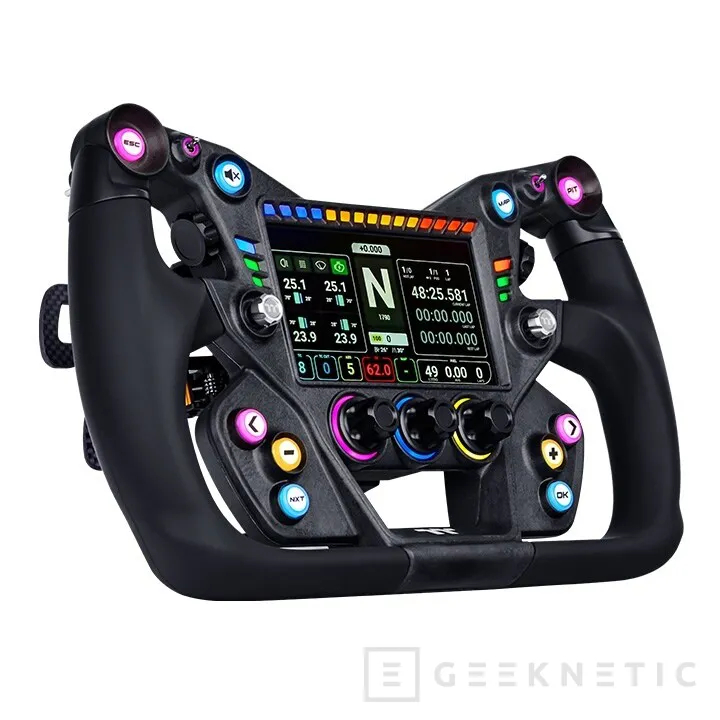
Added to this is a repertoire of controls clearly oriented towards customization. The steering wheel integrates 10 RGB buttons, a 15 LED bar for RPM, two groups of 3+3 LEDs for flags or other notifications, front and rear switches, multi-directional joysticks and several rotary encoders, both front and thumb.
Thermaltake has also focused on the tactile response of the cams. The XRW G1 GT mounts magnetic shifters and also includes clutches with Hall Sensor technologya combination that fits well with the product’s ambition: to offer a fast, clean and consistent response.
Another relevant detail is the compatibility with the brand’s quick release system. With the corresponding adapter, sold separately, the steering wheel can take advantage of a quick release mechanism with steel balls designed to change rims safely and without tools.
The XRP L1 pedals focus on what demanding users value most: brake with a 200 kg load cell
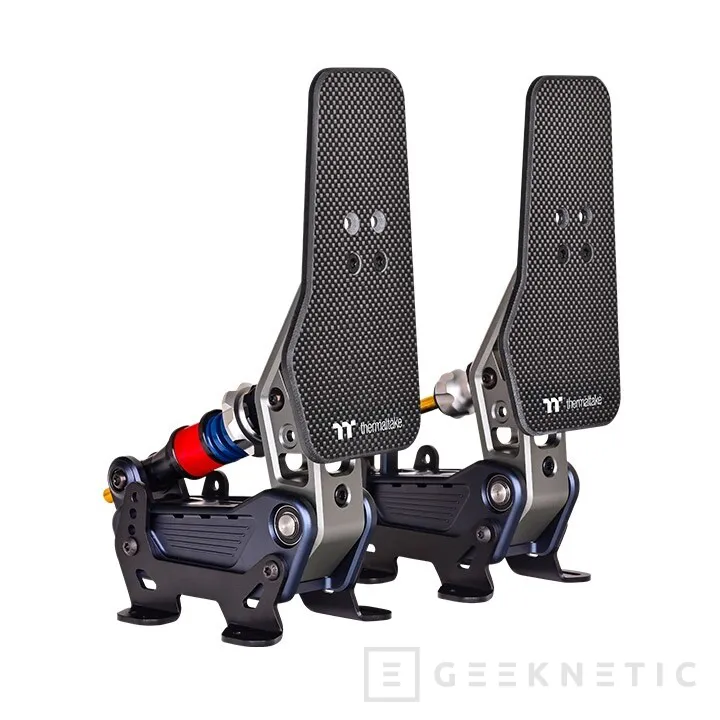
If the steering wheel seeks to reinforce the control and immersion part, the XRP L1 Loadcell Pedal Set They attack an even more sensitive point for those who compete seriously: the braking. Thermaltake has opted here for a 200 kg load cell on the brake, accompanied by a 16-bit resolutionwhich allows you to work with a reading based on pressure and not just travel.
The structure of the pedals is made of CNC machined aluminum from a single blockwith an FEM-optimized design to reduce flexing even under heavy braking or aggressive use.
On the accelerator, the brand uses a 16-bit Hall sensor, accompanied by elements such as a self-lubricating nylon sleeve and precision ball bearings. In addition, both the pedal travel and the preload can be adjusted, while in the brake springs and compression elements can be changed to vary the resistance and adapt the feel to each rider.
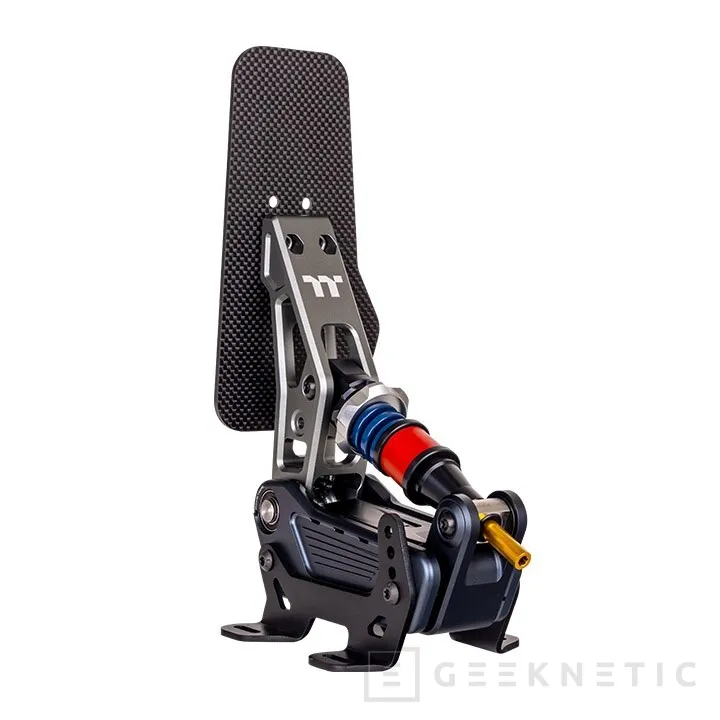
Thermaltake also finishes the set with practical details: compact format, relatively light construction, adjustable angles in steps of 5 degrees and stainless steel brackets to facilitate mounting in different cockpits. Added to this is the integration with the brand’s software, from which response and input parameters can be adjusted. And there is one more detail that the company wanted to highlight: the set is made in Italy, an argument with which it seeks to reinforce the perception of quality and finish of the product.
The feeling that this release leaves is quite clear. Thermaltake is not timidly trying its luck, but rather building a catalog with which it wants to carve out a real niche in a segment where the user looks closely at each specification. The new XRW G1 GT and the
