
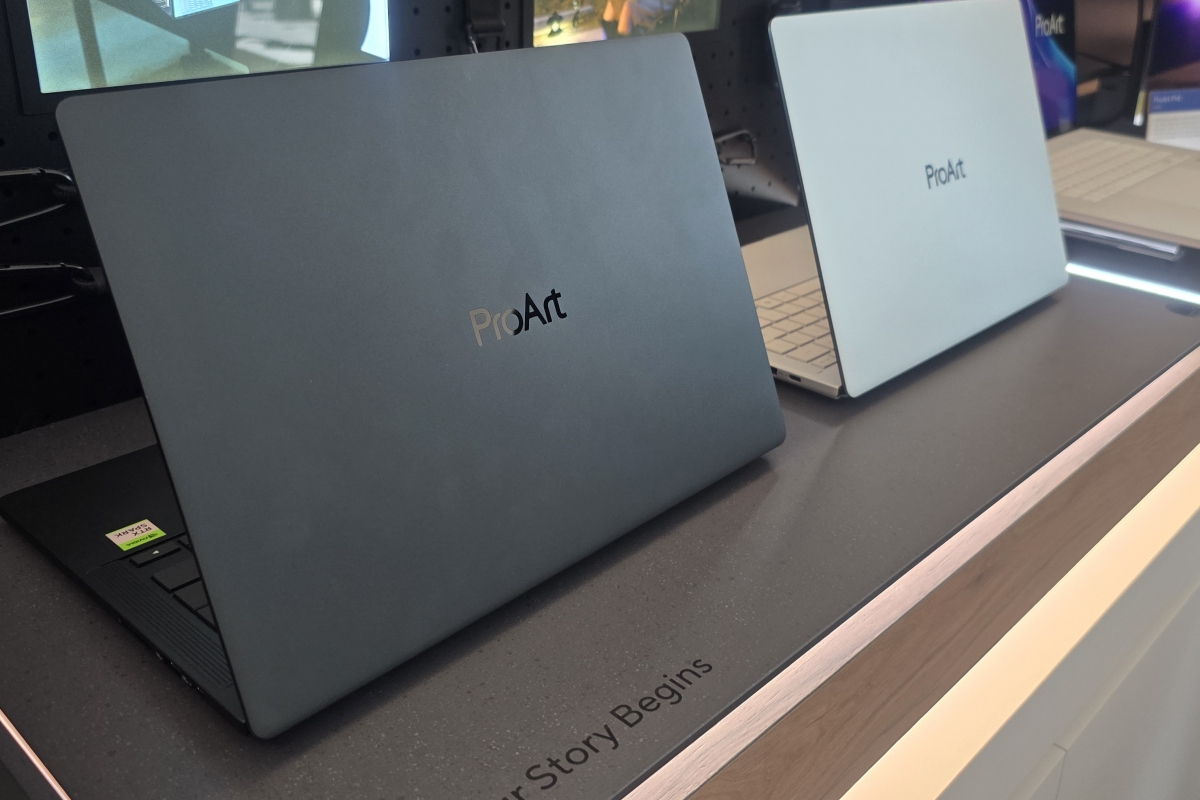
The ProArt P16 and P14 arrive and a mini PC with up to 128 GB of unified memory and 1 petaflop of AI
ASUS has taken advantage of the Computex 2026 to renew its ProArt family with three devices based on NVIDIA RTX Spark: the laptops ProArt P16 and ProArt P14in addition to the new ProArt Mini PC. ASUS’s commitment is to bring this new platform to a clearly professional environment, aimed at creators, developers and users who want to run artificial intelligence loads locally without depending so much on the cloud.
The common basis of all three devices is the new NVIDIA superchip, which combines a Blackwell RTX GPU with 6,144 CUDA cores with a Grace CPU with up to 20 cores and unified memory connected via NVLink-C2C. ASUS positions this architecture as the foundation for a new generation of creator PCs on Windows, with a focus on personal agents, generative AI workflows and GPU-accelerated creative applications.
| Specs | ProArt P16 | ProArt P14 | ProArt Mini PC |
|---|---|---|---|
| Platform | NVIDIA RTX Spark | NVIDIA RTX Spark | NVIDIA RTX Spark |
| AI Performance | Up to 1 petaflop | Up to 1 petaflop | Up to 1 petaflop |
| Unified memory | Up to 128 GB | Up to 128 GB | Up to 128 GB |
| Screen | ASUS Lumina Pro OLED 4K 120Hz VRR | ASUS Lumina Pro OLED up to 3K | Not applicable |
| Glow | Up to 1,600 nits | Up to 1,600 nits | Not detailed |
| Battery | Up to 99.9 Wh | Up to 99.9 Wh | Not applicable |
| Featured Dimensions | 13% thinner than previous generation | Ultra-thin and light format | 150 × 150 × 51mm |
| Connectivity/expansion | Not detailed | Not detailed | 10GbE and M.2 PCIe Gen 5 x4 |
| Availability | Fall 2026 | Fall 2026 | Fall 2026 |
Some ProArt designed for local AI, 4K video and large models
ASUS accompanies the announcement with a very specific set of use cases. According to the company, these teams will be able render 3D scenes larger than 90 GBedit 4:2:2 video in 12K, generate AI video in 4K and run language models of up to 120 billion parameters with contexts of up to one million tokens. These are ambitious figures, but they serve to explain well the type of user they are targeting: not so much the occasional creative, but rather those who already work with heavy tools and want more local processing.
The discourse is not limited to hardware. ASUS integrates tools such as ProArt Creator Hubaimed at optimizing system resources, in addition to MuseTree and StoryCube as a creation layer assisted by artificial intelligence. Added to that are agreements with applications such as Adobe Creative Cloud, Goodnotes or GoPro Cloud, as well as compatibility with more than a thousand accelerated applications and games, including Blender, Blackmagic Design, Capcut, ComfyUI or OTOY.
P16 and P14 are committed to mobility and the mini PC focuses on a compact format
Within the range, the ProArt P16 and P14 They are the most mobility-oriented part. ASUS talks about chassis that are 13% thinner and 16% lighter than the previous generation of the P16, with CNC manufacturing, Nano Black and Neo White finishes, and ASUS Lumina Pro OLED screens with Delta E precision less than 1. The P16 goes up to 4K at 120 Hz with VRR and G-Sync, while the P14 stays at 3K, both with up to 1,600 nits and anti-reflective treatment.
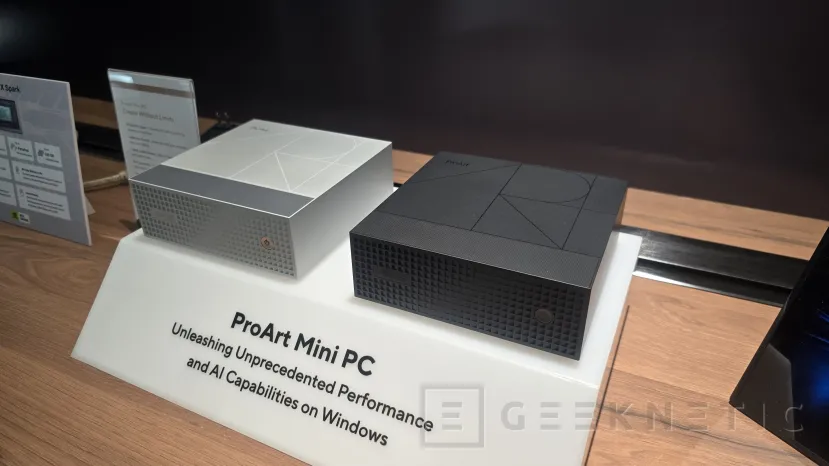
He ProArt Mini PCon the other hand, transfers the same platform to a 150 × 150 × 51 mm format, with up to 140 W of thermal headroom, 10GbE connectivity and M.2 PCIe Gen 5 x4 expansion. ASUS presents it as a machine for study, desktop or edge AI where space matters, but without giving up unified memory of up to 128 GB or the same ceiling of 1 petaflop in AI. With this range, ASUS tries to position ProArt as one of the first Windows families to adopt RTX Spark with a clearly creative and professional approach.
