
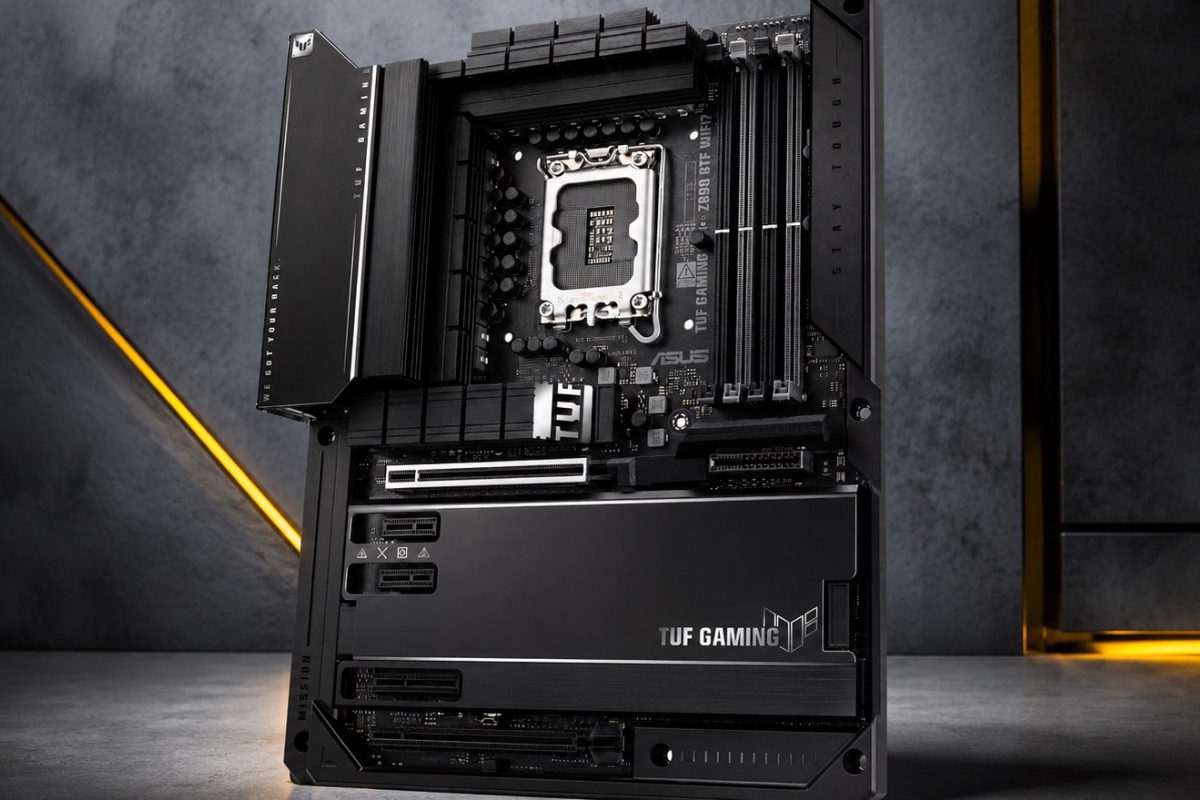
ASUS confirms TUF Gaming Z890-BTF WIFI7 motherboard with four M.2 slots and hidden connectors for Intel Core Ultra 200
ASUS has confirmed the TUF Gaming Z890-BTF WIFI7a new motherboard for the LGA1851 socket that incorporates the BTF design of hidden connectors to the TUF Gaming range on the Intel Z890 platform. It is the second model that ASUS launches with this design philosophy for Intel Core Ultra 200 processors, after the ROG Maximus Z890 Hero BTF, which was already available with a 22+1+2+2 stage power solution aimed at the highest range. The TUF Gaming Z890-BTF WIFI7 brings that same invisible wiring approach to a more accessible segment within the platform.
BTF, the acronym for Back To (the) Futureis ASUS’s commitment to cleaning the inside of towers of visible wiring. On a board with this design, the power connectors, internal USB headers and fan connectors are located on the back of the PCB, accessible from the back of the case through the openings that compatible chassis manufacturers incorporate for this purpose. The result is a virtually cable-free interior when looking through the case’s side window.
Confirmed specifications
The TUF Gaming Z890-BTF WIFI7 uses the Intel Z890 chipset and LGA1851 socketwith support for Intel Core Ultra 200 desktop processors. ASUS describes it as an ATX board with a design of hidden connectors and a high-power slot for graphics cards, which implies the presence of the GC-HPWR connector that allows powering GPUs compatible with the BTF format without any visible cables inside the case.
As for the feeding solution, The board features a 16+1+2+1 80A DrMOS stage designthe same scheme that other models in the TUF Gaming Z890 range have. The memory is DDR5 and the main graphics card slot is PCIe 5.0 x16 SafeSlot with Q-Release system for tool-free extraction. Storage is covered with four M.2 slots, of which one has support for PCIe 5.0, and the set includes DisplayPort and HDMI video outputs for the processor’s integrated graphics.
Wireless connectivity is WiFi 7 (802.11be) and the wired network is resolved with 2.5 GB Intel Ethernet. For high-speed connectivity there are two Thunderbolt 4 USB Type C ports on the rear panel and a front USB 20 Gbps Type C connector.
In the section of functions aimed at installation and maintenance, the board incorporates FlashBack BIOS to update the firmware without the need for a processor or memory, along with software functions such as AI Cooling II, Q-Dashboard and AI Networking II, plus Aura Sync lighting.
What the advanced BTF system provides
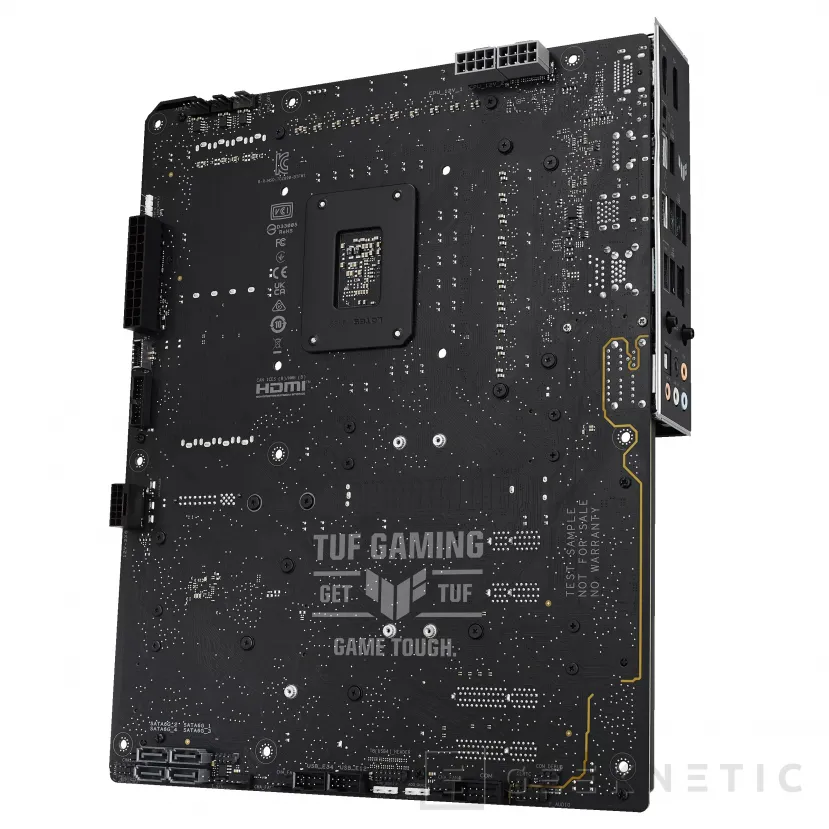
The most striking aspect of ASUS’ BTF design on this model goes beyond moving the board connectors to the rear. The board includes the GC-HPWR connector integrated into the PCIe slotallowing BTF-compatible graphics cards to receive all of their power through the slot without requiring an external 16-pin cable. ASUS has indicated that this system can supply up to 600W to compatible BTF GPUs, although conventional graphics cards will also work without any problem using their standard power cable.
To get the completely cable-free experience that the BTF format offers in its most complete version, it is necessary to combine the motherboard with a BTF format compatible case, a BTF graphics card and a compatible cooling system. With this combination, all the cables are hidden in the rear area of the board, and the visible interior of the tower shows only the components without any wiring visible.
ASUS has not published price or regional availability for the TUF Gaming Z890-BTF WIFI7 at the moment. The board has been listed with its official specifications, confirming its existence and features, but commercial launch details are not yet available. It will be the first board in the TUF Gaming line that brings the BTF design to the most recent Intel platform, completing a range that AMD already has the TUF Gaming B850-BTF model and the Z890 only had until now the high-end option of the ROG family.
