
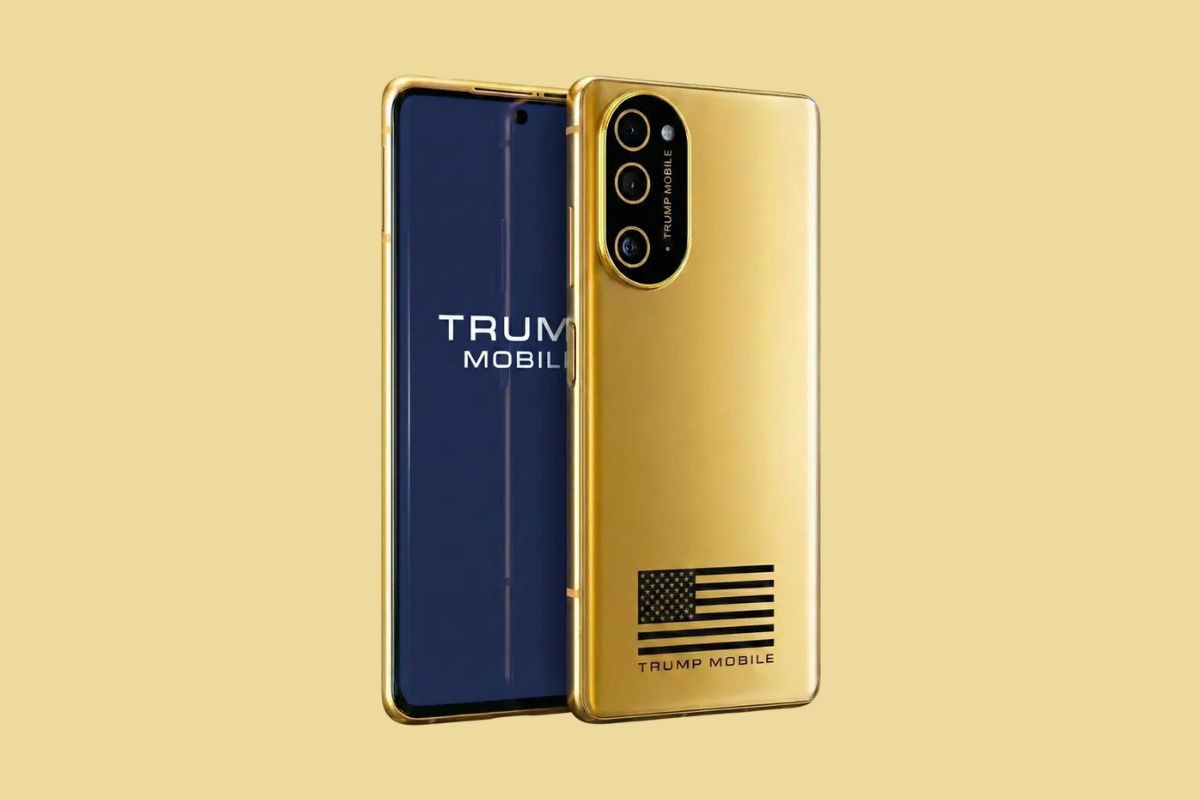
iFixit dismantles Trump Mobile’s T1 and confirms the suspicion: it was not an American mobile, but an already known Android
The soap opera of T1 Phone by Trump Mobile adds a new chapter. iFixit has dismantled the device and assures that its interior almost completely matches that of the HTC U24 Pro, a model launched in 2024. The conclusion does not come as a total surprise, because doubts about the real origin of the phone had been accumulating for months, but it does provide an element that was missing until now. We are referring to tests, to a detailed technical analysis that allows us to go from suspicion to confirmation.
The history of T1 was twisted from the beginning. When Trump Mobile introduced it in 2025, the project was supported by a very clear narrative. It was a golden mobile, associated with American values and linked to a nationally manufactured discourse. However, delays, technical sheet changes and design twists soon began. Already at the beginning of 2026 we saw how the T1 failed to fulfill its promise of launching in 2025, while reservations with a prior deposit were still open.
Then another element arrived that increased skepticism. Trump Mobile even started talking about a higher version before it had delivered a single unit of the base model. In parallel, the official design and specifications changed again and again. At the time, we explained to you that the company announced a T1 Ultra without having yet materialized the original terminal. Also that the technical sheet and the renders of the T1 were modified again in spring, bringing it closer to a much more coherent mid-range device, although without clearing up the great doubt about its real origin.
iFixit teardown confirms nearly identical base to HTC U24 Pro
Now iFixit has added the missing information. Before opening the terminal, the team used a Lumafield CT scanner and, he explains, the verdict was already clear even at that stage. And the interiors of T1 and HTC U24 Pro are almost identical. Later, the physical disassembly reinforced that impression. The position of components, screws, adhesives, layout of the motherboard and general layout coincide practically point by point.
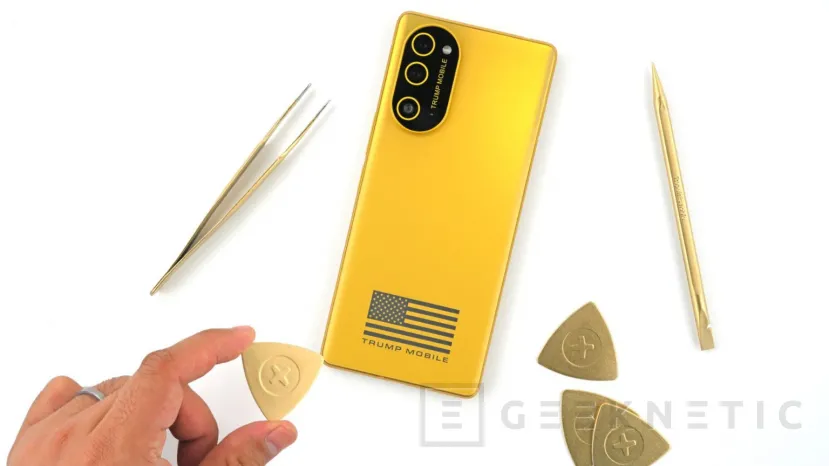
The differences detected are minor and, to a large extent, cosmetic. iFixit points out a slight change in flashsolved simply with a longer flex cable, and a speaker grill with a different pattern on the aluminum casing. It also points to a difference in supplier in the packaging that integrates RAM and storage, something that would not be strange within the same industrial base due to supply or cost issues. Instead, the processor is the same again: a Snapdragon 7 Gen 3.
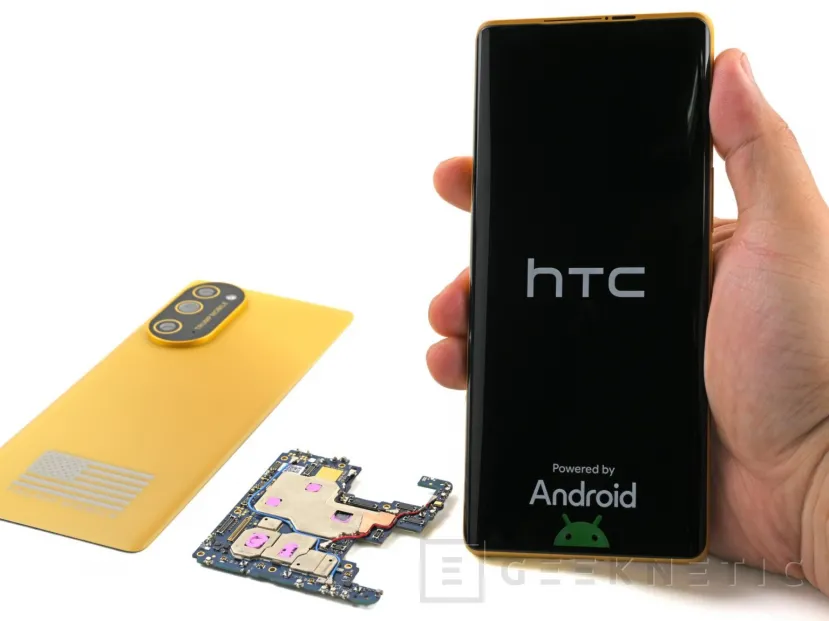
The other relevant difference is in the battery. The T1 has a unit with a higher energy capacity, manufactured in the Philippines by a company called Newlix, and is also limited to 30W chargingcompared to the 60 W of the HTC model. That fits with the profile that Trump Mobile had been tweaking in recent months. Beyond that, iFixit maintains that both phones even share the panel, with a complete coincidence in the pixel structure observed under the microscope.
Months of doubts lead to a fairly clear conclusion
Seen in perspective, the disassembly fits with what the chronology already indicated. The T1 went from promising a mobile “made in the United States” to moving towards much more ambiguous expressions, while accumulating delays, design revisions and a video call presentation that already revealed a very different phone from the initial promotional material. When Trump Mobile showed a unit to a journalist in February, the aesthetic change was already evident. Now, iFixit confirms that those statements could only be a chimera.
The underlying reading is that this “made in America” story could hardly be sustained as it had been told. iFixit does not deny that there may be some local assembly or final integration of some modules in the United States, but makes it clear that this is far from turning the T1 into a mobile phone manufactured there in the strict sense. In fact, the analysis itself indicates that the most probable place of production continues to be in existing lines in Guangdong, Chinawith a good part of the pieces also coming from the Chinese industrial ecosystem.
