
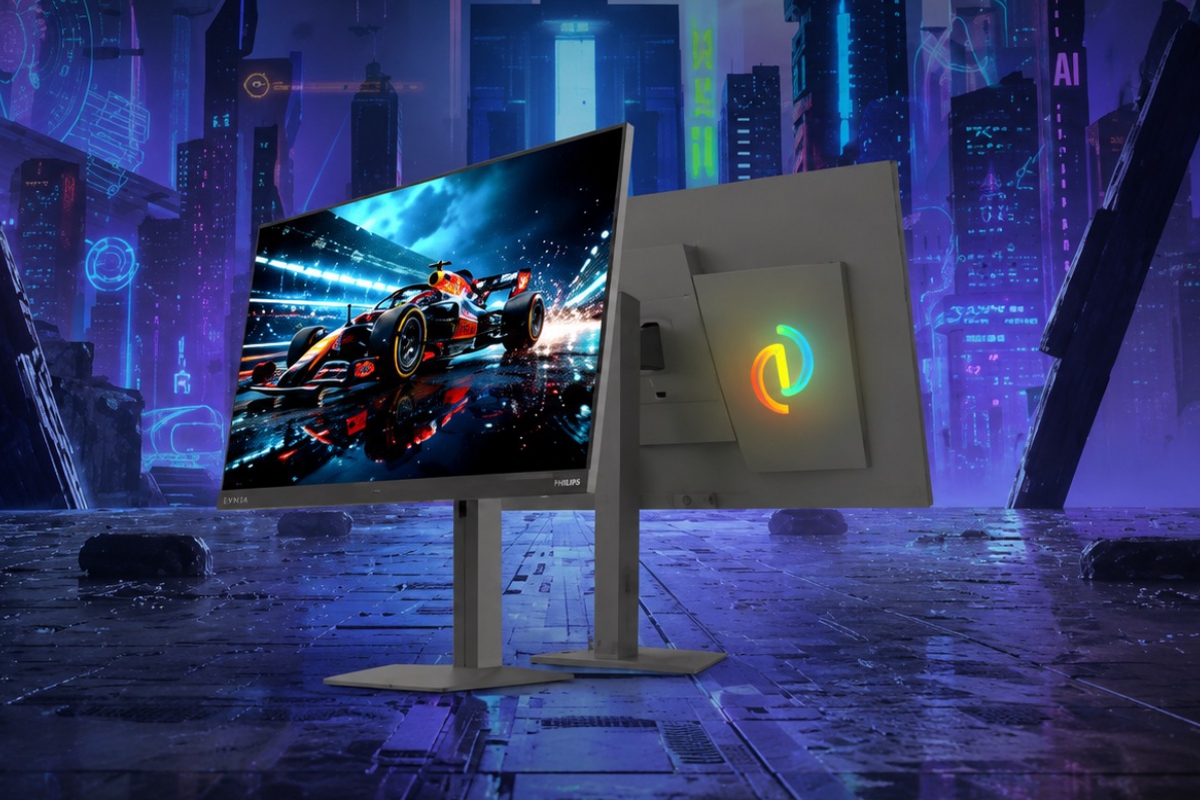
Philips launches Triple-Mode, the technology that allows you to choose between 275, 360 and 540 Hz on the same panel
Philips has introduced a technology into its Evnia range that promises to change the way gaming monitors are configured. It’s called Triple-Mode and, instead of forcing the player to choose between resolution or refresh rate as before, it allows you to switch between three different combinations of resolution and Hz without touching a single cable or entering complicated menus.
The firm has presented two models within this new M4 serieshe Philips Evnia 27M4N3500PT and the Philips Evnia 27M4N5500PTboth with Fast IPS panel and HDR compatibility. The idea behind Triple-Mode is simple: each profile is designed for a different type of game, so the user can go from a leisurely role-playing session to a competitive shooting game without changing screens or manual settings.
Three resolution and frequency modes on the same panel
He First of the three Triple-Mode monitor profiles works in QHD (2,560 x 1,440 pixels) with overclock up to 275Hz and HDR activated, designed for open world games or AAA titles where visual detail matters as much as fluidity.
The second mode reduces the resolution to 1,280 x 720 pixels to shoot the refresh at 540 Hz also with overclock, a profile aimed directly at esports players who prioritize minimal latency and instant response above anything else.
Between both extremes is the third profile, in Full HD (1,920 x 1,080 pixels) at 360 Hza middle ground that Philips defines as the balance between image fidelity and competitive speed. Unlike dual-mode monitors already on the market, this third profile fills the gap between pure graphics performance and pure competitive performance, and switching between the three is done instantly from the on-screen menu.
Comfort designed for marathon games
Beyond Triple-Mode, Philips has focused on visual protection during long sessions. The Fast IPS panel reduces blue light emission, and this reduction is combined with Low Blue Light and Flicker-Free technologies to minimize eye fatigue without sacrificing image quality.
The top model, the Evnia 27M4N5500PT, adds a SmartErgoBase with height adjustment, tilt, swivel and up to 90 degrees of vertical pivotwhich also makes it suitable for multi-screen setups in work environments. Philips has also added a EVNIA AI gaming iconglow ambient light and a base design with a minimalist geometric cut that seeks to visually differentiate this monitor from the rest of the range.
Key specifications and additional features
Triple-Mode Monitor Panel Mounts Treatment Anti-Glare with 25% haze and reaches a maximum brightness of 350 nits. At the level of gaming-oriented features, Philips has incorporated a set of AI-assisted improvements that include shadow reinforcement, smart sight, smart sniper mode and smart MBR sync, designed to give you an advantage in specific competitive gaming situations.
In terms of connectivity, both models have HDMI 2.1 and DisplayPort 1.4enough to take advantage of the higher refresh rates offered by Triple-Mode without cable bottlenecks.
One step beyond dual mode monitors
Until now, the usual formula in high-performance gaming monitors involved choosing between two fixed configurations: one oriented towards resolution and the other towards refresh rate.
This dual mode scheme forced the player to opt for one of the two extremes depending on the type of game, with no room for intermediate situations. The Philips Evnia Triple-Mode monitor breaks with this binary approach by incorporating a third profile that acts as a bridge between the two, something that until now was not common even in competing premium models.
At the moment, Philips has confirmed the launch of the Evnia 27M4N3500PT and 27M4N5500PT series only for APAC regionwithout information on availability or price for the European market having yet been provided. If the brand expands the launch to Spain or the rest of Europe, we will have to wait for it to confirm both dates and rates, which will likely vary with respect to the Asian figures due to taxes and distribution.
With this commitment, Philips joins the trend of gaming monitors that try to solve the eternal dilemma between resolution and speed, offering on the same panel three configurations designed for completely different player profiles. It will be necessary to see if other manufacturers respond with similar proposals in the coming months, since the multi-mode panel segment has been gaining ground for some time among those who frequently alternate game genres.
