
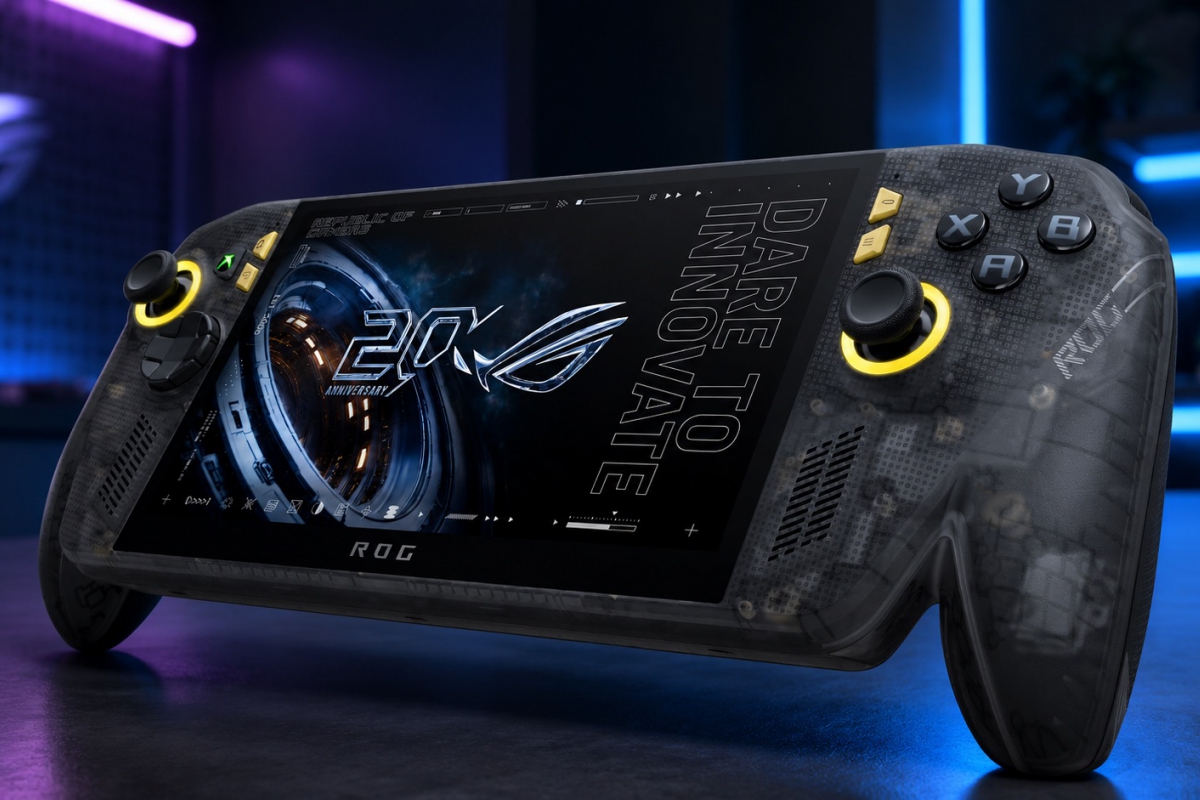
ASUS confirms that the Ally X20 with OLED screen will be sold without augmented reality glasses
ASUS has confirmed that its handheld ROG Xbox Ally X20, the variant with an OLED screen of its range of gaming laptopscan be purchased independently. It is a relevant change in approach, since this model had initially been presented as part of a package that also included augmented reality glasses, a combination that generated a lot of confusion among users interested only in the portable console.
The confirmation comes after ASUS’s initial proposal raised quite a bit of criticism. Selling a high-end handheld tied to an augmented reality accessory that most buyers had not ordered was, to say the least, a risky business decision. The company seems to have taken note, and now makes it clear that the Ally X20 will have its own path in the market, without depending on that bundle.
ASUS confirms that the Ally X20 will not require the AR glasses package
An ASUS spokesperson has confirmed in statements to the media that the company is actively working on the launch schedule for an independent version of the new Ally, and that in More official announcements are expected in the coming weeks.. ASUS has not yet set a specific availability date for this standalone version, although the message is unequivocal: the ROG Xbox Ally X20 will also arrive without the addition of augmented reality glasses.
This decision fits with the line that ASUS has followed in the rest of its ROG Ally range, where each model has always been sold as an independent product. At its launch, tying the Ally
7.4-inch OLED display with 120 Hz and VRR
Among the characteristics that define the Ally X20, its 7.4-inch OLED display with 1920×1080 resolution and 120 Hz refresh rate with support for VRR (variable refresh rate). It is a relevant leap compared to the LCD panels that previous versions of the ROG Ally range have mounted, since the OLED provides deeper blacks, better contrast and, in general, a superior visual experience for playing on the go, something especially appreciated in a device designed for prolonged gaming sessions away from home.
The jump to an OLED panel places this model in line with what other gaming handheld manufacturers already offer, a segment where screen quality has become one of the main selling points along with the autonomy and power of the internal hardware.
How the Ally X20 fits within the ROG Ally range
ASUS maintains several generations of its family of handhelds in parallel, and the differences between them give a clear idea of where the range is evolving.
The most recent models, including the Ally X20 itself, incorporate AMD Ryzen Z2 Extreme eight-core processors with Zen 5 architecture, accompanied by RDNA 3.5 graphics with up to 16 computing units. These more advanced versions also add a AMD XDNA NPU capable of reaching up to 50 TOPSan AI acceleration block that was not present in previous generations of the range, where this section did not exist directly.
In terms of memory, the most recent models of the ROG Ally family can mount up to 24GB LPDDR5X memory at 8,000 MT/s, compared to the 16 GB at more contained speeds offered by previous models such as the ROG Ally up to 1 TB in PCIe 4.0 NVMe SSD format in M.2 2280 formatexceeding the 512 GB limit that some of the first versions of the range came with from the factory.
Price and availability not yet confirmed
ASUS has not confirmed the price or availability date of the standalone version of the Ally X20. For reference, the Xbox Ally X Current, the variant without OLED screen, is priced at $999while the OLED model had until now been shown only as part of a more expensive package that included augmented reality glasses.
It is reasonable to expect the OLED version alone to be abovegiven that the OLED panel usually increases the manufacturing cost compared to an equivalent LCD panel, although ASUS has not provided any official figure in this regard.
ASUS’s decision to unbundle the Ally With Valve, Lenovo and ASUS itself competing strongly in this segment, offering purchasing flexibility has become almost as important a factor as the technical specifications themselves.
With the OLED display, Ryzen Z2 Extreme processor, and up to 24GB of LPDDR5X memory, the Ally
