
TSMC accumulates $1 billion in Apple chips while waiting for DRAM memory to complete them
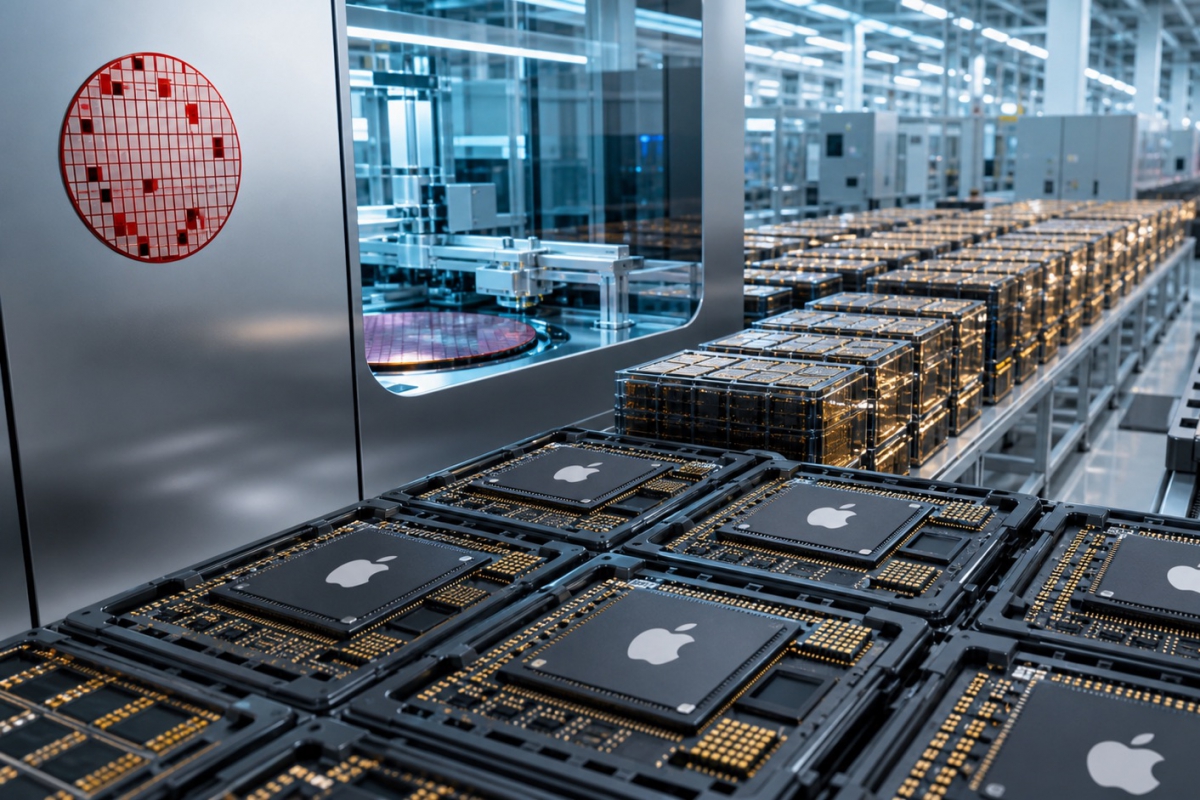
TSMC would have accumulated a significant volume of Apple processors already manufactured but pending completion, waiting for the necessary DRAM memories to arrive from the Cupertino company’s suppliers. The Taiwanese manufacturer reportedly currently has Apple chips valued at approximately 1 billion dollarsretained in your production chain while the rest of the components necessary to complete the final package arrive at your facilities.
The reason behind this bottleneck lies in the packaging technology that TSMC is using for these processors. The company is developing a package of type Integrated Fan-Out Package on Package (InFO-PoP)a 3D wafer fan solution designed to house memory directly on top of the SoC die. This approach allows the size of the printed circuit board design to be reduced, as it prevents the LPDDR5X module from individually occupying more than 100 mm² of surface area on the PCB, a particularly relevant space saving in a device as compact as a smartphone.
Less than six weeks until launch
According to the information available, there would be less than six weeks left for the launch of the iPhone 18 series and Ultra modelwhich would be pushing Apple to accelerate its DRAM memory orders to the maximum to ensure the necessary supply for the premiere.
The Cupertino company depends mainly on Micron DRAM memorywhose LPDDR5X modules are used in a wide variety of devices and are reportedly the primary source of memory for the next generation of iPhones. SK hynix and Samsung are also among Apple’s suppliers, although Micron would remain the company’s priority option.
Apple, according to this same information, would have been working to add more manufacturers to its memory supply chain, even negotiating with the Chinese company CXMT a possible discount based on purchase volume. However, CXMT reportedly rejected this proposal, leaving Apple with more limited room for maneuver when it comes to diversifying its DRAM memory sources at a particularly delicate time in the production schedule.
Why packaging requires you to wait
The underlying problem is that TSMC cannot assemble Apple processors until the corresponding DRAM memory arrives at its facilities. InFO-PoP technology requires DRAM dies to be integrated directly into the final package, so the Taiwanese foundry cannot ship any complete processors until that packaging process is complete. This process can reportedly take up to two additional weeks once memory is available, leaving TSMC and Apple working on a very tight timeline for the launch of the new iPhone.
This mutual dependency between the memory supply and the packaging process illustrates the extent to which manufacturing a high-end smartphone has become an exercise in coordination between multiple supplierswhere a delay in any of the links in the chain, be it the memory, the SoC manufacturing process itself or the final packaging, can directly impact the availability of the finished product just before its commercial launch.
A problem that goes beyond Apple
The shortage and rising cost of DRAM memory is not an exclusive problem for Apple. During recent months, the memory market has gone through a phase of generalized tension that has affected manufacturers of all types of devices, from computers to consoles, including business servers themselves. In this context, the fact that a company with the negotiating power of Apple has to adjust its DRAM orders to the limit and actively seek new suppliers gives an idea of the real magnitude of the pressure that currently exists on the global memory supply chain.
For consumers, these types of supply chain tensions often translate, sooner or later, into in an increase in the cost of the end devices themselves or in possible specific delays in the availability of certain models during the first weeks after its launch. We will have to wait for Apple’s next official announcements to see if this race against time to secure the supply of DRAM memory ends up having any visible impact on the availability or final price of the new generation of iPhone.
The role of the A20 in this whole equation
The processor affected by this situation would be the A20, the chip that Apple plans to integrate into the next generation of iPhone and which, as previously reported, will require a considerable amount of TSMC’s advanced production capacity. That this processor depends directly on a package that integrates DRAM memory at the wafer level adds an additional layer of complexity to its manufacturing, compared to previous generations where the SoC and memory were assembled more independently within the device itself.
This type of closer integration between logic and memory is, in any case, a trend that is spreading throughout much of the semiconductor industry, since it allows improving communication between both components and reducing the physical space required within the final device.
