
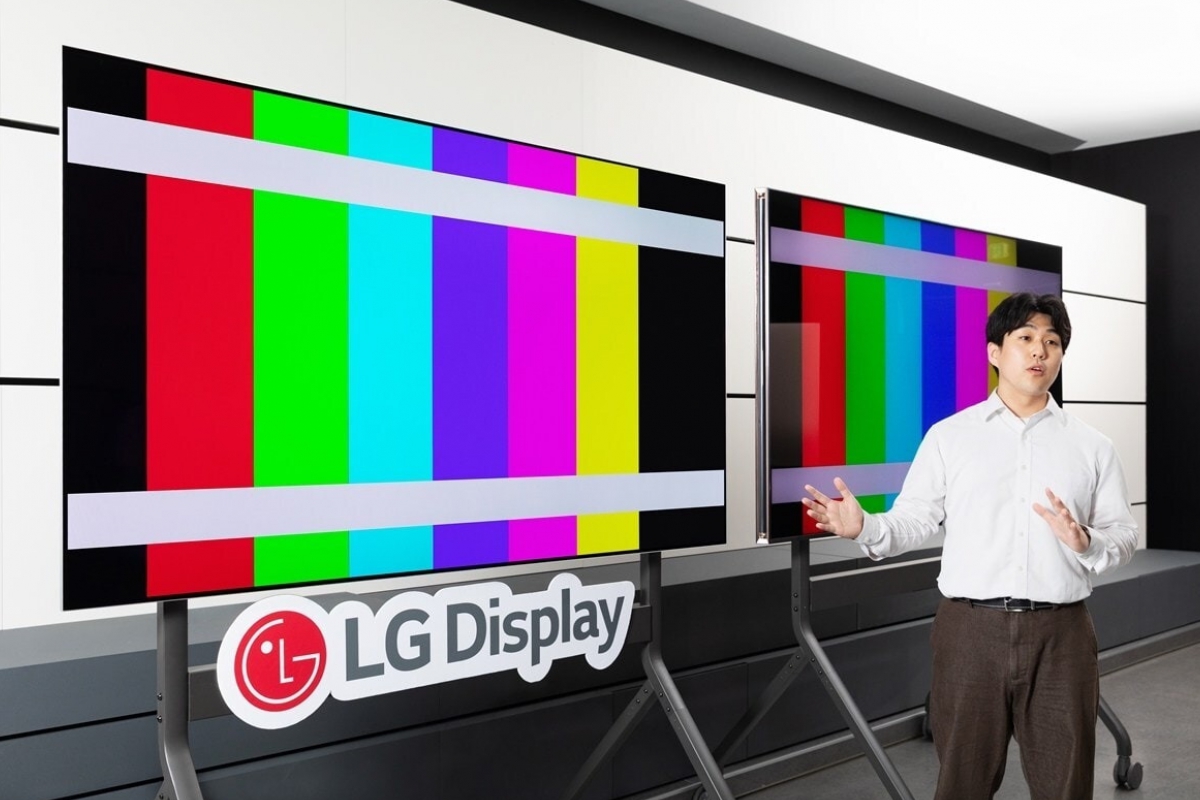
LG Display ensures that its large format OLED panels are the first to achieve perfect color and brightness certification up to 500 lux
LG Display has announced that its entire range of large format OLED panelsincluding those intended for monitors and televisions, has obtained a new certification from Intertek related to color and brightness accuracy under real-world use conditions. The company maintains that this is the first time that a complete family of panels achieves the “Perfect Color/Brightness Accuracy up to 500 lux” certification, a seal with which it seeks to reinforce the message that its OLED technology maintains a faithful reproduction of the image even outside of a laboratory environment.
The announcement also comes at a time when the company has announced exciting new features in different screen categories. In recent weeks, we have seen the new OLED gaming panels at SID Display Week 2026, while the laptop range also presented screens capable of going down to 1 Hz to improve autonomy. On this occasion, the great novelty is focused on the visual quality measured with real reproduction criteria.
As the company explains, the value of this certification is that it attempts to go beyond traditional data such as color space or maximum brightness. That is, LG Display suggests that these specifications are not always enough to objectively verify how well a panel reproduces colors and brightness as intended. To resolve that point, Intertek would have subjected OLED and LCD panels to a battery of tests with different patterns to measure color and luminance variations in different viewing situations.
LG contrasts the self-emissive structure of OLED against the limitations of LCD
Always according to the data provided by LG Display, its OLED panels recorded 100% color accuracy, 100% brightness accuracy and absence of color crosstalk, that is, no color interference between adjacent pixels. The company interprets these results as validation that its panels can display the color and brightness intended by the content creator regardless of the viewing environment or type of scene depicted.
The company takes advantage of the announcement to compare this architecture with that of LCD panels. LG Display maintains that, by relying on backlighting divided into zones and not self-emissive pixels, LCDs continue to have certain structural limitations. Among them, he mentions brightness losses in complex HDR scenes, such as starry skies or fireworks, as well as possible color distortions on some premium LCD televisions with RGB LED backlighting.
LG’s technical argument is that the OLED, when working with millions of pixels that emit light independentlyeliminates light leaks into adjacent areas and prevents interference between bright and dark elements of the image. Therefore, the company presents this certification as a way to quantify an advantage that, according to its speech, the consumer already perceives visually in everyday use.
