
ASUS and MSI bring AMD EXPO Ultra Low Latency to X670E boards with new BIOS based on AGESA 1.3.0.1b
ASUS and MSI have started deploying new BIOS for X670E motherboards that incorporate support for AMD EXPO Ultra Low Latency, an extension of memory profiles designed to better squeeze DDR5 within the same speed class. The move confirms that this feature will not be limited to the latest boards with the X870 or X870E chipset, but will also reach part of the AM5 ecosystem based on the 600 series.
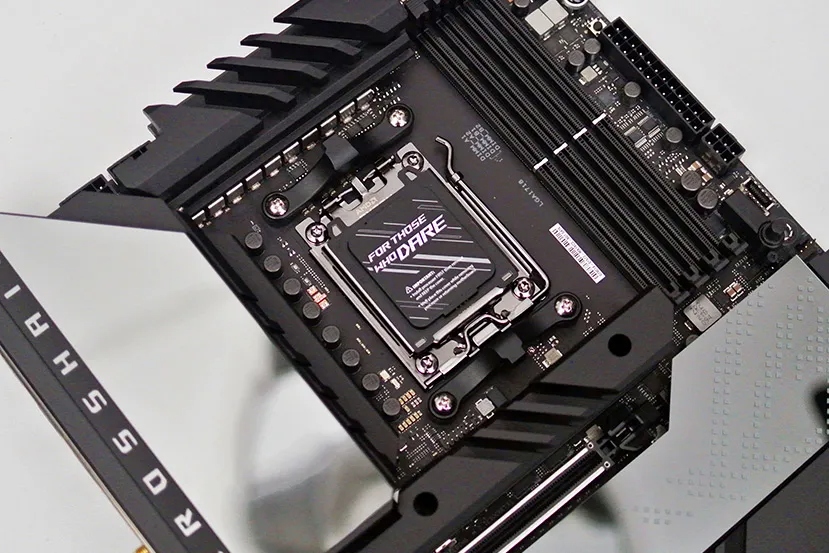
In the case of ASUS, the update appears as BIOS beta 3803 for various X670E models of the ROG Crosshair, ROG Strix, ProArt and TUF Gaming families. MSI, for its part, has released a similar update for its MEG X670E GODLIKE. In both cases, the new firmware is supported by AGESA 1.3.0.1bthe same base that we had already seen in X870E models.
The point is that the Ryzen 7000 and Ryzen 9000 processors do not stand out as much for extreme memory frequencies as other platforms, but they do leave room to work with much tighter latencies within known speeds. A typical example would be a DDR5-6000 CL26 kit versus more common profiles such as CL30 or CL36 at that same frequency.
EXPO ULL extends to AM5 beyond X870E
The arrival of this feature to the X670E confirms that AMD has not restricted it to a specific generation of chipsets. On compatible ASUS boards, in addition to support for EXPO ULL, three new timing controls appear within Ai Tweaker and DRAM Timing Control: TccdL, TccdL_WR and TccdL_WR2. They are low-level parameters aimed at advanced users who want finer control over the behavior of the DDR5.
MSI has also begun to incorporate in its release notes the reference to “Optimized with AMD EXPO Technology: Featuring Ultra Low Latency”indicating that the feature is being rolled out progressively across manufacturers and models. Availability, however, continues to depend on each license plate and the calendar of each brand.
What can this improvement bring to DDR5 in Ryzen?
AMD introduced EXPO Ultra Low Latency as part of the update EXPO 1.2 and directed it to reduce undertimings and improve effective latency. According to the data that the company itself showed during Computex, the improvement may be around 4% higher FPS on average vs. standard EXPO and up to 13% vs. DDR5 JEDEC on a test system with Ryzen 7 9700X. As always, these figures depend on the game, the kit and the specific configuration, but they serve to establish the objective of this certification.
For now, the published BIOSes are still beta versions, so they are more designed for enthusiasts, overclockers or users who want to try the new compatible memory kits as soon as possible. Still, the step is relevant because expands the real scope of EXPO ULL within AM5 and gives more scope to X670E motherboards that still have enough room to continue growing with new functions via firmware.
