
LG Display eliminates the metal mask from the OLED process with FLiPP: 64% more substrate utilization
LG Display has presented FLiPP (FMM-Less innovative Pixel Patterning)a new method of manufacturing OLED panels that completely dispenses with thin metal masking (FMM), the process that has dominated the production of this type of display for more than a decade. The South Korean company defines this technology as its own and “dream” method within the OLED pattern industry.
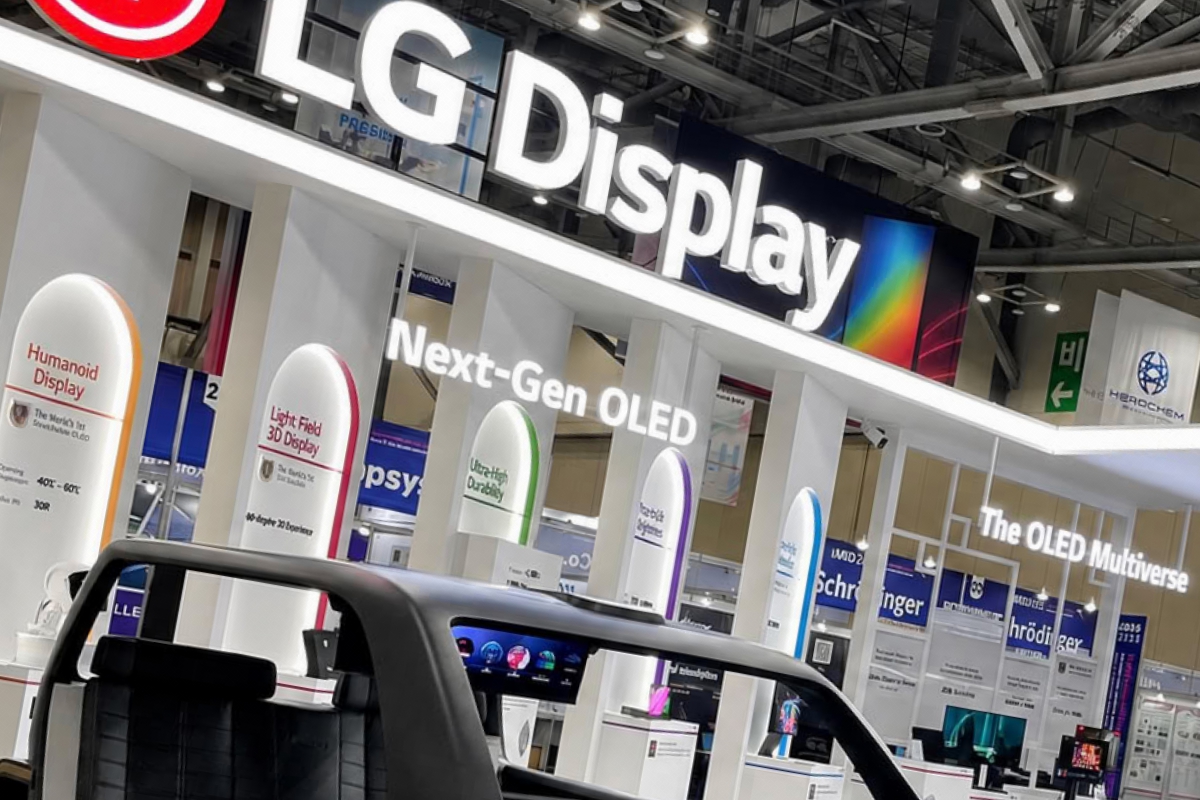
FLiPP will be presented for the first time in the world during the International Meeting on Information Display (IMID) 2026held in Busan, where LG Display will have a dedicated pavilion for three days starting August 19.
What changes compared to the traditional FMM process
The FMM method, which has been the OLED manufacturing standard for more than ten years, works similarly to a stenciling technique: red, green and blue (RGB) organic materials are evaporated through small holes drilled into metal plates. The problem is that these metal masks, when they increase in size, tend to sag under their own weight in the center, causing misalignments and sometimes color mixing defects.
FLiPP eliminates that dependency on metal plates. Instead, the technology coats the RGB pixels in order, secures them in precise positions, and uses photolithography (precision etching using ultraviolet light) to remove unnecessary areas during patterning of the OLED pixels.
Up to 64% more substrate utilization
Thanks to its existing infrastructure for the production of large-sized Tandem WOLED panels, LG Display becomes the first display company to manufacture OLED panels without FMM using eighth and a half generation mother glass (8.5G) as a single piece, without the need to divide it into smaller substrates.
Compared to manufacturing laptop OLED panels of the same size using FMM or other maskless methods that do require split substrates, FLiPP offers up to 64% more utilization of the mother glass.
Compared to panels manufactured with FMM under identical conditions, panels with FLiPP technology They manage to increase brightness by 1.6 times, extend useful life by 2.4 times and reduce energy consumption by 13%. LG attributes these improvements to the fact that FLiPP increases the aperture ratio by approximately 55%, that is, the proportion of the total screen area occupied by RGB pixels compared to the rest of the panel components.
The traditional FMM method also adds additional manufacturing costs, since the metal masks, which are expensive to produce, must be renewed every time the panel size or resolution changes. By removing that dependency, FLiPP reduces the recurring cost associated with each new product reference.
No size or panel type limits
One of the biggest advantages that LG Display claims for FLiPP is that it is free of the size and resolution restrictions that do condition the FMM method. In theory, the technology could be used to make screens between 1 and 100 inchesboth on conventional panels and on screens for virtual and augmented reality devices.
The company plans to begin applying FLiPP in IT-type applications such as tablets and monitors, and then expand its use to a range of products that would range from one-inch wearables to large format televisions, adapting manufacturing to the needs of each product category.
For the panel sector for laptops and tablets, This approach is relevant because it opens the door to specifications that until now conflicted with physical limitations. of the FMM process, such as very small formats with high pixel densities or large surface curved panels, both cases where a rigid metal mask considerably complicates manufacturing under conditions of constant quality.
Technology Protection and Next Steps
As it is the only non-FMM manufacturing process for 8.5G generation OLED panels, LG Display has presented trademark applications for FLiPP in both Korea and several key international marketsa movement that seeks to protect the property of this technology against possible competitors.
The company frames FLiPP within a broader strategy that combines its RGB OLED technology (currently considered the most advanced within the OLED segment) with this new manufacturing process, with the stated objective of maximizing both the flexibility and efficiency of its production.
LG Display has also taken advantage of the IMID framework to highlight another recent recognition: its OLED panel scanning technology for televisions, called Hyper Double Scanning (HDS), has received the “Display of the Year” award in the technological excellence categorydistinction awarded to the most outstanding product among those marketed during the year.
