
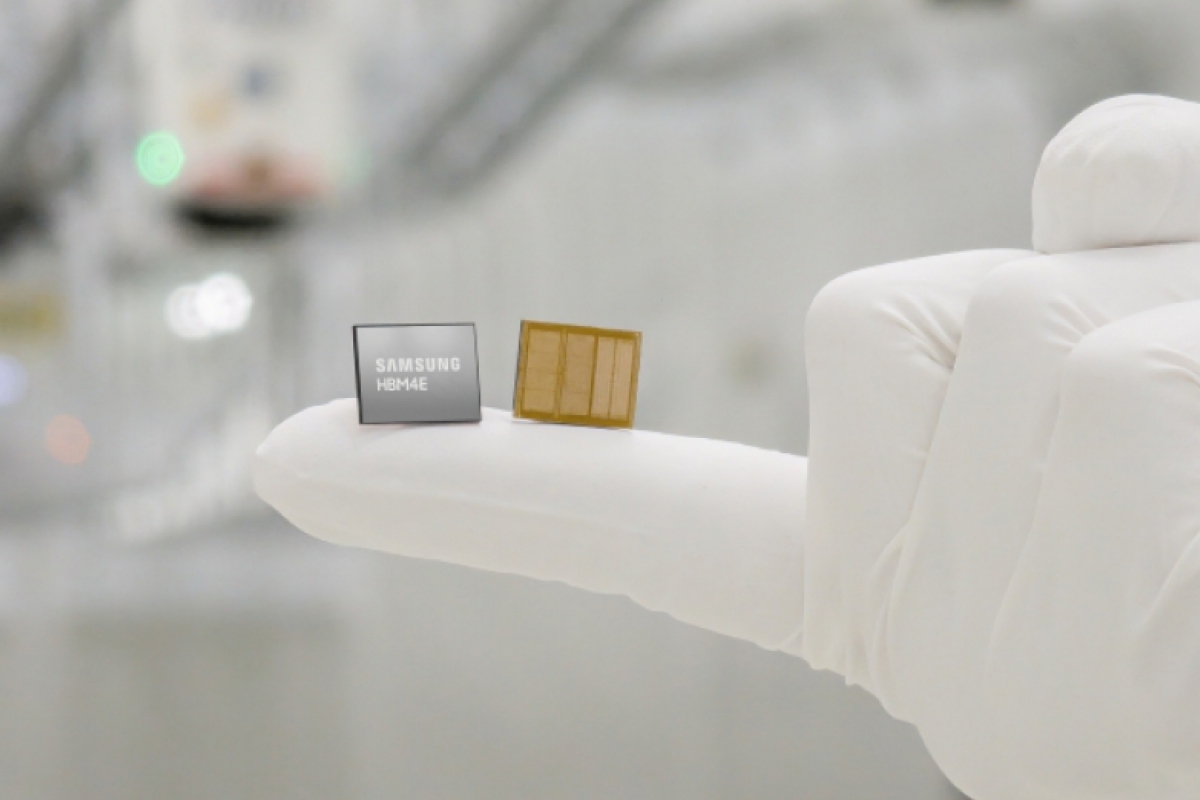
Samsung already achieves 16 Gbps per pin in its HBM4E to compete with SK Hynix
Although when they began manufacturing the first HBM4E memory chips at Samsung, they promised bandwidth speeds of up to 13 Gbps per pin and later made the jump to 14 Gbps per pin. It seems that the company has been working to increase that figure and be able to reach 16 Gbps, at least as can be seen in Samsung’s leaked slide at Hot Chips 2026.
The 13 Gbps of the Korean company’s initial data soon fell short after SK Hynix’s announcement of sending the first samples of its own HBM4E chips at 16 Gbps per pin, a speed increase that meant that Samsung memories were already born with a clear disadvantage.
With 16 Gbps per pin, Samsung can already compete with SK Hynix with its 12-layer HBM4E chips.
With the new update, Samsung catches up and will be able to compete face to face with SK Hynix, since its memories will be able to offer bandwidths of 4 TB/s per applied HBM4E chipthe same figure as the Samsung models after this bandwidth improvement.
Specifically, Samsung’s HB4E chips will have 12 layers with a density of 48 GB for each one, although they are expected to make the jump to 16-layer and 64 GB chips in the future, in addition to models with lower capacity according to the needs of their customers.
