
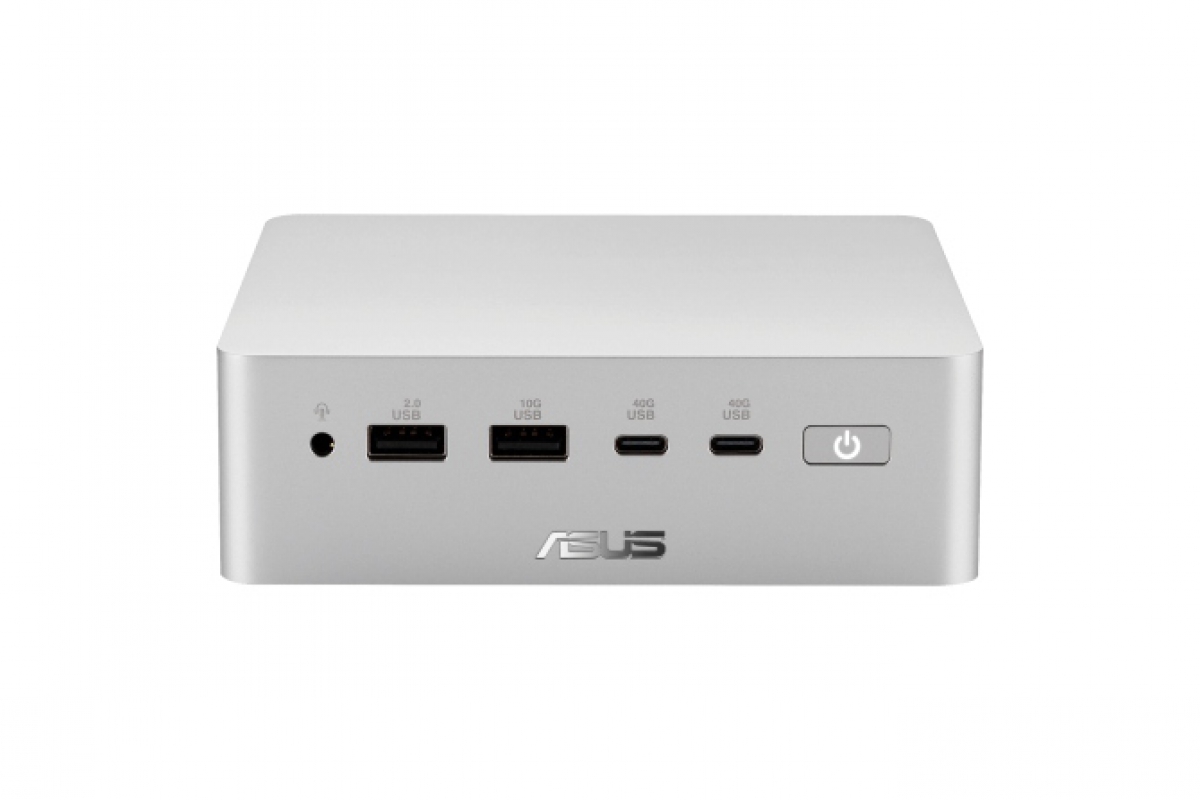
ASUS launches the Ascent QN10: a mini PC of less than 0.7 liters with 80 TOPS NPU and 18-core processor
ASUS has made official the market launch of the Ascent QN10a mini PC optimized for running AI locally. After unveiling its first prototypes during the last Computex, the manufacturer is definitively putting it on sale with a regular form factor, but that includes something unusual.
Yes, we mean this is an ARM mini PC. Furthermore, according to the brand, it is the first in its category, unless it is marketed, with up to 80 TOPS of NPU, easily exceeding the requirements demanded for the Copilot+ ecosystem.
We already knew the platform. This is the Snapdragon X2 Elite, with the Qualcomm Oryon CPU configured with up to 18 processing cores. For its part, the unit integrates an Adreno GPU that increases performance 2.3 times compared to the previous generation, according to figures provided by the manufacturer. With these features, the team transfers heavy computing capabilities to a chassis of just 0.7 liters, reducing the physical volume by 86% compared to traditional five-liter towers.
ASUS Ascent QN10 technical sheet
| ASUS Ascent QN10 | |
|---|---|
| Format and volume | Compact desktop chassis (less than 0.7 liters) |
| Platform and processor | Qualcomm Snapdragon X2 Elite |
| CPU | Qualcomm Oryon up to 18 cores |
| Graphics unit (GPU) | Qualcomm Adreno (up to 2.3 times faster according to manufacturer data) |
| Neural Unit (NPU) | Qualcomm Hexagon with performance up to 80 TOPS |
| AI Compatibility | Copilot+ PC Hardware Certification |
| Hardware security | Microsoft Pluton security processor and fTPM 2.0 (chip-to-cloud architecture) |
| Wireless connectivity | Wi-Fi 7 and Bluetooth 6.0 |
| Development ecosystem | Access to Qualcomm AI Hub (175+ models), BYOM and BYOD flows |
| Agent Integration | Support for OpenClaw, Hermes Agent and automated messaging (WhatsApp and LINE) |
| Operational approach | Local LLM inference, edge computing (Edge AI), and hybrid workflows |
ASUS wants to compete with the Mac mini in running AI models
For various reasons that we will not go into now, the Mac mini has become one of the favorite computers to run AI models locally. Therefore, it is normal for ASUS to emphasize that the main attraction of this device is the 80 TOPS Qualcomm Hexagon neural processor.
To speed up software deployment, the machine has direct access to the Qualcomm AI Hub developer portal, providing more than 175 optimized models for the platform. In this way, professionals can deploy customized architectures through BYOM and BYOD flows directly on premises, preserving the confidentiality of corporate information.
Beyond isolated execution, the platform contemplates hybrid work environments that combine local agents with selective calls to external services through tools such as OpenClaw.
A team clearly designed for the corporate environment
ASUS has strengthened protection measures by integrating the Microsoft Pluton security processor in combination with a TPM 2.0 module. How exactly does it work? Well, this multi-layer security architecture secures users’ encryption keys and credentials directly from the computer to the cloud.
Thanks to this, the security system allows remote recovery and auditing of connected terminals in deployments where the equipment functions as edge computing nodes.
In another vein, the team includes some improvements with respect to the prototype we saw at Computex. For example, the final model with Bluetooth 6.0, although at the fair we saw it with version 5.4. For the rest, it is a device with WiFi 7, up to 32 GB of RAM and two USB4 Type-C with DisplayPort 2.1.
