
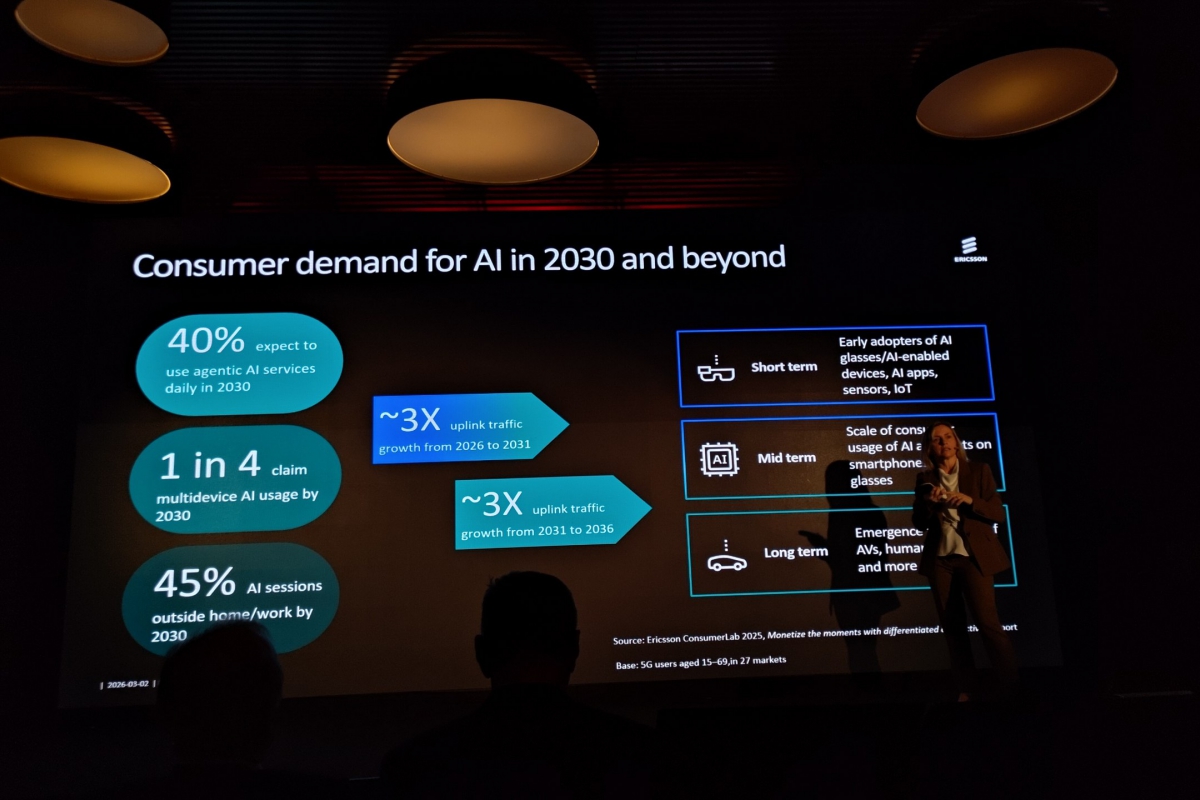
AI is going to trigger the “upload” of mobile data to triple by 2031
One of the most interesting presentations we have seen at MWC 2026 in Barcelona is that of Ericsson on the impact of artificial intelligence on mobile networks. According to data from the company’s ConsumerLab 2025, the data upload trafficthat is, the uplinkwill experience unprecedented growth in the coming years, driven above all by the massive use of AI services that require sending information from devices to the cloud.
The figures given by the firm are compelling. Ericsson projects that uplink traffic will triple between 2026 and 2031, and triple again between 2031 and 2036. This growth is directly related to the adoption of agentic AI services, where the 40% of users expect to use these services daily in 2030. Additionally, one in four users say they will use AI on multiple devices by then.
From smart glasses to humanoid robots
Ericsson’s presentation divides AI adoption into three time phases. In the following years, we will see the arrival of first adopters of AI glasses, AI-enabled devices and IoT sensors. These devices will constantly need to send data to the cloud for processing, which explains the first jump in uplink traffic.
In the medium term, perhaps between 2029 and 2033, the massive scale of use of AI assistants on smartphones and wearable devices will occur. By 2030, 45% of AI sessions will be conducted outside home or workincreasing pressure on 5G mobile networks and future generations.
In the long term, probably starting in 2034, Ericsson anticipates the emergence of autonomous vehicles, humanoid robots and other devices that will rely intensively on high-speed connections to function. This ecosystem of smart devices will transform mobile networks, which will have to evolve to support not only more download speeds, but also much more robust upload capabilities than the current ones.
