
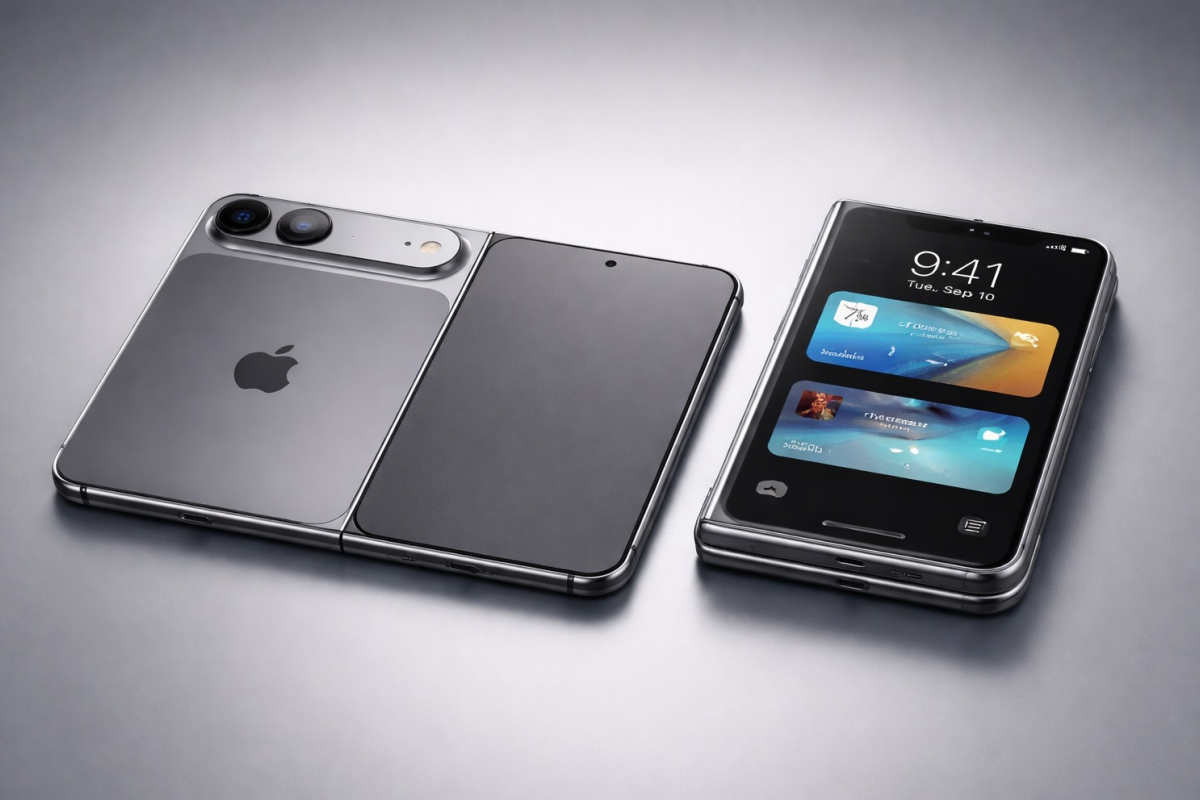
Apple is risking everything with its first foldable
Leaks about the iPhone Fold (or iPhone Ultra, who knows) have accelerated in recent weeks to become a constant trickle of data from Korean and Taiwanese publications and Weibo leakers. Although Apple has not confirmed any details, the convergence of several independent sources allows us to draw a fairly defined profile of the device, at least on paper.
The most relevant thing in recent days are two figures. The first is the price: according to a conversion from the Yuan published by the leaker Instant Digital on Weibo, the base 256 GB version of the iPhone Fold it would cost $2,325. The 512 GB and 1 TB versions they would reach 2,645 and 2,905 dollars, respectively. If Apple applies its usual pricing policy for Europe, the entry model could be around 2,500 euros in Spain, compared to approximately 1,300 euros for the iPhone 17 Pro. To put the category in context, the Samsung Galaxy Z Fold 7 is currently sold in Spain for around 2,229 euros, although Samsung foldables usually suffer significant price drops after a few months, something that is less predictable with Apple.
The second relevant figure is production. According to Samsung Display, the company would supply 20 million panels for the iPhone Fold20% more than previous estimates of between 13 and 15 million units. This contrasts with a previous report from Korean publication The Bell, which pointed to annual volume being less than 5% of typical iPhone sales, which would equate to less than 12 million units. The 20 million figure, if confirmed, would indicate that Apple is more confident in initial demand than early rumors suggested.
Design and technical specifications
Beyond price and production, the leaks point to a device with some eye-catching design decisions. The most notable is the removal of Face IDreplaced by a Touch ID integrated into the side button, probably to avoid the space problems involved with the interior folding screen. The camera under the interior screen, although in tests, seems that it will not reach the final model due to image quality problems.
One of the most delicate points in any foldable is the visible fold on the screen. According to Taiwan’s Economic Daily, Apple would have managed to reduce it to 0.15 mm in depth, which would make it practically imperceptible. To achieve this, the company would have used ultra-thin flexible glass and a hinge mechanism made of liquid metal.
As for the specifications, the leaks they point to the A20 Pro chip with 12 GB of RAM and the self-developed 5G C2 modem. The interior screen would have a resolution of 2,713 x 1,920 pixels with a 4:3 ratio and a size similar to an iPad, while the exterior would be comparable to that of a small iPhone. The battery would be between 5,400 and 5,800 mAh, and the device would arrive as an eSIM-only variant. The camera system would include two 48 MP rear sensors and a front camera of up to 24 MP.
On the software side, Mark Gurman of Bloomberg has pointed out that the iPhone Fold will run standard iOS with the ability to display two apps in parallel, without reaching the more complex interface of iPadOS 26. Given the existing application base for iPad, adapting apps to the foldable format should not represent a major obstacle for developers. All of the above are unconfirmed rumors. Apple hasn’t made any official announcements about the iPhone Fold, and any of these details could change before launch.
