
Apple’s AI Pin returns to the scene and already has a possible launch window
There are ideas that insist on coming back, even though the first attempt ended with a scared look. The smart pin is one of them: wearing a small piece of clothing, without a screen, that listens, looks and responds to you in seconds. On paper it sounds comfortable. In practice, we already saw how difficult it is to turn it into something you use every day.
Now the concept reappears with a much heavier name. Reportedly, Apple would be working on an AI Pin type device with a date that, for now, is places in 2027.
What is said about Apple’s supposed AI Pin
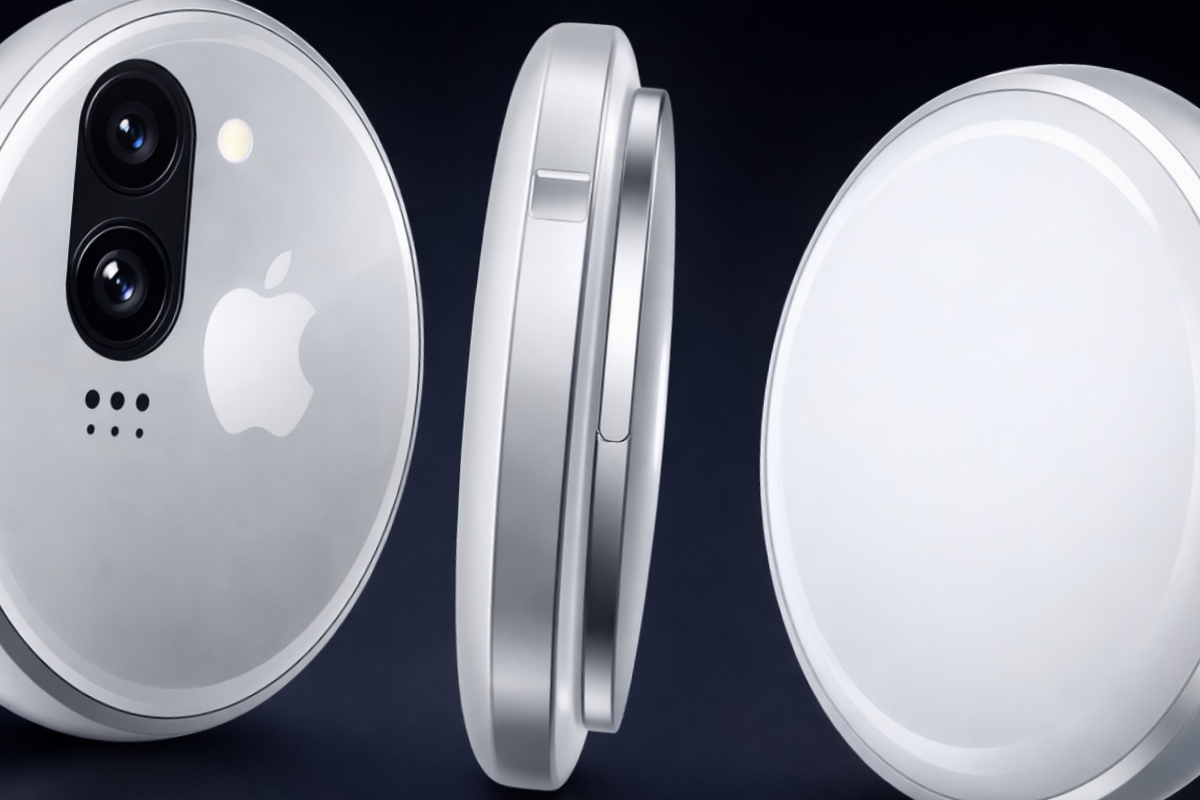
What is striking is the approach: a device without a screen, designed to be worn on the person, that relies on sensors and audio. In that piece we talk about a size similar to that of an AirTag and a construction mixing aluminum and glass.
Very specific hardware details also appear: two cameras, one of them wide angle, three microphones to capture the environment, a speaker and wireless charging. It is, basically, the minimum kit to understand context: see something, hear it and answer without forcing you to take out your cell phone.
With that profile, success or failure does not depend so much on the list of components as on experience. If it takes too long, if it makes a mistake, or if it asks you to repeat everything, it becomes an accessory forgotten in a drawer.
The ghost that always appears: Humane AI Pin
As soon as an AI Pin is mentioned, the conversation returns to Humane. That device promised to change the way we use assistants, but ended up being an example of inflated expectations. In the end it stopped selling and lost connection to servers, with key functions coming to nothing.
This precedent weighs because it marks two lessons. The first: there is real interest in a format that takes the screen off your shoulders. The second: if the software is not up to par, the pin is not a new interface, it is an expensive problem hanging on your chest.
Why 2027 sounds logical and also demanding
If that time window is true, it means something else: Apple doesn’t want to run here. A pin without a screen forces you to nail the essentials: battery without making it a brick, good audio in noisy environments and fast responses. There is no room for interfaces that ask you for patience, because the format itself promises the opposite.
Besides, A device so attached to the body opens a more intense social and privacy debate than that of a mobile phone. Carrying cameras and microphones on your chest is not perceived the same as taking them out of your pocket on time. Convoluted menus are not worth it here. Clear signs, simple controls and understandable speech would be needed.
This is a move by Apple to strengthen its artificial intelligence layer, something that reinforces the agreement with Google and the use of Gemini as support in the cloud. If the pin depends on that intelligence, the quality of service is the difference between tool and rarity.
How would it fit without fighting with the iPhone
The most credible idea is not a replacement for the iPhone, but an accessory that eliminates microfriction. Quick notes, on-the-fly translations, reminders linked to places, identifying something in front of you, dictating a message without looking at the screen. Seconds gestures. If the pin tries to be a mobile, it loses.
Apple already has parts: AirPods for audio, Apple Watch for notifications, the iPhone as a brain and connectivity. A pin would add something different: continuous perception of the environment. And that is where it fits that we talk about several cameras and several microphones, because the context is the raw material.
The Real Exam: Daily Usefulness and Confidence
To have a place, an AI Pin would have to do few things, but do them better than the mobile. Better, not the same. And do it in real life: noisy street, echoing interiors, car, public transport. If it only works perfectly in a quiet room, it remains in demo.
There is also the price. A pin with cameras, microphones and wireless charging is not going to be cheap, and the public has already learned to distrust promises without a clear reason. Lastly, privacy: A device with sensors always nearby has to earn trust with transparency and visible signals, not with fine print.
What lies ahead
Today, everything moves in the field of cited information and rumor. But the relevant data is that there is talk of an AI Pin for 2027 and a handful of plausible specifications are provided.
If Apple ends up entering, the most sensible approach seems to be this: not to sell a rare future, but to save screens at specific times. A pin that prevents you from taking out your phone ten times a day may have a place. One that forces you to think more than you already think with your cell phone, no.
