
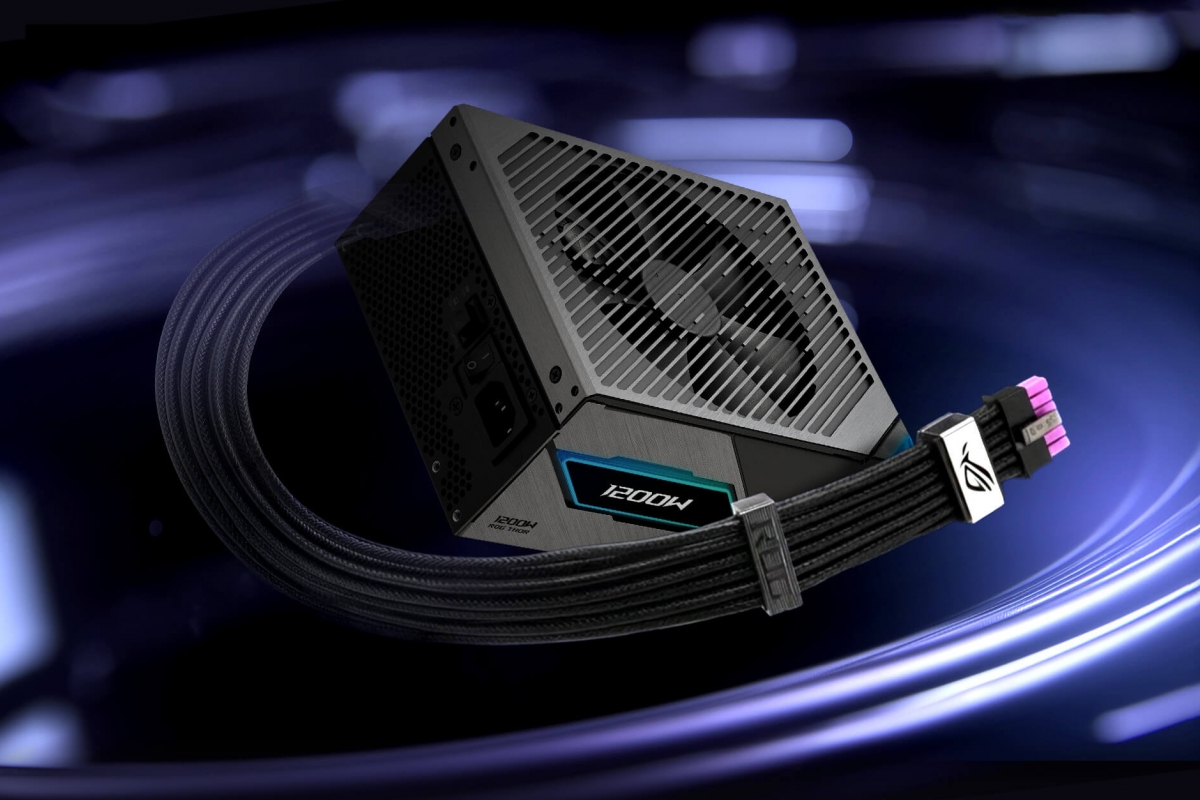
ASUS wants to nip in the bud one of the biggest fears of PC gaming with its new ROG Equalizer cable
The history of the 12V 2×6 connector continues to weigh on the high-end hardware market. Not because all assemblies have problems, but because the simple fact of talking about temperatures, current distribution and high-power connectors already generates distrust among those who spend a fortune on a premium graphics card and source. ASUS has decided to attack precisely that point with the new ROG Equalizera cable designed to better balance the load and reduce thermal risk in demanding configurations.
The idea is not to redesign the graphics card or change the power standard, but to intervene right in the most delicate link of the assembly: the cable. ASUS describes the ROG Equalizer as a 12V 2×6 “etched” cable that seeks to distribute the current between pins more evenly to minimize load variations and protect the connection between the source and the GPU. In other words, the brand wants the most critical point of the assembly to stop depending so much on an imperfect distribution of electrical flow.
A small accessory for a very visible problem
The most striking thing about the announcement is that ASUS does not present it as a simple aesthetic extra for window boxes, but as a piece of active protection within the ROG ecosystem. In his materials he even talks about a GPU-specific mode Tweak III Power Detector+where the ROG Equalizer will work together with the software to offer a double layer of protection: a physical one, in the cable itself, and another for real-time monitoring from the application.
Until now, when talking about 12V 2×6 connectors, the conversation almost always revolved around fear: if the cable was inserted correctly, if there was mechanical tension, if poor current distribution could trigger the temperature or if the problem came from the installation itself. ASUS tries to move that story towards a more controlled terrainwhere the manufacturer intervenes directly with a component designed specifically for that bottleneck.
ASUS puts numbers on the table to justify the move
The most powerful part of the announcement is in the thermal tests that ASUS itself teaches to defend the product. In an extreme scenario, the company removed the four center wires from the +12V line to simulate a current imbalance situation that can occur with a standard cable. In that test, the ROG Equalizer it stayed around 73.4 ºCwhile a Conventional 12V 2×6 cable reached around 146ºCa figure that ASUS clearly places outside safe margins.
Beyond the test being aggressive and deliberately forced on the ROG Equalizer, the message is very clear: the brand wants to demonstrate that its cable is designed to continue operating even when the power distribution is not ideal.
ASUS has confirmed that the ROG Equalizer will be included with the new sources ROG Thor III and ROG Strix Platinum 2026, but it has also dropped a point that may sit especially well with its community: users of existing ROG sources will be eligible for a discounted update. This detail changes the perception of the product quite a bit, because it prevents the launch from being reserved only for those who buy a new PSU from scratch.
That suggests two things.. The first, that ASUS sees real room to turn this cable into an ecosystem argument, not a specific curiosity. The second is that the brand understands that a good part of the public that buys ROG is already within the ecosystem and does not want to hear that the solution is to replace half a tower. If the cable can be adopted without remaking the equipment, the proposal immediately gains appeal.
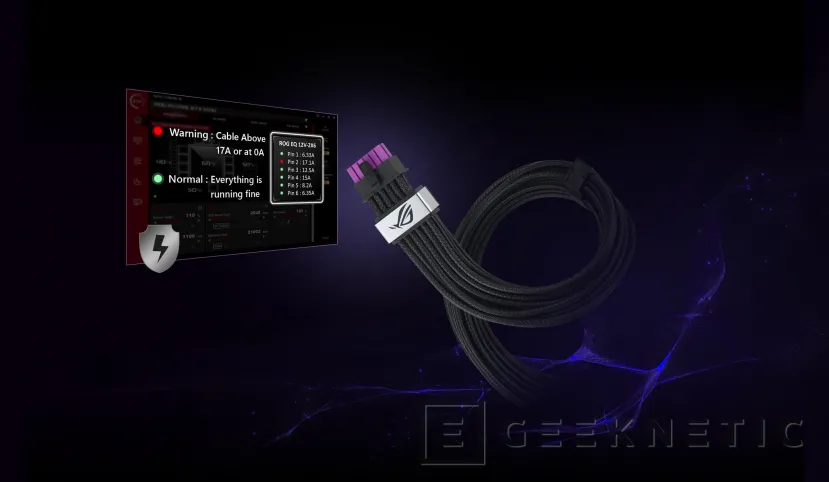
The cable is no longer invisible on the high-end PC
For years, wiring has been one of those elements that only the most obsessive assemblers really cared about. That has changed. In today’s high-end, where graphics can skyrocket in consumption and price, the cable stops being a secondary accessory and becomes a piece with its own weight within the product discourse. ASUS has understood this and is exploiting it with a very direct message: less current variation, less temperature and more control.
It remains to be seen how the market responds and if other manufacturers follow the same path with equivalent solutions, but ASUS’ move fits quite well with the current hardware moment. The user wants performance, yes, but also peace of mind. And in a scenario where a faulty connection can turn into a viral nightmare, selling security can be almost as important as selling power.
