
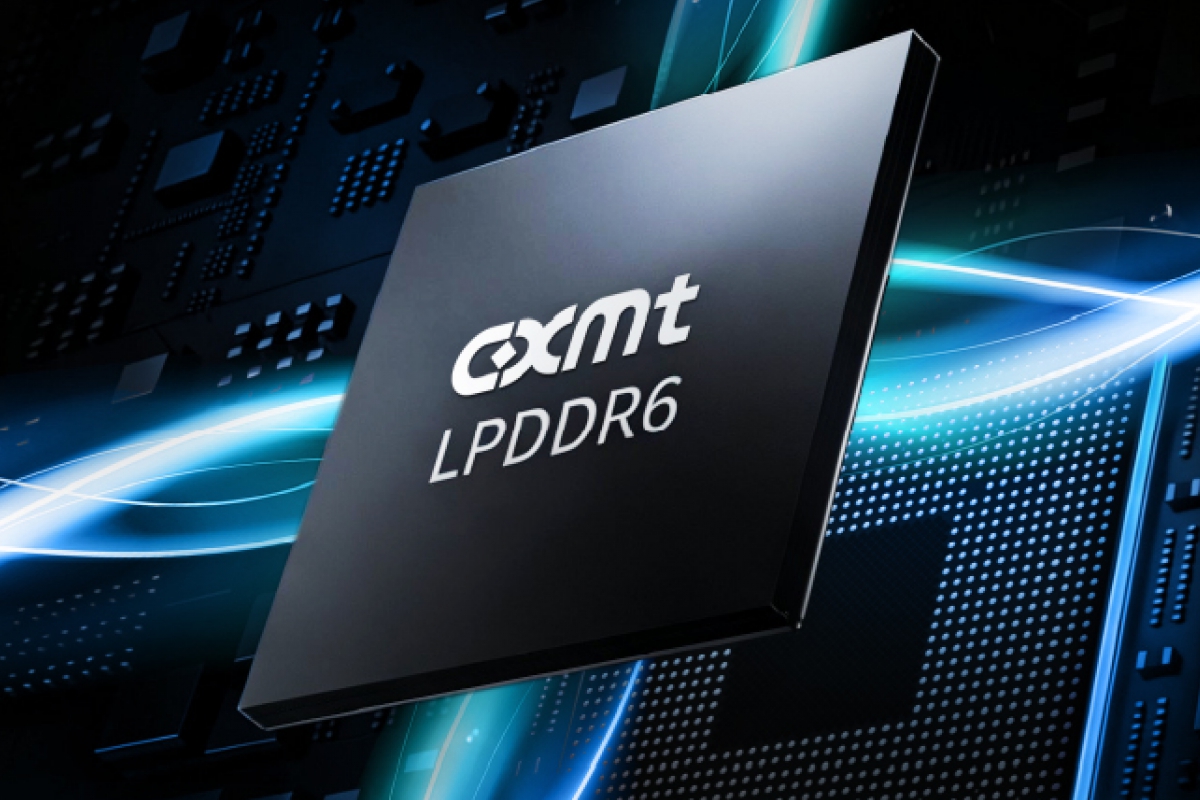
CXMT already mass produces LPDDR6 memory. The Xiaomi 18 Fold will be the first to integrate them
CXMT is a Chinese company that has made quite a few headlines in recent months by managing to manufacture different types of memory in a short time, competing with the most established companies in the market, including South Korean ones.
The situation of memory crisis produced by the “invasion” of AI has created the breeding ground for this company to manage to gain 10% of the market and even make Apple consider it as a supplier, despite being, until recently, unknown to the vast majority of the West.
It had recently been leaked that Xiaomi was going to launch a new foldable, the Xiaomi 18 Fold, equipped with LPDDR6 memories from CXMT but, until now, this information was not official nor was it known that the company had that capacity.
Now it is official and the company itself has published it on its website, stating that CXMT will be the suppliers of the LPDDR6 memory of Xiaomi’s next foldable, the Xiaomi 18 Fold.
CXMT has already begun mass production of these memories to supply them to well-known clients such as Oppo, Honor, Vivo or Lenovo, as well as companies such as Alibaba Cloud, Tencent, ByteDance or Transsion.
These memories promise speeds of up to 12,800 Mbps with per-chip capacities of 16 GB and a 20% decrease in consumption compared to its LPDDR5X. The chips will use a standard FBGA package with 1,296 ball contacts and have redesigned the chip itself to reduce thermal resistance by 40% to improve stability.
Technical Characteristics of CXMT LPDDR6 Memory
- General and Commercial Information
- Name: CXMT LPDDR6
- Commercial debut: Xiaomi 18 Fold
- Total packaged chip capacity: 16 GB (based on individual 16 Gb modules)
- Standard: JEDEC LPDDR6 compliant
- Performance and Energy Efficiency
- Maximum data rate: 12800 Mbps
- Power consumption: 20% reduction compared to its predecessor
- Architecture
- Dual channel with native 24-bit I/O
- Reliability, Availability and Serviceability (RAS)
- Integrated functions: Link ECC and On Die ECC
- New security and diagnostic features: PRAC (Per Row Activation Counting) to defend against row hammer attacks and MBIST (Memory Built-In Self-Test)
- Packaging and Heat Dissipation
- Packaging format: 1295-ball FBGA PoP
- Encapsulation: Use of High-K EMC material for the entire chip molding process

Antonio Delgado
Computer Engineer by training, editor and hardware analyst at Geeknetic since 2011. I love to tear apart everything that passes through my hands, especially the latest hardware that we receive here for reviews. In my free time I tinker with 3D printers, drones and other gadgets. For anything, here you have me.
