
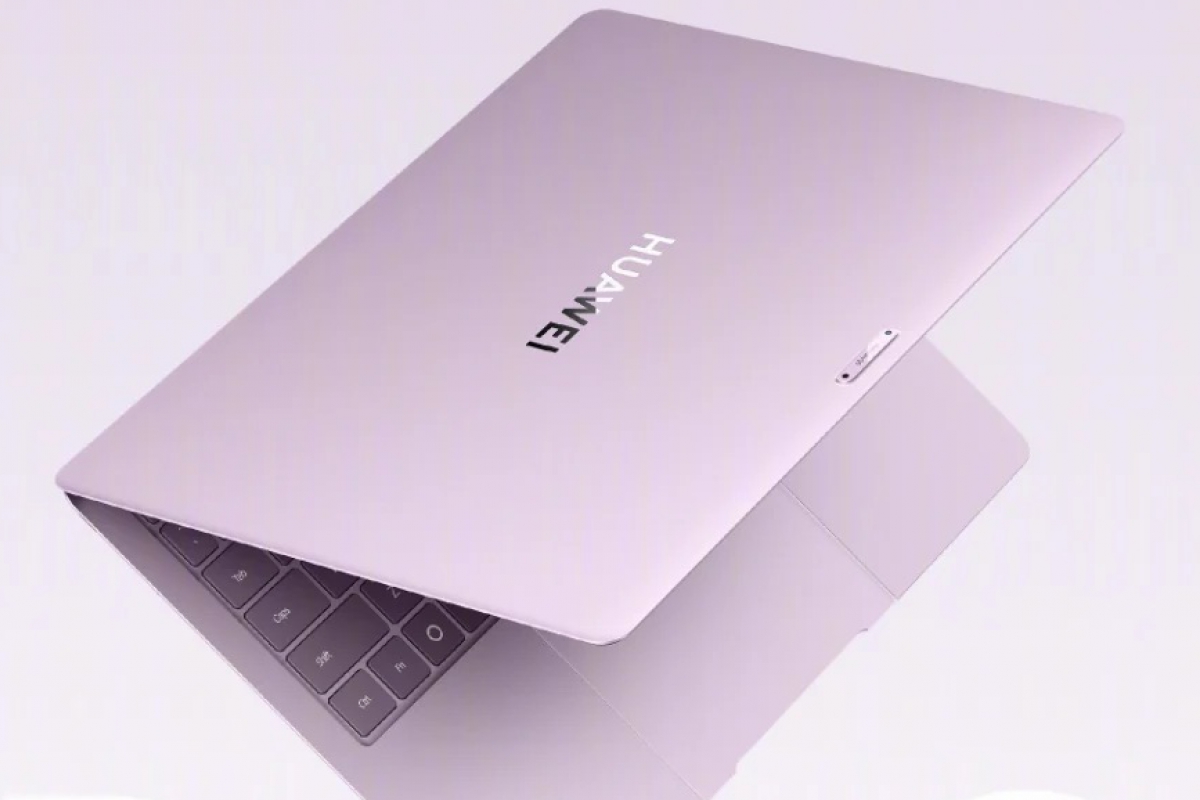
Huawei presents the MateBook Pro S: debuts a screen with instant privacy function
Huawei has expanded its catalog of laptops with HarmonyOS with a new premium model designed for those who prioritize portability without giving up high-end features. Is called Huawei MateBook Pro S and combines an ultralight metal chassis, a new Kirin family processor, a high-end OLED screen and a good handful of software functions supported by artificial intelligence.
The presentation comes just a few days after Huawei announced the data that has attracted the most attention about the model: its weight of only 798 grams, an especially low figure for a 14.2-inch laptop with high-end features. Now, with the official presentation already closed, the rest of the details that complete the technical sheet of the MateBook Pro S are known, from the screen to the starting prices in China.
An OLED screen with instant privacy function
The Huawei MateBook Pro S mounts a 14.2-inch flexible OLED display with 3,120 x 2,080 pixel resolutiona refresh rate of 120 Hz and maximum brightness of 1600 nitsfigures that place it among the most competitive laptops in the premium segment in terms of panel. The panel also offers full coverage of the P3 color space and touch support, something not always found in equipment so oriented towards lightness.
The most unique feature of the screen is what Huawei calls the first Lingdun privacy display of the industry, a system that allows you to instantly activate or deactivate a visual privacy mode using a dedicated key. With that key pressed, the viewing angle of the screen is drastically reduced, making it difficult for someone sitting next to or behind the user to read the content on the screen, something especially useful in shared work spaces, airplanes or cafes.
Kirin XE90: the performance jump compared to the previous generation
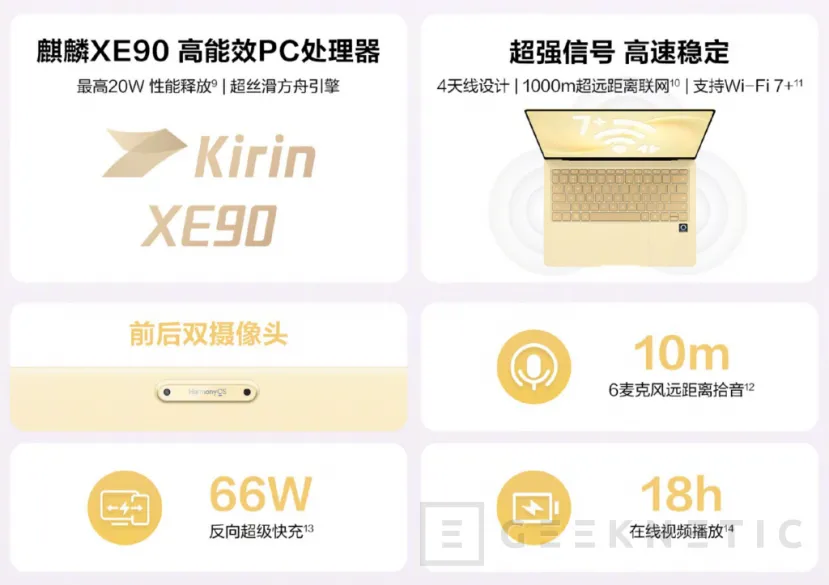
Under the chassis of the MateBook Pro S hides the new Kirin XE90 processor from Huawei, which according to the company offers a 23% improvement in performance single thread compared to the Kirin X90 of the previous generation. Added to this performance gain is a 25% improvement in energy efficiencyan especially relevant fact in a laptop that also boasts autonomy of up to 18 hours of use.
The third big leap that Huawei highlights is in the artificial intelligence section: the company assures that the Kirin XE90 offers Up to 40% higher performance in your neural processing unit (NPU) compared to the previous chip, an improvement that fits with Huawei’s general commitment to integrate AI functions directly into the HarmonyOS operating system of its most recent devices. These three combined improvements (performance, efficiency and AI capacity) are what Huawei uses as the main argument to justify the generational leap of the MateBook Pro S compared to previous models of the same family.
Starting prices and variants available in China
The Huawei MateBook Pro S has gone on sale with various memory and storage configurations, all of them with prices expressed only for the Chinese market for the moment. The entry variant, with 16 GB of RAM and 512 GB of storage, part of the 7,999 yuan (about 1,185 dollars, which at the current exchange rate would be equivalent to approximately 1,030 euros). The Soft Light edition, with 24 GB of RAM and the same 512 GB storage, goes up to 8,999 yuan (about 1,330 dollars, about 1,155 euros).
Above these two variants are three configurations with 24 GB of RAM and 1 TB of storage: the standard model, the Privacy edition and the Collector’s edition, with prices of 10,499 yuan (about 1,555 dollars, about 1,350 euros), 11,799 yuan (about 1,745 dollars, about 1,515 euros) and 14,999 yuan (about 2,220 dollars, about 1,925 euros), respectively. It is worth remembering that these conversions are approximate and that the final price in the European market, if Huawei finally decides to market the MateBook Pro S outside of China, will depend on VAT, applicable tariffs and the margins applied by local distributors, factors that usually raise the final price above the simple currency conversion.
In addition to the different memory and storage configurations, the MateBook Pro S will be available in five color finishes: Dawn Yellow, Summer Purple, Velvet White, Smoky Gray and Feather Black. This variety of tones, unusual in high-end laptops aimed at a professional audience, reinforces the idea that Huawei seeks to position this model also as a design object, not only as a work tool.
One more movement within Huawei’s technological independence strategy
The launch of the MateBook Pro S fits within a trend that Huawei has been reinforcing for some time: reduce your dependence on third-party processor suppliers through the development of its own silicon, something that it had already been doing in the field of smartphones and that is now extending more strongly to the laptop segment. Until recently, a good part of Huawei’s Windows laptop catalog depended on Intel or AMD processors, while models like the MateBook Pro S rely directly on HarmonyOS and their own ARM architecture silicon.
This strategy responds in part to the trade restrictions that Huawei has had for years in several international markets, which have limited its access to certain components and technologies of Western origin. Betting on its own processors such as the Kirin
