
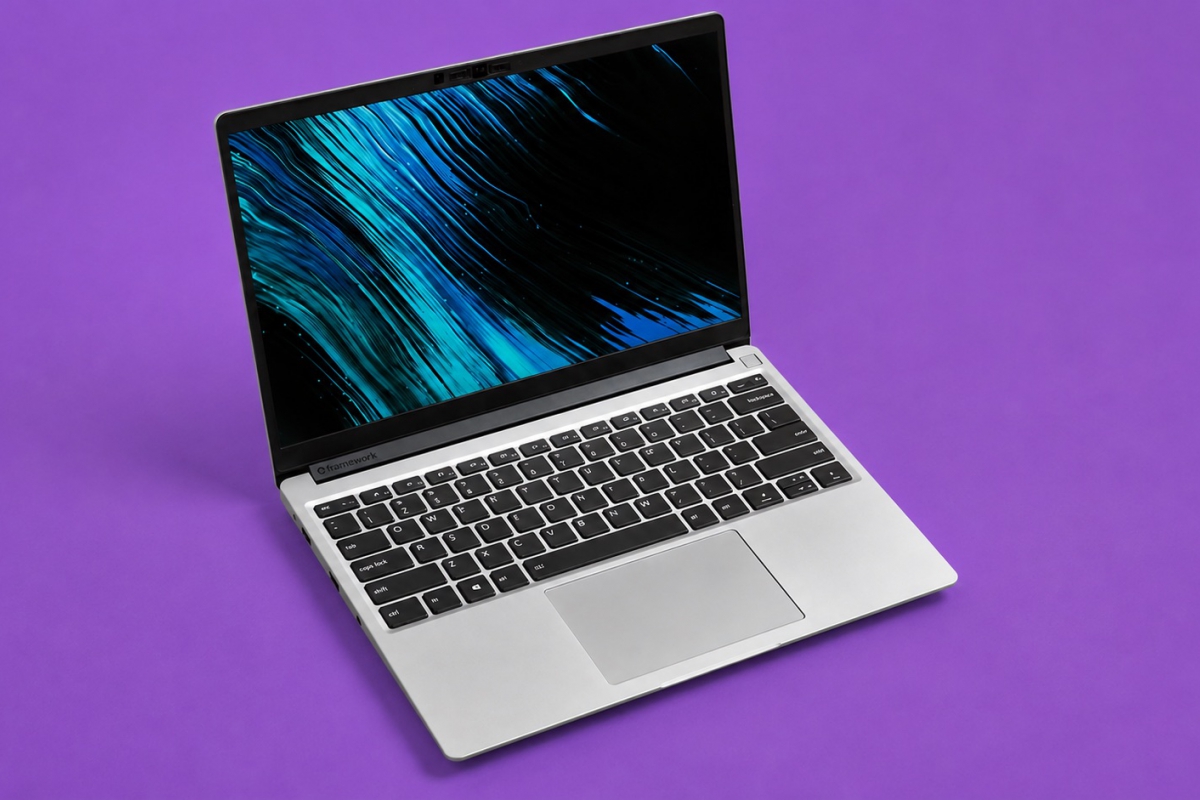
Framework confirms that BIOS 3.20 leaves some boards of the Laptop 13 with Ryzen 7040 unusable
Framework has confirmed that a BIOS update is rendering a small number of computer units unusable. Laptop 13 equipped with AMD Ryzen 7040 processors. After installing the firmware, the affected motherboards stop booting, and the company says it is investigating the source of the problem.
The failure is concentrated in BIOS 3.20published in June as a stable version for this range of modular laptops. Framework maintains this version as the most recent available for systems with Ryzen 7040, despite reports received in recent weeks.
A firmware designed for the Laptop 13 Pro that has ended up blocking plates
BIOS 3.20 did not arrive as a simple correction of specific errors. Framework designed this update to add support for several components typical of the Laptop 13 Pro, including the haptic trackpad, the touch panel and a higher capacity battery. The package also updated AMD PhoenixPI and incorporated various fixes along with several security patches.in line with what usually accompanies this type of releases.
In a statement, Framework explains that it has received notifications of a small percentage of the Laptop 13 7040 series BIOS updates that have ended up with motherboards unable to boot. The company maintains that it is already working to identify the root cause of these failures, without yet offering a definitive diagnosis as to what specific combination of hardware or circumstances causes the problem.
Updates that freeze mid-installation
Several members of the Framework community have reported that the update process stops completely during installation. A Ryzen 7 7840U owner described how an update from BIOS 3.18 to 3.20 stopped at the second progress indicator on the firmware screen, without progressing beyond that point despite leaving the computer on for a long time. Other users have reported similar failures that ended up leaving their laptops unable to boot normally, even after several restart attempts.
Framework acknowledges in its statement that the pattern is repeated in different hardware configurations within the same series of processors. It does not seem to be, therefore, a specific case linked to a single variant of the laptop.
In the absence of an immediate official solution, Some users have chosen to recover their boards using external programmers and direct flashing of the firmware chip. One of the community members managed to revive a motherboard that had been stuck after the failed jump from 3.18 to 3.20 using precisely this method.
This procedure is not part of the recovery process that Framework usually contemplates for its computers. It requires direct physical access to the chip where the BIOS resides, something that most home users are not in a position to do on their own, and which in practice works as a last resort solution for those who do not want to wait for a board replacement from the manufacturer.
Warranty Replacements and a New “Crisis Recovery Mode”
Framework confirms that it routinely replaces affected motherboards that are still covered under warranty. The company also notes that it is making exceptions to replace out-of-warranty plates. in cases where technical support can confirm that it was precisely an update to a stable BIOS version that caused the computer to stop booting.
As a medium-term response, Framework is preparing a feature called “Crisis Recovery Mode”. Its objective is to enable a direct way to recover equipment after a failed update, without the need to resort to external programmers or send the board for replacement. The company has not yet detailed when this function will be available or in which BIOS version it will be integrated.
At the moment, Framework has not revealed the exact number of systems affected by this problem, although it insists that it is a small percentage of the total updates installed through BIOS 3.20.
The episode comes at a delicate time for a brand that has built much of its identity around repairability and transparency with its users. Framework has popularized the idea that a laptop does not have to be completely dependent on the manufacturer to continue functioning, with boards, memory and modules that the buyer themselves can replace without specialized tools. That precisely an official BIOS update, and not a hardware failure due to wear and tear, is the cause of several computers stopping booting tests that promise in a different terrain than usual: that of the software that the company distributes directly through its own channels.
While Framework finishes outlining the Crisis Recovery Mode and specifying the technical origin of the failure, the implicit recommendation for owners of a Laptop 13 with Ryzen 7040 is to contact official support for any incident after updating, instead of resorting to manual recovery methods that require opening the device and directly manipulating the firmware chip.
